
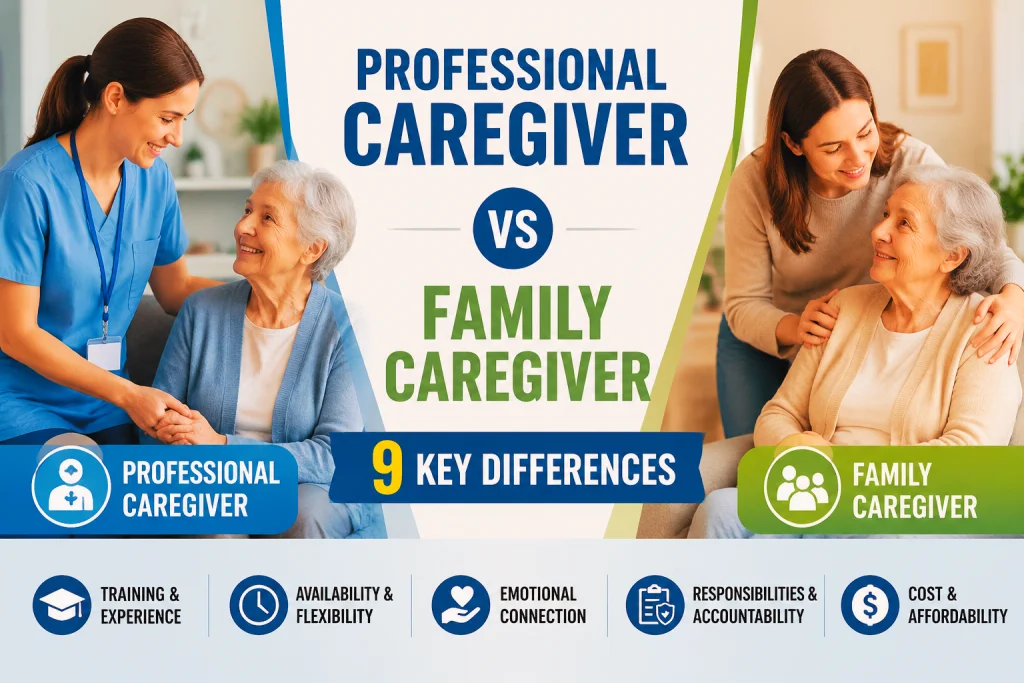
Introduction to Caregiving Roles in Modern Healthcare
When we think about taking care of seniors, we have to look at the difference between a professional caregiver vs family caregiver. A family caregiver is typically a family member who takes care of their loved one without getting paid. They do this because they care about this person and feel responsible for them. Family caregivers help with things like eating, bathing, remembering to take medicine and being there for emotional support. The care that family caregivers provide is very personal. They usually do not have the special training that professional caregivers have.
This can make things really tough for family caregivers when they have to deal with situations. Caregiving is a part of modern healthcare, especially with people getting older and needing help at home or in special facilities. It is really important to understand the difference between a professional caregiver vs family caregiver when it comes to taking care of older people dealing with long-term illnesses and helping with daily tasks. These days, families have to balance taking care of their loved ones with their jobs and lives, which makes it even more important to know about caregiving roles.
The need for caregiving support is growing fast. Many families are trying to decide whether to ask a family member for help or hire someone who is trained to do the job. This decision affects not only the quality of care but also how the whole family feels and their financial situation.
Why Understanding Caregiver Types Matters Today

Knowing the difference between caregivers helps families avoid getting too tired, reduces risks and makes sure older people get the care they need. It is not about the technical differences between caregivers, nurses and home health aides. It is about how it affects people’s health, safety and well-being. Choosing the kind of support can make a big difference in the quality of life for both the caregiver and the person getting care.
What Is a Family Caregiver?
A family caregiver is usually someone who is not paid, like a spouse, child or close relative, who takes care of someone who’s older, disabled or sick. This kind of caregiving is driven by love, responsibility and necessity rather than formal training or a job.
Family caregivers play a role in daily life, helping with things like meals, bathing, reminding people to take their medicine and being there for emotional support. They do this because they care, which makes their contribution really valuable.
Emotional Responsibility and Daily Support at Home
Family caregivers often take on a lot of physical responsibility without any formal training. They become the source of comfort and stability, especially for older people who want to stay in their own homes. This emotional bond is strong. It can also be hard as caregivers may struggle to balance their own life, job and caregiving duties.
Challenges Faced by Family Caregivers
Even though family caregivers are dedicated, they often face burnout, stress, and not knowing enough about things. They may not understand health conditions or know what to do in an emergency, which can lead to gaps in care. Financial problems are also an issue, especially when caregiving gets in the way of their ability to work or pursue their career.
What Is a Professional Caregiver?
A professional caregiver is someone who is trained and certified to provide care services to people or patients in their homes, hospitals or care facilities. Unlike family caregivers, professionals follow guidelines, care plans and safety rules to make sure they provide consistent and reliable support.
These caregivers are hired either privately or through agencies. Are trained in important caregiving skills like helping with hygiene, mobility and basic health monitoring.
Training, Certification and Medical Awareness
Professional caregivers go through training that prepares them to handle both care and emergency situations. They know how to deal with mobility issues, check signs and talk to healthcare professionals. This makes the difference between family caregivers really important, especially when medical knowledge is needed.
Roles of a Personal Caregiver for Seniors
A caregiver for seniors focuses on improving their quality of life by helping with daily tasks. Their jobs often include things like bathing, dressing, cooking, light housekeeping and being a companion. They also make sure older people keep their dignity and independence while getting the support they need.
Professional Caregiver vs Family Caregiver: Key Differences
The comparison between family caregivers highlights some important differences that affect the quality of care and how long it can be sustained.
Skills and Training Comparison
Professional caregivers have training and experience, while family caregivers rely on what they have learned and their emotional instincts. This difference is really important in situations where people have illnesses, mobility problems or cognitive decline, and professional knowledge can make care safer and more efficient.
Emotional Involvement and Boundaries
Family caregivers are emotionally attached, which can be both good and bad. Emotional involvement can sometimes cloud their judgment. Lead to stress. On the other hand, professional caregivers keep boundaries, which allows them to provide consistent care without getting too tired emotionally.
Time Commitment and Availability
Family caregivers often have to juggle responsibilities, including jobs and household duties, which limits how much time they have. Professional caregivers, however, work on schedules, which means they can provide reliable support. This difference often decides whether families need help or full-time care support.
Caregiver vs Nurse: Understanding the Difference
Caregiver vs Nurse is an important comparison when understanding senior care and healthcare support roles. Caregiver vs nurse is really important to understand the difference between caregivers and nurses when deciding what kind of support is needed. Nurses are licensed healthcare professionals who do tasks like giving injections, taking care of wounds and monitoring complex medical conditions.
Caregivers, on the other hand, focus on helping with daily life rather than medical treatment. While they may do some health monitoring, they do not do advanced medical procedures. In situations where a patient’s condition is unstable or medically complex, a nurse is needed instead of a caregiver.
Understanding caregiver vs nurse helps families choose the right care level. If a senior only needs daily living support, a caregiver is often enough. But if medical supervision or clinical care is required, a nurse becomes necessary for safe and proper treatment.
Medical Responsibilities vs Daily Assistance
Nurses handle responsibilities while caregivers focus on comfort, hygiene, mobility and emotional support. This difference helps families choose the kind of care based on health needs rather than general assumptions.
When a Nurse Is Required of a Caregiver
A nurse is needed when a patient requires medical supervision, post-surgical care, injections or ongoing treatment monitoring. In contrast, caregivers are better for medical daily assistance and long-term companionship.
Caregiver vs Home Health Aide Explained

Caregiver vs home health aide is something people think about when they want to find help for older people. A caregiver is someone who helps with things like taking a bath, getting dressed, making meals and being a friend. The main job of a caregiver is to make sure the person is comfortable, safe and happy at home. It is really important to know the difference between a caregiver vs home health aide .
Caregiver vs home health aide helps families pick the kind of help for the older person based on their health, how independent they are, and what is wrong with them medically. The comparison between caregivers and home health aides can be confusing because their roles can overlap. However, home health aides usually have structured training and may help with limited medical tasks under supervision.
Scope of Work and Daily Duties
A home health aide may help with hygiene, mobility and basic health-related tasks like checking vital signs. Caregivers, depending on their type, may focus more on assistance and emotional support without getting involved in medical matters.
Overlap Between Home Health Aides and Caregivers
Both roles share responsibilities in care, but home health aides usually work under healthcare systems or agencies, while caregivers can be private or informal. This overlap makes it important to evaluate qualifications before hiring.
Private Caregiver for Seniors: Is It the Right Choice?
A private caregiver for seniors is hired directly by a family to provide care at home. This option is often preferred when families want attention and flexible schedules.
Benefits of Hiring a Private Caregiver
Caregivers offer one-on-one attention, consistency and personalized care routines. They can adapt to the seniors’ lifestyle, preferences and medical needs more effectively than care facilities.
Risks and Considerations Before Hiring
Hiring a private caregiver also requires careful screening, background checks and building trust. Without agency supervision, families must make sure the caregiver is reliable, trained and able to handle emergencies.
Professional Caregiver vs Family Caregiver: Key Differences
Cost and Financial Impact
One of the important differences between professional and family caregivers is the financial impact on the household. Family caregivers are generally not paid. This does not mean they are free. The hidden costs often include lost income, reduced working hours, transportation expenses and medical supplies bought out of pocket. These indirect costs can add up over time, especially when care is needed for long-term conditions.
Professional caregivers, on the hand require direct payment through hourly rates monthly salaries or agency contracts. While this may seem expensive at first, it provides care, accountability and consistency. In some cases, families find that hiring a professional caregiver actually reduces long-term stress and unexpected expenses caused by unmanaged care situations.
Care Quality and Consistency
Care quality is another difference between family and professional caregiving. Family caregivers may provide emotional and personalized care but their consistency can be affected by fatigue work obligations and lack of training. This inconsistency can sometimes lead to missed medications, irregular routines or delayed responses in emergencies.
Professional caregivers maintain schedules and follow established care plans. Their training allows them to deliver care every day, even in challenging situations. This makes them more reliable in maintaining health routines for seniors with complex or progressive conditions.
Signs It’s Time to Hire a Professional Caregiver
Increasing Care Needs and Safety Concerns
There often comes a point where family support alone’s not enough. When a senior starts to experience falls, memory loss, mobility issues or worsening chronic illness, it becomes necessary to consider professional support. At this stage, relying solely on a family caregiver can increase the risk of accidents and medical complications.
A professional caregiver provides trained supervision. Can respond quickly to safety concerns. This includes monitoring activities assisting with movement, and making sure the living environment remains safe. Recognizing these signs early helps families avoid emergency situations and ensures long-term care planning.
Caregiver Burnout in Families
Caregiver burnout is an issue that affects many family members who take on long-term care responsibilities. Emotional exhaustion, stress, sleep deprivation and loss of time are common symptoms. Over time, burnout can negatively affect both the caregiver’s health and the quality of care provided.
When burnout becomes noticeable, it is often a sign that additional help is needed. Introducing a caregiver can reduce pressure on the family, restore balance and ensure that care remains consistent and safe. This transition does not replace family involvement. Instead supports it.
Cost Comparison Between Family and Professional Caregivers
Hidden Costs of Family Caregiving
Although family caregiving does not involve payment, it carries hidden financial and emotional costs. Many caregivers reduce their working hours. Leave their jobs entirely, leading to long-term income loss. There are also expenses related to transportation, home modifications, medical supplies and emergency care.
Insurance and Paid Care Options
We can get help from insurance plans or government programs to pay for caregivers or home health services. When families look at their options, they often find that it is cheaper than they thought to get part-time or subsidized care. If we know what kind of help we can get, it can make professional caregiving more affordable.
How to Choose the Right Care Option for Seniors

We need to look at the seniors’ health and what they need every day. If they just need someone to keep them company or help with things around the house, a family member can take care of them. If they need medical help, someone to assist them with moving around or special care, we might need a professional caregiver or a nurse.
We should look at their routine, what medicine they take and what they can and cannot do. This helps us decide if we need a caregiver, a nurse or a home health aide.
Building a Sustainable Care Plan
A care plan includes emotional support, financial planning and medical care. It works best when families work together with caregivers. This way, seniors get the support they need from their family and the professional care they need from caregivers.
A good plan also includes having someone to fill in when the caregiver is not available, a plan for emergencies, and regular check-ups to see if the senior’s needs have changed.
Finding the Right Balance in Caregiving
Choosing between a caregiver and a family caregiver is not about picking one or the other. It is about knowing what kind of support the senior really needs. Family caregivers give love, trust and familiarity which’s very important. Professional caregivers have the training and experience to give consistent care.
In life, the best way to give care is often a mix of both. When families work with caregivers, seniors get better care that includes emotional support, physical care and medical care. This also reduces stress on family members. Improves the quality of care. Understanding the difference between caregivers, nurses and home health aides helps families make decisions. Each role is different. We need to choose the right one based on the senior’s health and needs.
In today’s healthcare, good caregiving is not about choosing one option or the other. It is about building a system that prioritizes dignity, safety and comfort. When family support and professional care work together, they create a foundation for seniors to live healthier more independent lives.
When comparing professional caregiver vs family caregiver, it is important to understand how each role supports seniors in different ways. A caregiver vs nurse comparison shows that nurses usually provide medical care, while caregivers focus more on daily living support and companionship. In the discussion of caregiver vs home health aide, home health aides often have formal training and may assist with basic medical tasks under supervision, unlike general caregivers.
Many families also search for options like a personal caregiver for seniors or a private caregiver for seniors when they want more personalized one-on-one support at home. Choosing between these care types depends on the senior’s health condition, independence level, and daily assistance needs. The comparison of professional caregiver vs family caregiver helps families understand whether trained support or emotional family care is better suited for seniors’ daily needs. When looking at caregiver vs nurse, it is clear that nurses handle medical treatments and health monitoring, while caregivers provide essential daily living support and companionship.
The difference in caregiver vs home health aide shows that home health aides may assist with limited medical tasks under supervision, whereas caregivers mainly focus on comfort, safety, and routine care. A personal caregiver for seniors can greatly improve quality of life by offering one-on-one attention, helping with mobility, meals, and emotional support at home. Families choosing a private caregiver for seniors often prefer customized care plans that match the senior’s lifestyle, health condition, and personal preferences.
Conclusion
To make decisions about care for seniors, we need to know the difference between a professional caregiver vs family caregiver. Both are important. Help seniors in different ways. Family caregivers who give seniors support are familiar with them and care about them very much. Professional caregivers have the training know about health issues and can help seniors every day.
When people compare caregivers, nurses and home health aides for seniors, they see that there is no one option for every situation. The right choice depends on the senior’s health, how independent they are and what kind of care they need in the long term. Often, the best way is to use both family and professional caregivers. This gives seniors the support they need from family and the expert care they need from professionals.
Today, caregiving is not about replacing family with professionals or vice versa. It is about creating a care system that keeps seniors safe, respected and happy. A personal caregiver for seniors can help with needs when things get tough, while family members keep giving emotional support and companionship.
The main goal of caregiving is to create a supportive place where seniors can live comfortably and independently. It is not about helping with daily tasks. By understanding the caregiving roles, families can make better decisions that help both the seniors and the people who care for them. Choosing the right caregiving balance for seniors is very important. Seniors need a caregiving balance that works for them. Caregiving balance for seniors is about finding the mix of family and professional care.
A caregiver vs nurse comparison helps families understand the level of support each role provides, from daily assistance to medical care. While a caregiver focuses on comfort and companionship, a nurse provides clinical treatment and health monitoring. Understanding caregiver vs home health aide is also important because home health aides may have formal training and can assist with basic medical tasks under supervision, unlike general caregivers. Families often look for a personal caregiver for seniors when they want one-on-one daily support at home, while a private caregiver for seniors offers more customized and flexible care based on individual needs.
FAQs About Professional Caregiver vs Family Caregiver
What are the 4 types of caregivers?
There are four types of caregivers: family caregivers, professional caregivers, home health aides and nurses. Family caregivers give daily support to their loved ones. Professional caregivers are trained to assist with care and daily activities. Home health aides give health support and personal assistance. Nurses handle tasks like giving medicine and taking care of wounds.
What is another name for a family caregiver?
A family caregiver is also called a caregiver or an unpaid caregiver. They give care without getting paid, usually because they are family members or friends. They are also called caregivers when they are the main person taking care of a senior or someone who is ill.
What is a professional caregiver?
A professional caregiver is someone who is trained to assist individuals with living activities, health monitoring and personal support. They work independently or through agencies. Follow proper care guidelines. Their tasks include helping with bathing, dressing, mobility support, meal preparation and companionship.
What is the meaning of a family caregiver?
A family caregiver is someone who gives care to a senior, someone who is disabled or someone with a chronic illness. They are usually family members or close friends who give care because they care, not because it is their job. They help with tasks like feeding, hygiene and emotional support.
What is the role of a family caregiver?
The role of a family caregiver goes beyond help. It includes social and sometimes financial support. They help seniors with their routine, remind them to take their medicine and give them companionship. However, this role can be stressful. Lead to burnout, especially when care needs increase over time.
What is a name for a caregiver?
A professional caregiver can be called a personal care assistant, home care aide or certified caregiver. They work with home health aides and nurses to give care services, especially to seniors who need daily assistance at home.
What are the 5 C’s of caregiving?
The 5 C’s of caregiving are compassion, communication, competence, commitment and consistency. Compassion means understanding and empathizing with the senior. Communication helps us understand their needs. Competence means having the skills and knowledge to give safe care. Commitment means being dedicated to the caregiving role, and consistency means giving reliable support every day.
What are the two types of caregivers?
Caregivers are either informal or formal. Informal caregivers are family members or friends who give support. Formal caregivers are trained professionals who get paid for their services and often work through agencies or healthcare systems.
What are the top 3 qualities of a caregiver?
The top three qualities of a caregiver are patience, empathy and reliability. Patience is essential because caregiving involves tasks and challenging situations. Empathy helps the caregiver understand the senior’s struggles, and reliability ensures that the senior gets timely assistance.
Senior Caregiving: A Complete Guide with 15 Expert Tips for Better Elder Care in 2026

Welcome to USA Senior Citizen, a trusted resource dedicated to helping older adults live healthier, happier, and more independent lives.
Our mission is to provide valuable information, practical tips, and helpful guidance for seniors and their families. We cover important topics including **senior health, retirement planning, senior living, caregiving, technology for seniors, and everyday lifestyle solutions**.
At USA Senior Citizen, we believe aging is not about slowing down — it is about embracing new opportunities, staying connected, and enjoying every stage of life. Our goal is to make life easier for seniors by sharing simple, reliable, and easy-to-understand information that supports better decisions and improved well-being.
Whether you are looking for advice on maintaining a healthy lifestyle, exploring retirement options, learning new technology skills, or finding ways to stay active and independent, USA Senior Citizen is here to guide you.
We are committed to creating a supportive online community where seniors can discover useful resources, gain confidence, and continue living life with dignity and purpose.
USA Senior Citizen — Empowering Seniors to Live Better Every Day.