
Introduction
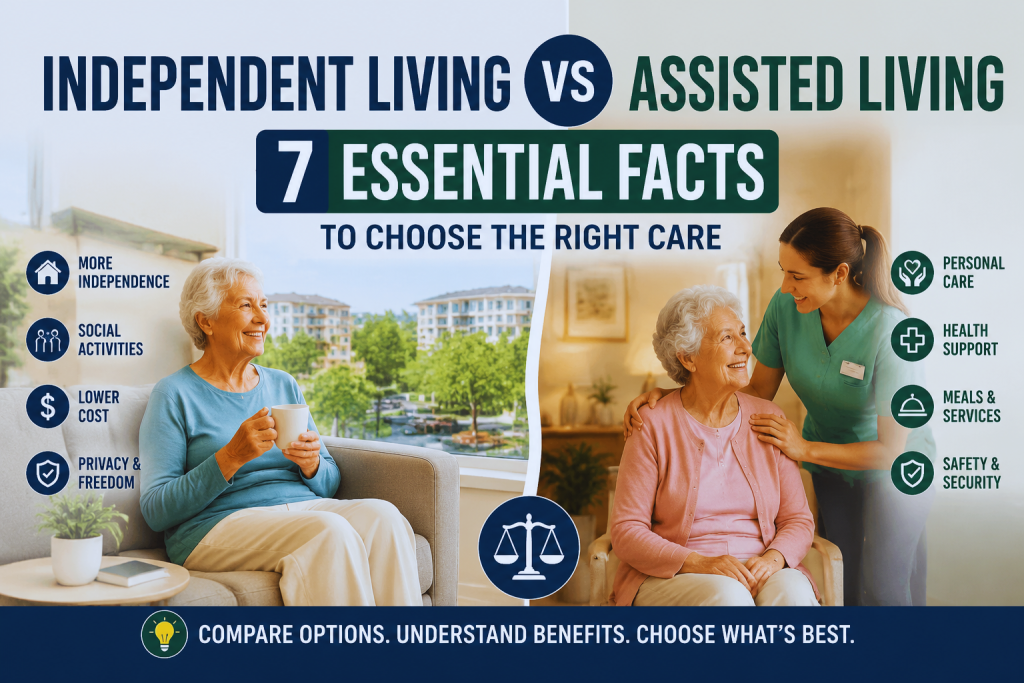
Choosing the right senior living option for your parents is one of the most important family decisions you may ever make. As parents grow older, their needs often change. Some older adults remain active and independent, while others require help with daily activities such as bathing, dressing, medication management, or meal preparation. Understanding independent living vs assisted living can help families make a confident and informed choice that supports both safety and quality of life.
Many families feel overwhelmed when comparing senior living options because both communities offer housing, social opportunities, and supportive environments. However, they are designed for different lifestyles and levels of care. Knowing the key differences can prevent unnecessary stress and ensure your loved one receives the right level of support.
This guide explains independent living vs assisted living in simple terms. You’ll learn who each option is best for, what services are included, the benefits and limitations of each community, and the major differences every family should understand before making a decision.
What Is Independent Living?
Independent living is a type of senior housing created for older adults who can manage their daily lives without personal caregiving assistance. Residents enjoy a maintenance-free lifestyle while remaining in a community filled with people of a similar age and interests.
Unlike traditional neighborhoods, independent living communities remove many daily responsibilities. Residents no longer need to worry about mowing lawns, repairing homes, or handling household maintenance. Instead, they can spend more time enjoying hobbies, traveling, exercising, or participating in social activities.
When discussing independent living vs assisted living, independent living focuses on convenience, freedom, and community rather than medical or personal care.

Definition of Independent Living
Independent living communities are residential neighborhoods designed specifically for seniors, usually aged 55 or older. These communities provide private apartments, cottages, or villas with shared amenities and organized activities.
Residents live independently while enjoying services that simplify everyday life. Staff members maintain the property, organize events, and assist with community operations, but they generally do not provide hands-on personal care.
Many retirees choose independent living because it allows them to enjoy retirement without the burdens of homeownership.
Who Is Independent Living Best For?
Independent living is ideal for seniors who:
- Can safely manage their daily routines.
- Do not require regular medical supervision.
- Want to reduce home maintenance responsibilities.
- Enjoy meeting new people and staying socially active.
- Prefer a safer community environment.
- Want convenient access to dining, transportation, and recreational activities.
Many residents move into independent living before health concerns become significant. Planning early often makes the transition easier and allows seniors to build friendships while maintaining their independence.
When comparing independent living vs assisted living, healthy and active seniors generally benefit most from independent living communities.
Typical Services and Amenities
One reason independent living has become increasingly popular is the wide variety of services offered. While amenities differ between communities, many provide features that make daily life easier and more enjoyable.
Housekeeping and Maintenance
Most communities include regular housekeeping services, exterior maintenance, landscaping, and repair work. Residents no longer need to worry about fixing appliances, mowing the lawn, or shoveling snow.
This maintenance-free lifestyle allows seniors to spend more time doing activities they truly enjoy.
Dining Options
Many communities offer restaurants, dining halls, or flexible meal plans. Residents may cook in their own kitchens or choose community dining whenever they prefer.
Healthy meals, social dining experiences, and nutritional support make mealtimes both convenient and enjoyable.
Transportation Services
Transportation is another valuable benefit. Scheduled shuttle services often take residents to:
- Medical appointments
- Grocery stores
- Shopping centers
- Religious services
- Community events
- Local attractions
Reliable transportation helps seniors maintain independence even if they no longer drive.
Fitness and Wellness Programs
Healthy aging is a major focus of independent living community. Many offer:
- Fitness centers
- Walking paths
- Yoga classes
- Water aerobics
- Stretching programs
- Wellness seminars
Regular physical activity helps improve mobility, balance, strength, and overall well-being.
Social Activities
Social engagement is one of the biggest advantages of independent living.
Communities frequently organize:
- Movie nights
- Game tournaments
- Educational classes
- Art workshops
- Gardening clubs
- Volunteer opportunities
- Holiday celebrations
- Group travel
These activities encourage friendships and help reduce loneliness, which is an important factor in healthy aging.
Advantages of Independent Living
There are many reasons why families choose independent living for aging parents.
Greater Freedom
Residents maintain control over their daily schedules. They decide when to wake up, eat meals, participate in activities, or spend time with family.
Reduced Stress
Without household maintenance and repair responsibilities, seniors can focus on enjoying retirement instead of managing a home.
Strong Sense of Community
Living among peers creates opportunities for meaningful friendships. Many residents report improved emotional well-being after joining an active senior community.
Improved Safety
Independent living community often include security features such as gated entrances, emergency call systems, well-lit walkways, and accessible building designs.
Convenient Lifestyle
Everything from dining to transportation is available nearby, making everyday life simpler and more enjoyable.
When evaluating independent living vs assisted living, independent living offers the greatest flexibility for seniors who remain capable of caring for themselves.
Potential Limitations
Although independent living provides many benefits, it is not the right choice for everyone.
Residents usually do not receive assistance with:
- Bathing
- Dressing
- Medication management
- Mobility support
- Personal hygiene
- Ongoing medical care
If a senior begins needing regular assistance with these activities, another care option may become more appropriate.
Families should also remember that independent living communities vary widely in pricing, amenities, and services. Visiting multiple communities before making a decision is always recommended.
What Is Assisted Living?
Assisted living is designed for older adults who value independence but also require help with everyday activities. Residents continue living in private apartments or suites while receiving personalized support from trained caregivers.
Unlike nursing homes, assisted living community encourage independence whenever possible. Staff members provide assistance only where it is needed, allowing residents to maintain dignity and control over their daily lives.
Understanding this distinction is essential when comparing independent living vs assisted living, because the primary difference lies in the level of care provided.
Definition of Assisted Living
Assisted living community combine residential housing with personal care services. They are intended for seniors who cannot safely live alone but do not require the intensive medical care provided in a nursing home.
Residents receive individualized care plans based on their specific needs, ensuring they receive appropriate assistance while preserving as much independence as possible.
Who Should Consider Assisted Living?
Assisted living may be the better choice for seniors who:
- Need help with bathing or dressing.
- Frequently forget medications.
- Have difficulty preparing meals.
- Experience mobility challenges.
- Require supervision for safety.
- Feel isolated while living alone.
- Need assistance several times throughout the day.
Many families begin exploring assisted living after noticing changes in a parent’s ability to manage everyday responsibilities.
Personal Care and Medical Support
One of the biggest differences in independent living vs assisted living is the availability of daily support.
Assisted living community commonly provide:
Medication Management
Caregivers help residents take medications correctly and on schedule, reducing the risk of missed doses or medication errors.
Bathing and Dressing Assistance
Staff members assist residents who have difficulty with personal hygiene while respecting their privacy and dignity.
Mobility Support
Residents receive help walking, transferring between beds and chairs, or using mobility devices safely.
Meal Assistance
Nutritious meals are prepared daily, and caregivers assist residents who need help eating or following special dietary plans.
Benefits of Assisted Living
Assisted living offers several important advantages for seniors and their families.
- Personalized daily assistance
- Improved safety through trained caregivers
- Medication reminders and monitoring
- Opportunities for social interaction
- Reduced caregiver stress for family members
- Access to organized activities and wellness programs
- Greater peace of mind knowing help is available when needed
For many families comparing independent living vs assisted living, the availability of professional support provides reassurance while allowing older adults to maintain as much independence as possible.
Possible Drawbacks
Although assisted living offers valuable care, there are some considerations.
Monthly costs are generally higher than independent living because personal care services are included. Residents may also have less privacy due to regular caregiver visits.
Some seniors initially struggle with accepting assistance, especially if they have lived independently for many years. However, many discover that receiving appropriate support actually improves their confidence, comfort, and overall quality of life.

Independent Living vs Assisted Living: Side-by-Side Comparison
When comparing independent living vs assisted living, both options aim to improve the lives of older adults, but they serve different needs.
Independent living is best suited for active seniors who can manage daily tasks independently and simply want a maintenance-free lifestyle with social opportunities. Assisted living, on the other hand, is intended for seniors who require regular assistance with personal care while still wishing to live in a comfortable, community-based environment.
The right choice depends on your parent’s current health, daily living abilities, financial situation, and expected future care needs. Understanding these differences lays the foundation for making a confident decision, and in the next part, we’ll explore costs, lifestyle, healthcare services, and safety features in greater detail.
In the next part, we’ll cover the cost comparison, lifestyle differences, healthcare support, and safety features in detail while maintaining the same SEO-friendly style.
Cost of Independent Living vs Assisted Living
For many families, cost is one of the biggest factors when comparing independent living vs assisted living. While both options provide housing and community amenities, the monthly expenses can vary significantly because of the level of care included.
Independent living communities are generally more affordable since they focus on convenience and lifestyle rather than personal care. Assisted living communities usually cost more because residents receive help with daily activities, medication management, and access to trained caregivers.
Before making a decision, families should understand not only the monthly fees but also what those fees include and whether additional charges may apply.
Average Monthly Cost
Although prices differ depending on the state, location, apartment size, and amenities, the average monthly costs in the United States typically fall within these ranges:
- Independent Living: Approximately $2,000–$4,500 per month
- Assisted Living: Approximately $4,500–$7,000 or more per month
Luxury communities or those located in major metropolitan areas may charge considerably higher rates.
When evaluating independent living vs assisted living, remember that a lower monthly fee does not always mean better value. The services included in the price are equally important.
What’s Included in the Cost?
Independent Living
Monthly fees often include:
- Private apartment or cottage
- Exterior maintenance
- Landscaping
- Housekeeping
- Community dining options or meal plans
- Fitness facilities
- Transportation services
- Recreational activities
- Security services
- Utility packages in some communities
Residents usually pay separately for personal healthcare, medications, and specialized home care if needed.
Assisted Living
Monthly fees commonly include:
- Private or semi-private accommodation
- Three daily meals
- Personal care assistance
- Medication management
- Housekeeping
- Laundry services
- Social activities
- Transportation
- Emergency response systems
- Twenty-four-hour staff availability
Some communities also include wellness monitoring and coordination with healthcare providers.
Hidden Costs Families Should Know
When comparing independent living vs assisted living, families should ask about additional fees that may not appear in advertised pricing.
Possible extra charges include:
- Higher levels of personal care
- Medication administration
- Beauty and barber services
- Guest meals
- Pet fees
- Reserved parking
- Specialized therapy programs
- Memory care services
- Cable television or premium internet
- Move-in community fees
Understanding every potential expense before signing a contract helps families avoid unexpected financial surprises later.
Does Medicare or Medicaid Cover These Costs?
Many families mistakenly believe Medicare pays for senior living communities.
In reality, Medicare generally does not cover long-term housing costs for either independent living or assisted living.
However, Medicare may pay for:
- Doctor visits
- Hospital care
- Rehabilitation services
- Certain short-term skilled nursing services
Medicaid benefits vary by state. Some state Medicaid programs may help cover personal care services provided in assisted living community for eligible individuals, but they usually do not pay for room and board.
Families should also explore:
- Long-term care insurance
- Veterans benefits
- State assistance programs
- Personal retirement savings
- Home equity options
Financial Planning Tips
Planning early can make senior living much more affordable.
Families should:
- Compare multiple communities before deciding.
- Request a complete list of fees.
- Review annual price increases.
- Consider future healthcare needs.
- Include emergency expenses in the budget.
- Consult a financial advisor if needed.
Choosing the right community involves balancing both current affordability and long-term financial stability.
Lifestyle Comparison
While cost matters, daily lifestyle often determines whether a senior truly enjoys their new home. Understanding lifestyle differences is essential when comparing independent living vs assisted living.
Both community types encourage social interaction, but residents experience daily life differently because of their individual care needs.
Social Activities
Independent living communities often provide an active social calendar filled with opportunities such as:
- Fitness classes
- Card games
- Book clubs
- Educational seminars
- Art workshops
- Community outings
- Volunteer programs
- Holiday celebrations
Residents have complete freedom to choose which activities they want to attend.
Assisted living community also organize social events but may modify activities to accommodate residents with mobility limitations or health conditions.
Both settings encourage friendships, helping reduce loneliness and improve emotional well-being.
Dining Experience
Dining is an important part of community life.
Independent living residents often enjoy restaurant-style dining while still having the option to cook meals in their own apartments.
Assisted living communities provide prepared meals designed to meet nutritional needs. Staff members are available to help residents who have difficulty eating or following special diets.
Many communities also host themed dinners and family events that create enjoyable social experiences.
Privacy and Independence
Privacy remains important regardless of age.
Independent living residents enjoy maximum independence. They manage their schedules, entertain visitors, travel, and participate in activities whenever they choose.
Assisted living residents also maintain private living spaces but receive scheduled assistance throughout the day based on their care plans.
When comparing independent living vs assisted living, the main difference is not privacy—it is the availability of daily support.
Wellness and Fitness Programs
Most senior communities recognize that staying active improves physical and mental health.
Independent living communities frequently offer:
- Walking clubs
- Yoga
- Swimming
- Dance classes
- Strength training
- Wellness education
Assisted living communities provide similar opportunities but adapt exercises for varying physical abilities.
These programs help improve mobility, balance, flexibility, and overall quality of life.
Transportation Services
Transportation becomes increasingly important as seniors stop driving.
Many communities provide scheduled transportation for:
- Medical appointments
- Grocery shopping
- Religious services
- Community events
- Restaurants
- Local attractions
Reliable transportation allows seniors to remain active while reducing dependence on family members.
Healthcare and Daily Support
Healthcare services represent one of the largest differences in independent living vs assisted living.
Independent living communities expect residents to manage their own healthcare. Assisted living communities provide varying levels of personal assistance based on each resident’s needs.
Understanding these differences helps families choose the most appropriate environment.
Medical Assistance
Independent living communities usually do not provide medical care.
Residents continue visiting their personal physicians, specialists, and healthcare providers independently.
Some communities may coordinate optional home healthcare services, but these are generally arranged separately.
Assisted living communities offer assistance that may include:
- Health monitoring
- Coordination with physicians
- Wellness checks
- Support following medical appointments
Although assisted living is not a nursing home, it provides significantly more daily support.
Medication Management
Medication errors become more common as people age.
Independent living residents typically manage prescriptions independently.
In assisted living communities, trained staff help ensure medications are taken correctly and on time.
Medication management reduces missed doses and helps prevent dangerous drug interactions.
Emergency Response Systems
Safety remains a priority in both community types.
Independent living apartments often include emergency call buttons or wearable alert devices.
Assisted living communities usually provide:
- Emergency pull cords
- Wearable emergency pendants
- Rapid caregiver response
- Around-the-clock staff availability
These systems provide reassurance for both residents and their families.
Care Coordination
As healthcare needs become more complex, communication between caregivers and medical professionals becomes increasingly important.
Assisted living communities often help coordinate:
- Physician appointments
- Medication updates
- Therapy services
- Family communication
- Wellness evaluations
This coordinated approach improves continuity of care and helps identify health concerns early.
How Health Needs Can Change Over Time
Many seniors begin retirement living completely independent but later require additional assistance.
Families comparing independent living vs assisted living should think beyond current health needs.
Questions to consider include:
- Will mobility likely decline?
- Are chronic medical conditions becoming more difficult to manage?
- Is memory beginning to change?
- Will additional support become necessary within a few years?
Planning ahead can reduce the stress of future transitions.
Some retirement communities offer multiple levels of care, allowing residents to move from independent living to assisted living without leaving the same campus.
Safety and Security Features
Safety is one of the primary reasons many families explore senior living options.
Both independent and assisted living community are designed with older adults in mind, but assisted living generally includes more extensive safety measures due to residents’ higher care needs.
Fall Prevention
Falls remain one of the leading causes of injury among older adults.
Many communities reduce fall risks through:
- Wide hallways
- Handrails
- Slip-resistant flooring
- Well-lit walking paths
- Accessible bathrooms
- Elevator access
Twenty-Four-Hour Staff Availability
Independent living communities may have staff available during business hours along with emergency maintenance personnel.
Assisted living community maintain trained caregivers on-site twenty-four hours a day to respond quickly whenever residents require assistance.
This constant availability provides significant peace of mind for families.
Emergency Call Systems
Modern senior living communities invest heavily in emergency technology.
Residents may have access to:
- Bedside emergency buttons
- Bathroom emergency pull cords
- Wearable alert pendants
- Wireless communication systems
Quick response times help minimize complications during emergencies.
Secure Community Design
Many senior communities include security features such as:
- Controlled building access
- Security cameras
- Gated entrances
- Well-maintained sidewalks
- Secure visitor check-in procedures
These features create a safer environment while allowing residents to remain socially active.
By this stage, the differences between independent living vs assisted living become much clearer. Independent living emphasizes freedom, convenience, and an active retirement lifestyle, while assisted living combines comfortable housing with personalized daily support and enhanced safety. In the final part, we’ll explore how to decide which option is right for your parents, the warning signs that indicate a change may be needed, common myths, expert tips, and answers to the most frequently asked questions families have before choosing a senior living community.
How to Decide Which Option Is Right for Your Parents
Choosing between independent living vs assisted living is not simply about selecting a place to live. It is about finding an environment where your parents can remain safe, healthy, socially engaged, and happy. Every senior has unique needs, so there is no one-size-fits-all solution.
The best decision comes from evaluating your parent’s current abilities while also considering how those needs may change over the next several years.
Evaluate Physical Health
Start by considering your parent’s overall physical health.
Ask questions such as:
- Can they walk safely without assistance?
- Are they able to prepare meals?
- Can they bathe and dress independently?
- Do they manage household chores?
- Have they experienced recent falls?
If your parent remains active and independent, independent living may provide everything they need. However, if daily tasks have become difficult, assisted living may offer the right level of support.
Consider Memory and Cognitive Health
Memory changes can affect daily safety.
If your parent:
- Frequently forgets appointments
- Misses medication doses
- Gets confused while driving
- Leaves appliances running
- Has difficulty managing finances
additional assistance may become necessary.
While assisted living can support seniors with mild memory issues, those with advanced dementia may eventually require specialized memory care services.
Assess Daily Living Skills
Healthcare professionals often evaluate Activities of Daily Living (ADLs), including:
- Bathing
- Dressing
- Eating
- Toileting
- Walking
- Personal hygiene
The more assistance a senior needs with these daily activities, the stronger the case for assisted living becomes.
Understand Their Social Preferences
Loneliness affects many older adults.
Independent living communities encourage active lifestyles through clubs, fitness classes, educational programs, and social events.
Assisted living community also promote social engagement but provide additional support for residents who need help participating.
Discuss your parent’s preferences and include them in every decision whenever possible.
Review Family Support
Some families provide daily caregiving, while others live far away.
If family members cannot regularly assist with meals, transportation, medications, or personal care, assisted living may reduce caregiver stress while ensuring your parent receives consistent support.
Budget Considerations
Financial planning should always be part of the decision-making process.
Compare:
- Monthly fees
- Included services
- Future care costs
- Insurance coverage
- Long-term affordability
Choosing the least expensive option today may not save money if another move becomes necessary within a short period.
Plan for Future Care Needs
When comparing independent living vs assisted living, it is wise to think several years ahead rather than focusing only on present needs. Selecting a community that offers multiple levels of care can make future transitions much easier if health conditions change.
Signs Your Parent May Need Independent Living
Many seniors remain healthy but simply want an easier lifestyle.
Independent living may be the right choice if your parent:
- Wants to stop maintaining a large home.
- Feels isolated while living alone.
- Enjoys social activities.
- Travels frequently.
- Can safely manage personal care.
- Wants convenient transportation.
- Prefers a maintenance-free lifestyle.
Independent living allows seniors to maintain their freedom while enjoying the convenience of a supportive community.

Signs Your Parent May Need Assisted Living
Some changes indicate that additional help has become necessary.
Consider assisted living if your parent:
- Has difficulty bathing or dressing.
- Frequently forgets medications.
- Experiences repeated falls.
- Has trouble preparing meals.
- Loses weight because of poor nutrition.
- Has increasing mobility problems.
- Needs supervision throughout the day.
- Has become socially withdrawn.
- Requires help several times each day.
Family caregivers should also consider their own well-being.
If caregiving responsibilities are becoming emotionally or physically overwhelming, assisted living can improve quality of life for both parents and family members. When comparing independent living vs assisted living, safety should always take priority over convenience.
Can You Move from Independent Living to Assisted Living Later?
Many families worry that choosing independent living now will make future transitions difficult.
Fortunately, many senior living providers offer multiple care levels within the same community.
Continuing Care Retirement Communities (CCRCs)
Continuing Care Retirement Communities allow residents to move between different levels of care without leaving the campus.
A resident may begin with independent living and later transition to assisted living or memory care if health needs change. This continuity helps seniors remain in familiar surroundings while maintaining relationships with neighbors and staff.
Aging in Place
Aging in place means remaining in the same community even as healthcare needs increase. Many families appreciate this approach because it minimizes disruption during major life changes.
Understanding the Transition
Moving from independent living to assisted living usually involves:
- Updated health assessments
- Revised care plans
- Different monthly pricing
- Additional caregiver support
Planning ahead makes future transitions smoother and less stressful.
Common Myths About Independent Living vs Assisted Living
Many misconceptions cause families to delay important decisions.
Let’s separate fact from fiction.
Myth 1: Assisted Living Means Losing Independence
This is one of the most common misunderstandings.
In reality, assisted living encourages independence by providing help only when needed.
Residents continue making personal choices while receiving assistance that improves safety and confidence.
Myth 2: Independent Living Is Only for Wealthy Seniors
Communities exist at many different price points. Many older adults discover that selling a home and reducing maintenance expenses makes independent living financially practical.
Myth 3: Family Members Cannot Visit Frequently
Most senior communities encourage family involvement. Relatives are welcome to visit, attend activities, share meals, and participate in celebrations. Strong family relationships remain an important part of community life.
Myth 4: Senior Living Communities Feel Like Hospitals
Modern communities focus on comfort rather than clinical environments. Residents enjoy attractive apartments, beautiful outdoor spaces, restaurants, fitness centers, libraries, walking paths, and social gathering areas. Many communities resemble upscale residential neighborhoods rather than healthcare facilities.
Questions to Ask Before Choosing a Senior Living Community
Touring several communities allows families to compare services and make informed decisions.
Important questions include:
Staff and Care
- What training do caregivers receive?
- Is staff available twenty-four hours a day?
- How are emergencies handled?
Costs
- What is included in the monthly fee?
- Which services cost extra?
- How often do prices increase?
Daily Life
- What activities are offered each week?
- Are transportation services available?
- Can residents bring pets?
- Are meals prepared on-site?
Future Care
- Can residents remain if healthcare needs increase?
- Is memory care available?
- How are care plans updated?
Asking detailed questions helps families understand exactly what each community offers.
Expert Tips for Choosing the Best Senior Living Community
Selecting the right community requires careful planning.
Consider these recommendations:
Visit More Than Once
Tour communities at different times of day.
Observe meal service, activities, cleanliness, and staff interactions.
Talk with Current Residents
Residents provide valuable insights about everyday life that brochures cannot.
Ask about friendships, activities, dining, and overall satisfaction.
Review Every Contract Carefully
Read all agreements before signing.
Understand pricing, cancellation policies, refund rules, and future care options.
Compare Several Communities
Avoid choosing the first community you visit.
Comparing multiple options helps identify the best combination of care, lifestyle, and affordability.
Include Your Parents in Every Decision
Whenever possible, involve your parents throughout the process.
Allowing them to express preferences helps maintain dignity and increases satisfaction with the final decision.
FAQs
Is independent living cheaper than assisted living?
Yes. Independent living is generally less expensive because it focuses on housing, amenities, and community services rather than personal caregiving.
What is the biggest difference between independent living and assisted living?
The primary difference is the level of daily support. Independent living is designed for active seniors who need little or no assistance, while assisted living provides help with everyday activities such as bathing, dressing, medication management, and mobility.
What is the best age to move into assisted living?
There is no specific age. The decision depends on health, mobility, safety, and the ability to perform daily activities independently.
Can couples live together if only one spouse needs assisted living?
Many senior living communities allow couples to live together while providing individualized care for the spouse who requires assistance.
Does Medicare cover assisted living?
Generally, Medicare does not pay for long-term assisted living housing. However, it may cover certain medical services provided outside the housing costs.
Can someone move from independent living to assisted living later?
Yes. Many communities, especially Continuing Care Retirement Communities (CCRCs), allow residents to transition smoothly as their care needs change.
How do I know which option is right for my parents?
Evaluate your parent’s physical health, cognitive abilities, daily living skills, social preferences, financial situation, and expected future care needs. Touring communities and speaking with healthcare professionals can also help guide the decision.
Is assisted living the same as a nursing home?
No. Assisted living supports seniors who need help with daily activities while encouraging independence. Nursing homes provide a much higher level of medical and skilled nursing care for individuals with serious health conditions.
Conclusion
Choosing between independent living vs assisted living is a significant decision that affects your parents’ comfort, safety, and overall quality of life. While independent living is ideal for active seniors seeking a maintenance-free lifestyle and greater social opportunities, assisted living provides personalized care for those who need support with everyday tasks.
There is no universally “better” option. The right choice depends on your parent’s current health, level of independence, financial resources, and future care needs. Taking time to assess these factors carefully can help families make a decision they feel confident about.
Visit several communities, ask detailed questions, compare services, and involve your parents throughout the process. Planning ahead often leads to smoother transitions and better long-term outcomes.
By fully understanding independent living vs assisted living, families can choose a senior living solution that provides security, independence, and peace of mind for years to come.
Concordia Village Of Tampa: 10 Amazing Tips & Complete Guide

Welcome to USA Senior Citizen, a trusted resource dedicated to helping older adults live healthier, happier, and more independent lives.
Our mission is to provide valuable information, practical tips, and helpful guidance for seniors and their families. We cover important topics including **senior health, retirement planning, senior living, caregiving, technology for seniors, and everyday lifestyle solutions**.
At USA Senior Citizen, we believe aging is not about slowing down — it is about embracing new opportunities, staying connected, and enjoying every stage of life. Our goal is to make life easier for seniors by sharing simple, reliable, and easy-to-understand information that supports better decisions and improved well-being.
Whether you are looking for advice on maintaining a healthy lifestyle, exploring retirement options, learning new technology skills, or finding ways to stay active and independent, USA Senior Citizen is here to guide you.
We are committed to creating a supportive online community where seniors can discover useful resources, gain confidence, and continue living life with dignity and purpose.
USA Senior Citizen — Empowering Seniors to Live Better Every Day.