
Can You Work After You Retire? A Complete Guide
Retirement is often seen as the time when people finally stop working. However, retirement does not always mean the end of your working life. Many retirees continue working because they want extra income, social interaction, or a sense of purpose. Others may simply enjoy their careers and want to keep using their skills.
If you are wondering can you work after you retire, the answer is generally yes. Retirement and employment can exist together, depending on your financial situation and the rules that apply to your benefits. Some people choose part-time jobs, while others work as consultants, freelancers, or business owners.
For people considering early retirement, another common question is can you retire at 62 and still work? This is also possible in many situations. However, your earnings and retirement benefits may affect each other, so it is important to understand the rules before making a decision.
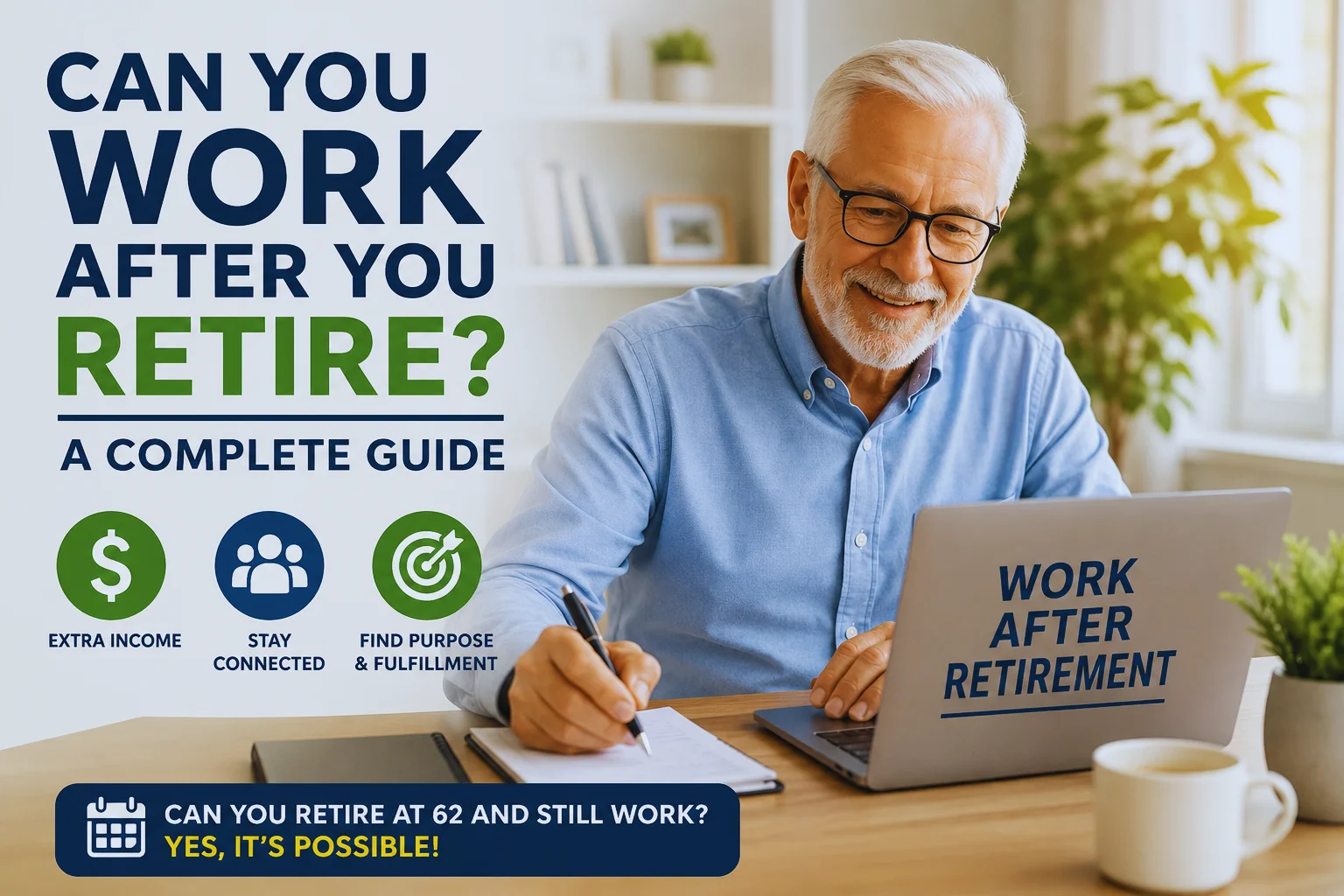
Can You Work After You Retire?
The simple answer to can you work after you retire is yes. Retirement does not necessarily prevent you from earning money through employment. Many older adults continue working after leaving their main careers.
Some retirees work because they want additional money for everyday expenses. Others want to travel, support family members, or increase their savings. Working can also provide a regular routine and opportunities to meet new people.
You do not necessarily need to return to the same type of job you had before retirement. Many retirees choose flexible positions that require fewer hours. Part-time employment can provide income while still leaving plenty of time for personal activities.
Remote work is another option for retirees. Jobs involving writing, customer service, bookkeeping, consulting, tutoring, and administrative tasks can sometimes be performed from home. This can be especially useful for people who prefer a flexible schedule.
Before accepting a job, retirees should consider how their earnings could affect taxes, pensions, or government benefits. The rules can vary depending on the benefit program and individual circumstances.
Can You Retire at 62 and Still Work?
A question many people ask is can you retire at 62 and still work? In many cases, yes. A person can leave their primary career at 62 and continue earning money through another job.
Retiring at 62 may allow someone to enjoy more free time while maintaining a source of income. However, choosing this option requires careful financial planning. Your retirement savings, employment income, and government benefits should all be considered together.
If you begin receiving Social Security retirement benefits before reaching full retirement age, working and earning above certain limits can affect the amount of benefits you receive temporarily. The exact rules depend on your age and circumstances.
Taxes are another important consideration. Your employment income may increase your overall taxable income. Because of this, it can be useful to estimate your expected income before deciding whether to work after claiming retirement benefits.
People considering retirement at 62 should also think about health insurance, retirement savings, and long-term expenses. Leaving a full-time career does not automatically mean that all financial responsibilities disappear.
The key point is that can you retire at 62 and still work is not simply a yes-or-no financial question. It is a decision that should take your income, benefits, savings, lifestyle, and future plans into account.
If You Retire, Can You Still Work?
Many people wonder, if you retire can you still work? Retirement can mean different things to different people. For some, it means completely leaving the workforce. For others, it means leaving a demanding full-time career while continuing with lighter work.
A retiree might choose to work only two or three days each week. Another person may work during certain seasons or take short-term contracts. These arrangements can provide income without creating the same pressure as a traditional full-time career.
Some retirees also use retirement as an opportunity to change careers. After spending decades in one profession, they may finally have the freedom to explore an interest they could not pursue earlier.
For example, a former teacher might become a private tutor. A retired manager might offer consulting services. Someone with creative skills might sell handmade products or provide freelance services online.
Therefore, if you retire can you still work depends largely on your personal goals and the rules connected to your retirement benefits. Retirement can be flexible rather than permanent.

Benefits of Working After Retirement
There are several reasons why people choose to continue working after retirement. The most obvious benefit is additional income. Even a part-time job can help cover household expenses and reduce the amount of money taken from retirement savings.
Another benefit is social interaction. Leaving a full-time job can sometimes reduce daily contact with coworkers and other people. A part-time position can provide opportunities to communicate, cooperate, and build new relationships.
Working can also give retirees a sense of purpose. After many years of following a professional routine, suddenly having no work responsibilities can feel unusual. A suitable job can provide structure and meaningful activities.
Continuing to work may also allow some people to delay using their retirement savings. If employment income covers some expenses, less money may need to be withdrawn from savings each month.
However, working after retirement should not become a source of unnecessary stress. The purpose of retirement is often to create more freedom and flexibility. A job should ideally support that goal rather than remove it.
Choosing the Right Type of Work After Retirement
The best job after retirement is usually one that matches your lifestyle, skills, and financial needs. You may not want the same responsibilities or schedule that you had during your main career.
Part-time work can be a good starting point. It allows you to earn income while maintaining more personal time. Flexible schedules can also make it easier to travel, spend time with family, or enjoy hobbies.
Consulting can be another option for experienced professionals. Years of knowledge can be valuable to companies that need advice without hiring someone permanently.
Freelancing is also becoming increasingly accessible. Writing, editing, design, bookkeeping, tutoring, and virtual assistance are examples of services that can sometimes be offered independently.
Before choosing a job, consider how many hours you actually want to work. Think about whether you prefer working from home, traveling to a workplace, or operating your own small business.


Welcome to USA Senior Citizen, a trusted resource dedicated to helping older adults live healthier, happier, and more independent lives.
Our mission is to provide valuable information, practical tips, and helpful guidance for seniors and their families. We cover important topics including **senior health, retirement planning, senior living, caregiving, technology for seniors, and everyday lifestyle solutions**.
At USA Senior Citizen, we believe aging is not about slowing down — it is about embracing new opportunities, staying connected, and enjoying every stage of life. Our goal is to make life easier for seniors by sharing simple, reliable, and easy-to-understand information that supports better decisions and improved well-being.
Whether you are looking for advice on maintaining a healthy lifestyle, exploring retirement options, learning new technology skills, or finding ways to stay active and independent, USA Senior Citizen is here to guide you.
We are committed to creating a supportive online community where seniors can discover useful resources, gain confidence, and continue living life with dignity and purpose.
USA Senior Citizen — Empowering Seniors to Live Better Every Day.