
Introduction
Hiring a caregiver is a decision because caregivers help seniors, patients, and people who need assistance with daily tasks. To make sure you hire someone, you need to do a proper background check. This is a part of the hiring process because it helps you verify a caregiver’s identity, qualifications, and work history before you hire them.
A caregiver’s job is very important. Requires a lot of responsibility, patience, and strong values. By doing a background check, you can learn about a candidate’s past work experience, any criminal history, and their certifications. You should also think about what makes a caregiver and what qualities they should have, such as being kind, patient, and reliable. Families and healthcare organizations should evaluate the qualities of a professional caregiver to find individuals who are trustworthy, skilled, ethical, and dedicated to providing exceptional care.

What Are Background Checks for Caregivers?
Background checks for caregivers are like screenings that help you verify the professional information of people who want to be caregivers. These checks help you confirm whether a caregiver has the experience, training and character to work with people who need help.
Caregiver background checks usually involve reviewing areas such as criminal records, work history, licenses, education, and references. The goal is to identify risks and build trust among caregivers, families, and healthcare organizations.
For seniors and patients who need help, safety and trust are extremely important. A caregiver may help with things like taking medicine, personal care, mobility support, cooking, and emotional support. Because caregivers often work closely with people in settings, you must carefully evaluate each applicant before making a hiring decision.
A complete screening process also helps create relationships at work. When you hire caregivers, it can reduce stress and create a safer and more supportive environment where professionals can focus on providing good care. A caregiver’s success depends on important qualities of a professional caregiver, such as patience, flexibility, problem-solving skills, and the ability to communicate effectively with patients and families.
Why Are Background Checks for Caregivers Important?
Protect Seniors and Patients From Unsafe Care
The main reason for caregiver screening is to protect people from unsafe situations. Seniors, people with disabilities, and patients often rely on caregivers for support. A thorough background check helps identify applicants who may have a history that could put clients at risk.
Looking at records, past work experience, and professional qualifications helps you make informed hiring decisions. A caregiver with a background and proper training is more likely to provide dependable and respectful assistance.
Safety is not about avoiding risks; it is also about creating an environment where patients feel comfortable and respected. Proper screening helps families and healthcare providers feel confident that their loved ones are receiving care from professionals.
Prevent Negligent Hiring Risks
Healthcare organizations and care agencies have a responsibility to hire employees. If you do not do screening, it can lead to serious consequences if a caregiver harms a patient or behaves unprofessionally. Asking the right caregiver interview questions helps employers understand a candidate’s experience, problem-solving skills, compassion, and ability to provide safe and professional care.
Background checks help you demonstrate that you took steps to evaluate candidates before hiring. This process reduces the possibility of hiring claims and helps organizations maintain strong safety standards. Effective caregiver interview questions allow families and healthcare organizations to evaluate a caregiver’s skills, personality, ethics, and readiness for handling daily care responsibilities.
A careful hiring process should include reviewing qualifications, conducting interviews, checking references, and understanding the candidate’s work history. Combining background screening with caregiver interview questions provides a complete picture of the applicant.
Build Trust Between Caregivers and Families
Trust is one of the important parts of caregiving. Families want to know that the person caring for their loved ones is honest, skilled, and dependable. A verified background check provides reassurance that the caregiver has been properly evaluated.
When families understand that caregivers have gone through screening, they often feel more comfortable allowing them into their homes. This trust creates relationships between caregivers, patients, and family members. A trustworthy caregiver also demonstrates characteristics, such as compassion, patience, reliability, and respect for others.
Reduce Caregiver Stress Through Safer Workplaces
Caregiving can be emotionally and physically demanding. Caregivers often experience pressure from managing patient needs, handling situations, and providing continuous support. A safe workplace with team members can help reduce unnecessary caregiver stress.
When you properly screen employees, you create an environment where caregivers can work with confidence. Knowing that coworkers have been evaluated and trained helps improve teamwork and workplace satisfaction.
Reducing caregiver stress is important because caregivers who feel supported are more likely to provide quality care. A positive work environment also helps prevent burnout. Improves long-term employee retention.
Maintain Professional Care Standards and Reputation
Healthcare organizations depend on their reputation. Families choose care providers based on trust, professionalism, and the quality of services offered. Hiring unreliable caregivers can damage an organization’s credibility.
Background checks help maintain standards by ensuring that caregivers meet required qualifications and demonstrate appropriate behavior. Along with screening, you should evaluate the qualities of a caregiver, such as empathy, communication skills, responsibility, and emotional stability.
Following hiring practices shows families that you value safety and high-quality care.
What Do Background Checks for Caregivers Include?
Criminal History and Record Verification
One of the important parts of caregiver screening is reviewing criminal history. You typically check whether an applicant has convictions or legal issues that may affect their ability to provide safe care.
A criminal background check does not automatically determine whether someone is suitable or unsuitable for caregiving. You should review information carefully. Consider the nature of any record, how long ago it occurred, and whether it relates to the responsibilities of the job.
The purpose of this process is to protect patients while also ensuring evaluation of each applicant.

Identity Verification and Personal Information Checks
Identity verification confirms that the caregiver is providing personal information during the application process. This step helps prevent fraud, incorrect records, and false claims about experience or qualifications.
You may verify details such as name, address history, and other identifying information to ensure that screening results belong to the individual. Accurate identity verification is an important step in creating a reliable hiring process.
Employment History and Experience Verification
A caregiver’s previous work experience provides information about their skills and reliability. You often verify past caregiving positions, job responsibilities, employment dates, and references.
Reviewing employment history helps determine whether the applicant has experience working with seniors, patients, or individuals with care needs. Previous employers can also provide insight into caregiving qualities, including dependability, communication abilities and professional behavior.
Professional License and Certification Checks
Many caregiving roles require certifications or training. You should verify whether applicants have completed courses and maintain valid credentials.
Certification checks help confirm that caregivers have the knowledge needed to provide effective support. Training in areas such as care, emergency response, or specialized health conditions can improve the quality of services provided. Qualified caregivers are more prepared to handle challenges while maintaining professional standards.
Education and Training Verification
Education and training records help you understand a caregiver’s preparation for the role. Some caregiving positions require education while others may require specific skill-based training programs.
Verifying education ensures that applicants have accurately represented their background and possess the knowledge needed for their responsibilities.
Professional development is also connected to the qualities of a caregiver, as skilled caregivers continue learning and improving their abilities.
Abuse and Neglect Registry Screening
Because caregivers work with individuals, checking abuse and neglect registries is an important safety measure. These records can help identify individuals who may have reports related to mistreatment or exploitation.
This screening protects patients. Ensures that caregivers understand the importance of dignity, respect, and safety.
Following caregiver ethics is essential because caregivers are trusted with personal information, private situations, and the well-being of those they support.
Legal Requirements for Caregiver Background Checks
Caregiver ethics are essential for maintaining trust, respect, and professionalism in caregiving. They guide caregivers to protect patient dignity, maintain confidentiality, and provide compassionate support. Understanding caregiver ethics helps employers identify professionals who value honesty, responsibility, respect, and the well-being of the individuals they serve. Strong caregiver ethics include respecting privacy, maintaining professional boundaries, treating patients with dignity, and making decisions that prioritize safety and quality care.
Fair Credit Reporting Act (FCRA) Compliance
The Fair Credit Reporting Act (FCRA) provides guidelines for conducting background checks through third-party screening companies. You must follow procedures, including informing applicants about the screening process and obtaining permission before conducting checks.
Applicants also have rights regarding the accuracy of information found during background screening. You should provide opportunities for candidates to respond to information before making final decisions. Following FCRA guidelines helps create a transparent hiring process.
Equal Employment Opportunity (EEO) Guidelines
Caregiver hiring decisions should follow employment opportunity principles. You should evaluate applicants based on job-related qualifications rather than unfair discrimination.
Background checks should be used as one part of the hiring process. You should consider skills, experience, interviews, and professional qualities when selecting caregivers.
A balanced approach helps organizations find professionals while maintaining ethical hiring practices.
State-Specific Caregiver Screening Laws
Caregiver background check requirements can vary depending on location. Many states have regulations related to healthcare workers, senior care providers, and home care employees.
You should understand requirements before hiring caregivers. Staying updated with regulations helps you avoid problems and maintain compliance.
Healthcare Background Check Regulations
Healthcare environments often require screening because employees work directly with patients. You may need to verify information depending on the type of care provided.
Following healthcare screening standards ensures that caregivers are prepared, qualified, and capable of delivering services.
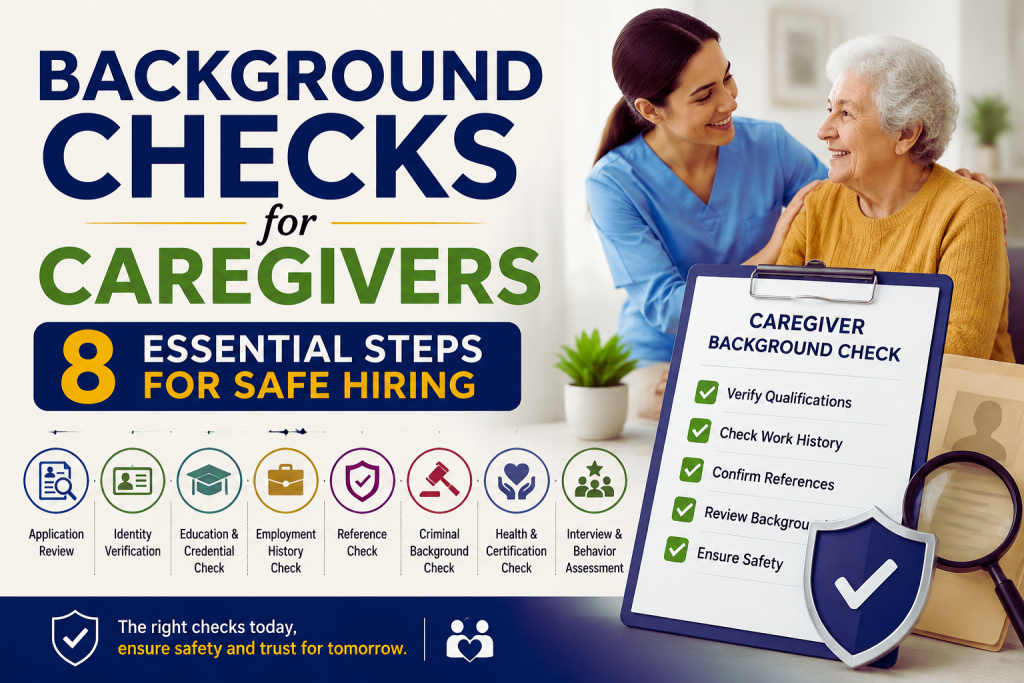
8 Essential Steps for Conducting Background Checks for Caregivers
A successful caregiver hiring process requires more than reviewing an application. You must follow an approach to confirm that candidates have the right skills, experience and professional values. A complete screening process helps identify caregivers while protecting patients, families and healthcare organizations.
Background checks for caregivers should be combined with interviews, reference verification and evaluation of qualities. Understanding a caregiver’s history and abilities allows you to make confident hiring decisions and create care environments.
Step 1: Verify the Caregiver’s Identity and Personal Details
The first step in caregiver screening is confirming the applicant’s identity and personal information. Identity verification ensures that background check results belong to the individual and prevents problems caused by inaccurate or false information.
Employers need to review details that caregivers provide during the application process. This includes identification, previous addresses, and other relevant records. Caregivers need to provide information so that employers can make good hiring decisions.
Accurate information helps employers hire caregivers. It also helps organizations maintain hiring standards. Every caregiver gets an evaluation based on accurate information.
Step 2: Review Criminal and Abuse Records
Reviewing criminal history and abuse records is one of the important parts of caregiver background screening. Caregivers often work with seniors, children, and individuals with health challenges. Employers need to understand whether a caregiver has any history that could create safety concerns.
Criminal records need to be evaluated. Employers should consider the type of offense, how much time has passed, and whether it relates to caregiving responsibilities. Checking abuse, neglect, and exploitation records is especially important. Caregivers must follow caregiver ethics and protect the dignity and safety of every individual they serve. Caregiver ethics play an important role in building positive relationships between caregivers, patients, and families by promoting trust, accountability, and respectful communication.
Step 3 is to confirm employment history and references.
Previous employment experience can reveal information about a caregiver’s reliability, skills, and professional behavior. Employers should verify caregiving positions, job duties, and employment duration.
Speaking with employers or professional references can provide additional details about the applicant’s performance. References may explain how the caregiver handled responsibilities, communicated with families, and responded to situations. A caregiver with a work history is more likely to demonstrate the qualities needed for long-term success in the profession.
Step 4 is to check certifications and professional qualifications.
Caregivers may require levels of training depending on their role and workplace. Employers should verify certifications, licenses, and completed training programs before hiring.
Professional qualifications show that a caregiver has learned skills related to patient safety, communication, personal care, and emergencies. Qualified caregivers are better prepared to handle responsibilities and provide consistent support.
Step 5 is to conduct caregiver interview questions.
Background checks provide information about a candidate’s history, but interviews help employers understand personality, communication style, and caregiving approach. Before hiring, employers should prepare thoughtful caregiver interview questions to identify qualified professionals who demonstrate patience, reliability, and strong caregiving values.
Effective caregiver interview questions should explore the applicant’s experience, problem-solving abilities, and understanding of needs. Employers may ask questions about caregiving situations, such as how the candidate handled an upset patient, managed emergencies, or supported a family during difficult times.
Step 6 is to evaluate caregiver ethics and professional behavior.
Professional ethics play a role in caregiving. Caregivers are trusted with information, private situations, and the daily needs of vulnerable individuals.
Strong caregiver ethics include honesty, respect, confidentiality, responsibility, and maintaining boundaries. During the hiring process, employers should evaluate whether candidates understand the importance of treating every patient with dignity. When hiring caregivers, evaluating caregiver ethics alongside skills and qualifications helps organizations choose professionals who provide safe, compassionate, and reliable care.
Step 7 is to review background check results.
After completing the screening process, employers should carefully review all information before making a decision. Background check results should be considered along with interviews, qualifications, references, and overall experience.
A single piece of information should not always determine whether someone is hired. Employers should evaluate the profile of the caregiver and consider whether the applicant can safely perform the responsibilities of the position.
Step 8 is to maintain documentation and follow-up checks.
Keeping records of background checks helps organizations maintain compliance and improve their hiring process. Employers should document screening steps, verification results, and hiring decisions.
Regular follow-up checks may also be beneficial for caregivers working in healthcare environments. Ongoing screening helps organizations maintain safety standards over time.
What disqualifies someone from becoming a caregiver?
Not every applicant will meet the requirements needed for caregiving positions. Certain issues may raise concerns about a candidate’s ability to provide reliable care.
Serious criminal convictions
It can prevent an individual from working as a caregiver if crimes involve violence, abuse, theft, or harm toward vulnerable individuals. Employers should evaluate history according to legal requirements and job responsibilities while maintaining a fair review process.
A history of abuse, neglect or exploitation can be a concern because caregivers are responsible for protecting vulnerable people. Individuals working in caregiving roles must demonstrate compassion, responsibility and respect for safety.
Providing information during hiring
It can damage trust and may result in disqualification. Caregivers need to be honest about their experience, qualifications and personal history.
Lack of training or qualifications can also be a problem. Caregivers need knowledge and skills to provide quality support. Applicants who do not meet education, certification, or training standards may not be suitable for specific caregiving roles.

How to Choose a Qualified and Professional Caregiver
Finding the right caregiver requires looking beyond background checks. Employers and families should also understand qualities that contribute to effective caregiving.
What makes a caregiver
Understanding what makes a good caregiver helps employers identify professionals who can provide excellent support. A good caregiver is compassionate, patient, dependable, and willing to understand the needs of each individual. Good caregivers communicate clearly, respect choices, and create a comfortable environment for those receiving care.
Understanding what makes a good caregiver helps families and healthcare organizations identify professionals who provide compassionate support, maintain patient safety, and build trusting relationships with those in their care. They also remain calm during situations and show emotional strength when handling challenges. The qualities of a caregiver include empathy, reliability, communication skills, patience, and responsibility.
The qualities of a professional caregiver include compassion, patience, reliability, strong communication skills, and the ability to provide respectful care while meeting the unique needs of each individual. When evaluating what makes a good caregiver, employers should consider both professional skills and personal qualities, including honesty, empathy, problem-solving abilities, and dedication
Qualities of a Professional Caregiver
The qualities of a professional caregiver include empathy, reliability, communication skills, patience, and responsibility. A professional caregiver understands that every person has needs and preferences. They provide care with respect while maintaining independence and dignity. Strong caregivers are also adaptable because healthcare situations can change quickly. The qualities of a professional caregiver go beyond basic skills; they include empathy, responsibility, emotional strength, adaptability, and a commitment to maintaining patient dignity.
Their ability to respond positively to challenges makes them valuable members of care teams. When interviewing caregivers, it is a good idea to ask the right questions. Along with background screening, asking the right questions during interviews helps employers understand whether a candidate is suitable for the role. A good caregiver demonstrates qualities such as reliability, compassion, patience, and adaptability while ensuring that every patient receives respectful and personalized care.
Recognizing the qualities of a professional caregiver allows families and healthcare organizations to choose caregivers who demonstrate professionalism, ethical behavior, and dedication to quality care. Understanding the qualities of a professional caregiver helps employers identify individuals who can deliver safe, dependable, and compassionate support to seniors and patients.
Important caregiver interview questions may include
How much caregiving experience do you have? How do you handle emotional situations with patients? How would you respond if a patient refuses care? How do you communicate with family members? What steps do you take to maintain safety?
Using detailed caregiver interview questions along with background checks helps ensure that employers choose caregivers who can deliver trustworthy and compassionate support. These questions help reveal a caregiver’s experience, attitude, and approach to providing support. Background checks can help reduce caregiver stress. Caregiving can be stressful. Stress can affect both caregivers and the quality of care they provide. What makes a good caregiver is a combination of compassion, patience, reliability, and professional skills that allow caregivers to provide safe, respectful, and personalized support to those who depend on them.
How Background Checks Help Reduce Caregiver Stress
A proper hiring process helps reduce pressure by ensuring that qualified and trustworthy professionals are selected. When caregivers work in environments with reliable teams, they experience greater confidence and job satisfaction.
Proper screening also helps families feel secure, reducing concerns about caregiver performance and safety. Supporting caregivers through hiring practices can improve workplace morale and create healthier caregiving relationships. The foundation of what makes a good caregiver includes compassion, emotional strength, patience, and a commitment to improving the quality of life for those in their care.
Best Practices for Caregiver Background Screening
First, follow compliance requirements. Organizations should always follow state regulations when conducting background checks.
Second, use background screening services. Professional screening providers can help organizations complete legally compliant background checks.
Third, review results fairly and consistently. Every applicant should be evaluated using the standards. Fair screening practices support hiring decisions.
Finally, update background checks. Ongoing screening can help organizations maintain care environments and ensure continued compliance. This approach ensures that caregivers continue meeting expectations throughout their employment.
Conclusion
Background checks for caregivers are very important for making sure that the places where caregivers work are safe and reliable. A good checking process helps people who are hiring to make sure that a caregiver has the skills, the right experience, and a good history before they decide to hire them. When background checks are used with questions during interviews, organizations can learn more about a person’s abilities, their beliefs, and how well they can take care of others. Understanding the qualities of a professional caregiver helps families and healthcare providers choose skilled individuals who provide compassionate, reliable, and ethical care while ensuring patient safety and comfort.
What makes a good caregiver is the ability to combine practical caregiving skills with kindness, respect, and emotional support while meeting the unique needs of each individual. When hiring caregivers, understanding what makes a good caregiver allows employers to recognize individuals who demonstrate empathy, responsibility, professionalism, and strong ethical values.
Knowing what makes a good caregiver is important. Things like being kind, being patient, being responsible, and being able to talk help make sure that people who need care get the help they need. Also, following rules about how caregivers should act and knowing what it means to be a professional caregiver is important for building trust and keeping good relationships between caregivers and the people they help.
A full process for checking caregivers does more than stop problems. It makes people feel more confident, helps reduce stress for caregivers, makes the workplace safer, and makes the care better overall. When families and health care groups take the time to do checks and hire people in a responsible way, they build a strong base for care that is kind, dependable, and trustworthy.
FAQs
What disqualifies you from being a caregiver?
Individuals may be disqualified from becoming caregivers for serious criminal offenses, a history of abuse or neglect, financial exploitation, falsifying information during the hiring process, or failing to meet required certifications and qualifications. Employers usually review each situation carefully based on the law and the responsibilities of the caregiving role.
What do they look for in a background check?
A caregiver background check typically reviews areas, including criminal history, identity verification, employment records, professional licenses, certifications, education, and abuse or neglect registries. These checks help employers confirm that candidates have the experience, honesty and qualifications needed to provide professional care.
What are three signs of caregiver stress?
Common signs of caregiver stress include tiredness or lack of energy, increased feelings of frustration or anxiety, and changes in sleep or mood. Caregivers experiencing stress may also lose interest in activities they previously enjoyed or feel overwhelmed by their responsibilities.
What is the best way to identify family caregivers who are experiencing stress due to caregiver burden?
The best way to identify caregiver stress is through conversations, observation of emotional and physical changes, and asking caregivers about their daily challenges. Healthcare professionals and families can use caregiver stress assessments to discuss workload concerns and provide support to recognize when additional help may be needed.
How long does a caregiver background check take?
The time required for a caregiver background check depends on the type of screening and the records being reviewed. Some checks may be completed within a day, while more detailed screenings involving multiple databases, employment verification, or licensing checks may take longer.
What information appears on a caregiver background check?
A caregiver background check may include records, identity verification, employment history, professional certifications, education verification, and abuse or neglect registry checks. These details help employers evaluate whether a caregiver is suitable for working with individuals.
Can someone with a record become a caregiver?
A person with a record may still qualify as a caregiver depending on the type of offense, how long ago it occurred, state regulations, and employer policies. Each case should be reviewed individually to determine whether the person can safely perform caregiving responsibilities.
Are background checks required for all caregivers?
Background check requirements for caregivers are different depending on the laws in your area and your employer. The kind of caregiving job you have. A lot of healthcare places, home care agencies, and senior care providers want to do a background check on you before they hire you as a caregiver.
How can families make sure a caregiver is trustworthy?
Families can check a caregiver’s past by doing a background check, talking to the people they used to work for, checking their references, making sure they have the right certifications, and asking them a lot of questions during the interview. These steps help families pick a caregiver who’s trustworthy and qualified to take care of their loved ones.
Why are background checks so important when hiring caregivers?
Background checks help keep seniors and patients safe by making sure caregivers have the qualifications, a good work history, and no bad records that could put someone in danger. They also help families and organizations trust the caregivers and make sure they give the best possible care.

Welcome to USA Senior Citizen, a trusted resource dedicated to helping older adults live healthier, happier, and more independent lives.
Our mission is to provide valuable information, practical tips, and helpful guidance for seniors and their families. We cover important topics including **senior health, retirement planning, senior living, caregiving, technology for seniors, and everyday lifestyle solutions**.
At USA Senior Citizen, we believe aging is not about slowing down — it is about embracing new opportunities, staying connected, and enjoying every stage of life. Our goal is to make life easier for seniors by sharing simple, reliable, and easy-to-understand information that supports better decisions and improved well-being.
Whether you are looking for advice on maintaining a healthy lifestyle, exploring retirement options, learning new technology skills, or finding ways to stay active and independent, USA Senior Citizen is here to guide you.
We are committed to creating a supportive online community where seniors can discover useful resources, gain confidence, and continue living life with dignity and purpose.
USA Senior Citizen — Empowering Seniors to Live Better Every Day.