
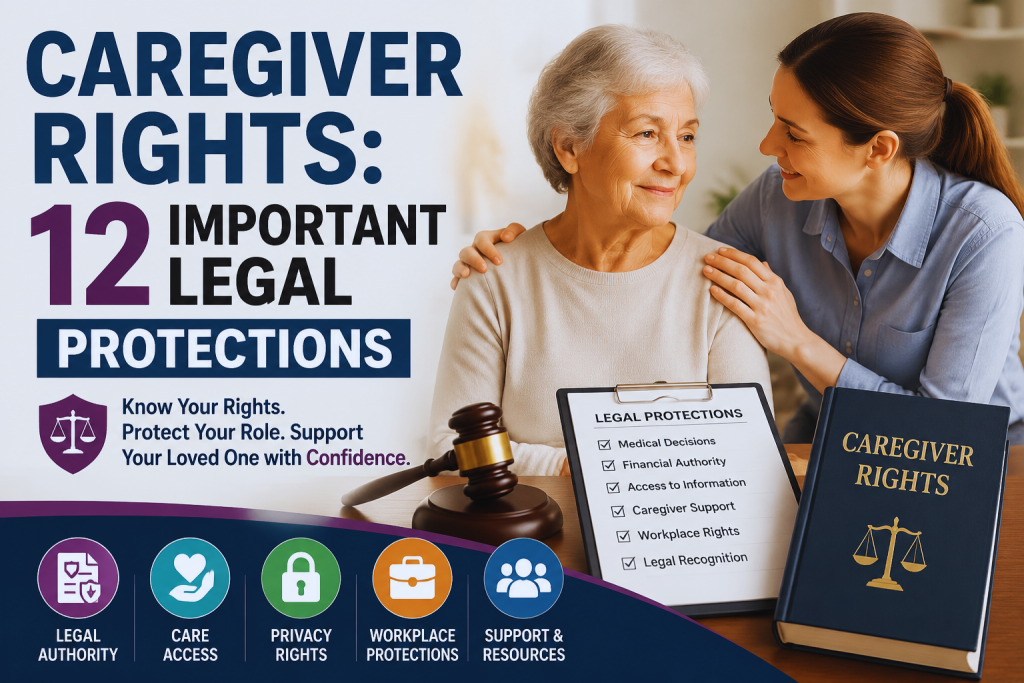
Understanding Caregiver Rights and Legal Protections
Taking care of an aging parent, spouse, or loved one is a responsibility, but many people who do this work do not fully understand the laws that protect them. Knowing your rights as a caregiver can help you make decisions, keep yourself safe, and make sure your loved one gets the best care possible. When family members become caregivers, they often handle appointments, finances, daily tasks, and emotional support, but they may face challenges if they are unaware of their legal rights.
Understanding your rights as a family caregiver is important because taking care of someone is not about helping with physical tasks. Caregivers may need permission to talk to healthcare providers, handle money, or make decisions in emergencies. Planning with papers, such as power of attorney and advance care planning, can prevent confusion and protect both caregivers and seniors.
This guide explains protections for caregivers, the role of legal planning, and how caregivers can prepare for their responsibilities while respecting the wishes and independence of their loved ones.

What Are Caregiver Rights?
Caregiver rights are the laws, personal rights, and ethical protections that protect people who care for family members or loved ones. These rights help caregivers participate in decisions, get the information they need, and get support while doing their job.
Many family caregivers take care of their loved ones at home without pay, often while working, taking care of their families, and dealing with their own needs. Without knowing their rights, caregivers may have trouble dealing with the healthcare system, money issues, or disagreements with family members.
The rights of family caregivers allow them to have a voice in the care process while still respecting the senior’s personal choices and legal independence. These rights may vary depending on where you live. They generally include getting information, being part of care discussions, being protected from unfair treatment, and being able to get help when needed.
Caregivers should understand that taking care of someone does not automatically give them the right to make all decisions. Legal arrangements are often necessary to ensure caregivers can act when their loved one cannot make decisions on their own.
Why Family Caregivers Need Legal Protection and Support
Family caregivers often have to handle tasks like scheduling medical visits, organizing medications, dealing with insurance paperwork, and managing daily care needs. While these tasks are important, they can be overwhelming without legal preparation.
Having clear legal protections helps caregivers avoid stress and family conflicts. For example, a caregiver may know what their loved one wants regarding treatment, but without proper authorization, healthcare providers may not be able to share certain information or let the caregiver make decisions.
This is why preparing documents for caregivers is an essential step in senior care planning. Documents like healthcare authorizations, power of attorney forms, and advance directives create a plan for future situations.
Legal preparation also protects individuals by ensuring their wishes are followed. By leaving important decisions to chance, families can discuss preferences early and create a plan that respects the senior’s values, needs, and personal choices.
1.Right to Be Included in Care Decisions
One of the important rights of caregivers is being part of discussions about their loved one’s care. When a family member becomes a caregiver, they often have valuable knowledge about the senior’s daily habits, health concerns, and personal preferences.
Being part of care decisions allows caregivers to share information with doctors, nurses, and other healthcare professionals. For example, caregivers may notice changes in memory, mobility, behavior, or medication reactions that the senior may not mention during appointments.
However, caregivers should remember that being part of care decisions depends on the senior’s wishes and legal arrangements. If an elderly person is capable of making their decisions, their choices should remain the priority.
Creating communication between seniors, caregivers, and healthcare providers can improve care quality and prevent misunderstandings. Planning can also help families understand how decisions should be handled if a senior’s health condition changes in the future.

2.To Access Important Care Information
Caregivers often need accurate information to provide safe and effective support. Understanding conditions, treatment plans, medications, and healthcare instructions allows caregivers to make better decisions and provide appropriate assistance.
However, healthcare privacy laws may limit the information caregivers can access unless proper permission has been provided. This is where legal planning becomes important.
Documents like healthcare authorization forms and other legal documents for caregivers allow approved individuals to communicate with healthcare professionals and get updates. Without these documents, caregivers may experience difficulties when trying to help during situations.
Having access to care information also helps caregivers prepare for emergencies. Whether managing medications, attending appointments, or coordinating home care services, informed caregivers can provide support for elderly loved ones.
3.Right to Prepare Documents for Caregiver Protection
Preparing the paperwork is one of the most important steps caregivers can take. Legal documents for caregivers provide clarity, reduce family disagreements, and ensure important decisions are handled according to the senior’s wishes. Legal documents for caregivers can provide clarity and protection by outlining who has the authority to make healthcare, financial, and personal decisions for an aging loved one.
Preparing legal documents for caregivers in advance can reduce stress and prevent confusion during medical emergencies or major life changes. Every family’s situation is different. Common documents may include healthcare directives, financial authorizations, caregiver agreements, and power of attorney forms. These documents help establish who can assist with responsibilities and what decisions can be made.
Without documentation, caregivers may struggle to manage financial matters, communicate with healthcare providers, or handle emergencies. This can create delays during situations when quick decisions are needed.
Important legal documents for caregivers may include power of attorney, advance directives, healthcare authorization forms, and other planning documents that support responsible caregiving. Starting planning early gives families time to discuss expectations and make thoughtful choices. Waiting until a crisis happens can make the process more stressful and complicated.
4.Right to Establish Power of Attorney for Parents
A power of attorney for elderly parents is one of the most valuable legal tools available for caregivers. It allows a trusted person to make decisions or manage specific responsibilities on behalf of an elderly individual when legally authorized. Caregivers should understand how a power of attorney for elderly parents works because proper legal planning can make caregiving responsibilities easier and more organized.
There are different types of power of attorney. A financial power of attorney may allow caregivers to help manage bills, banking matters, property issues, and other financial responsibilities. A healthcare power of attorney allows an authorized person to make decisions when the elderly individual cannot communicate their choices.
Establishing a power of attorney for parents does not remove their independence. Instead, it creates a safety system that allows trusted caregivers to assist when needed. A power of attorney for elderly parents is an important legal document that can protect seniors and help families manage unexpected situations with confidence.
Families should discuss power of attorney decisions carefully. Choose someone responsible, trustworthy, and willing to respect the seniors’ preferences.
5.Right to Participate in Advance Care Planning
Advance care planning is a process that allows individuals to communicate their healthcare preferences before a serious illness or emergency occurs. It helps caregivers understand what their loved one wants and reduces uncertainty during situations.
Through advance care planning, seniors can discuss their wishes regarding treatments, emergency care, long-term support, and quality-of-life decisions. These conversations can then be documented through forms such as advance directives or living wills.
For caregivers, advance care planning provides guidance and confidence. By making difficult decisions without knowing their loved one’s wishes, caregivers have a clear understanding of what matters most to the person they are supporting.
Starting these conversations early allows families to make decisions while the senior is still able to express their preferences.
6.Right to Receive Caregiver Support and Resources
Caregiving can be physically and emotionally demanding, which is why caregivers have the right to seek support and resources. Many caregivers focus so much on their loved ones’ needs that they ignore their own health and well-being. Having the right legal documents for caregivers allows family members to handle important responsibilities while protecting the rights and preferences of seniors.
Support may come from family members, community organizations, healthcare professionals, and caregiver assistance programs. Learning about resources can help caregivers manage responsibilities more effectively. Legal planning, including preparing legal documents for caregivers, can make caregiving responsibilities easier by providing clear guidance for future decisions.
Understanding family caregiver rights also means recognizing that caregivers deserve guidance, education, and emotional support. Asking for help is a part of providing quality care. Many caregivers experience less stress when legal documents for caregivers are properly prepared because they know how to manage healthcare, finances, and personal matters.
With knowledge, legal preparation and access to resources, caregivers can create a safer and more supportive environment for both themselves and their elderly loved ones.
7.Right to Protect Your Own Health and Well-Being
While caring for a parent or loved one is a rewarding responsibility, caregivers must also understand their right to protect their own physical and emotional health. Many family caregivers dedicate most of their time and energy to supporting others while ignoring their needs. Over time, this can lead to stress, exhaustion, and caregiver burnout.
Understanding caregiver rights means recognizing that caregivers also deserve rest, support, and personal time. A healthy caregiver is better able to provide quality care and make decisions. Taking breaks, seeking assistance from family members, and using caregiver resources are important parts of maintaining balance.
Family caregiver rights include the ability to ask for support and create boundaries. Caregivers should not feel pressured to handle every responsibility. Sharing caregiving duties with relatives, hiring assistance when possible, or joining caregiver support groups can make the caregiving journey more manageable.
Protecting well-being also helps caregivers continue providing long-term support without sacrificing their own health. Caregiving should be a partnership where both the senior and the caregiver receive attention and respect.
8.Right to Respectful Treatment and Fair Communication
Every caregiver has the right to be treated with respect by family members, healthcare professionals, and other individuals involved in care. Unfortunately, disagreements can sometimes occur when multiple family members have opinions about an elderly loved one’s needs.
Clear communication is a part of protecting family caregiver rights. Caregivers should have opportunities to share their observations, concerns, and suggestions regarding care, medical appointments, and lifestyle decisions.
Respectful communication also means recognizing the role caregivers play. A family member who assists with meals, medications, transportation, and emotional support contributes valuable time and effort that should be appreciated.
When conflicts arise, families can use discussions, professional mediation, or guidance from senior care experts to find solutions. Establishing responsibilities through agreements and proper planning can prevent misunderstandings and create a healthier caregiving environment.
9.Right to Understand Responsibilities and Benefits
Caring for a parent or loved one can be very tough. Many people who take care of their parents have to help them pay bills, manage their money, organize their insurance information, and make plans for future care costs.
Caring for parents is a big job, and it is important to understand what you can and cannot do. You should know what you are allowed to do and what you are not allowed to do. If you do not have the papers, you might have trouble getting into their accounts or managing their money.
A power of attorney is a document that lets you help your elderly parents make decisions about their money when they need you to. This paper lets someone they trust handle money tasks.
Families should talk about how they will pay for care. Making a plan can reduce stress. Make sure everyone knows how things will be paid for.
Some people who take care of their parents might be able to get help with money or taxes. Learning about what’s available can help them make good choices and not have too much financial pressure.
10.Right to Privacy and Confidentiality
Keeping things private is very important when taking care of elderly parents. People who take care of their parents often have to deal with sensitive information like medical records and personal details. Understanding how to keep things private helps build trust.
Some papers can help people who take care of their parents get the right to see private information. These papers let them talk to doctors and other medical people while still following the rules.
People who take care of their parents should keep important papers safe and not share personal information without permission. This is especially important when dealing with records or money.
Respecting people’s privacy is also important for building a relationship with them. Elderly people deserve to be treated with dignity and have control over their information even when they need help.
11.Right to Make Emergency Decisions When Legally Authorized
Emergencies can happen when taking care of parents, especially when their health is changing. People who take care of their parents might have to make quick decisions about medical care or other important things.
However, just because you are a family member does not mean you have the right to make decisions. You need to plan to make sure you can act when you need to.
A power of attorney is a document that can help people who take care of their parents make decisions in an emergency. This document says who can make decisions and what they can do.
This is why it is so important to plan. Talking about what you want before an emergency happens can help people who take care of their parents make good decisions.
Making a plan ahead of time can reduce confusion and help families deal with difficult situations.
12.Right to Seek Help and Caregiver Advocacy Support
People who take care of their elderly parents have the right to get professional help when they need it. Laws about taking care of parents can be complicated, and understanding them can help people avoid mistakes.
A lawyer who specializes in care or a caregiver support group can provide guidance on important things like legal papers, medical decisions, and money planning.
Getting help does not mean you are looking for trouble. It can help families make plans that protect everyone.
Knowing your rights as a caregiver can help you stand up for yourself and your elderly loved one.
Essential Legal Documents Every Caregiver Should Have
Power of Attorney for Elderly Parents
A power of attorney is an important document that lets you help your elderly parents make decisions about their money or medical care. It lets someone they trust handle tasks. Creating a power of attorney for elderly parents can help ensure that trusted family members are legally prepared to manage healthcare, financial, and personal decisions when seniors are unable to make decisions themselves.
A power of attorney for elderly parents allows families to plan ahead by giving a trusted person legal authority to help manage important healthcare and financial decisions when needed. Having this document can prevent problems and disagreements when emergencies happen.
Advance Care Planning Documents
Advance care planning is when elderly people talk about what they want to happen if they get very sick or hurt. This can include things like what kind of care they want or do not want.
For people who take care of their parents, advance care planning guides what to do. It makes sure that medical decisions are what the elderly person wants. Discussing a power of attorney for elderly parents early can reduce stress during emergencies and ensure their wishes are respected. Many caregivers consider creating a power of attorney for elderly parents as part of long-term care planning to avoid confusion about who can make important decisions.
Talking about these plans ahead of time can help everyone communicate better.
HIPAA Authorization Forms
HIPAA authorization forms are papers that let people who take care of their parents get certain medical information. These papers can make it easier to talk to doctors and get care.
Without these papers, it can be hard to get the information you need.
Caregiver Agreements
Caregiver agreements are papers that say what the caregiver will do and how they will be paid. These papers can help prevent misunderstandings and make things more organized.
A written agreement can be very helpful when one family member is doing most of the caregiving.

How to Assert Your Rights as a Family Caregiver
Understanding your rights is the first step, but you also need to know how to protect them. Keeping papers organized and learning about laws that affect caregivers can help.
Making and updating documents can help make sure everything is clear. Families should look at these documents regularly because things can change.
People who take care of their parents should also talk to their relatives about what they expect and what they will do. This can help prevent problems and make sure everyone is on the same page.
Common Legal Challenges Family Caregivers Face
People who take care of their parents often have problems with things like making decisions, managing money, and dealing with family disagreements. Without planning, even people who are trying to help can have trouble.
Common problems include disagreements about care, not being able to get information, and not knowing what to do about money or medical care.
Making documents and planning can help families deal with these problems.
Where Can Caregivers Find Support and Guidance?
People who take care of their parents do not have to do everything alone. There are resources available to help them understand their responsibilities and provide better care.
They can get help from doctors, caregiver support groups, community programs, and lawyers who specialize in care. These resources can provide education, emotional support, and practical help.
Learning about caregiver rights and what help is available can make things easier for people who take care of their parents.
Conclusion
Understanding caregiver rights is very important for anyone who takes care of a parent or loved one. People who take care of their parents have many responsibilities, but they also deserve to be recognized and protected. Having a power of attorney for elderly parents in place can provide caregivers with the legal support needed to handle medical appointments, financial matters, and daily responsibilities.
Making legal documents and planning can help families avoid problems and make decisions. These steps make sure that people who take care of their parents have the authority they need while still respecting the wishes and independence of their loved ones.
By learning about caregiver rights, staying organized, and communicating well, people who take care of their parents can provide better care and support. Knowing your rights can protect you. Make things better for everyone.
FAQs
What rights do family caregivers have?
Family caregivers have the right to be part of the discussions about the care of their loved ones to get the support they need, to get important information when they are allowed to, and to get protection by planning. When family caregivers understand their rights, they can make decisions that respect the independence and preferences of their loved ones.
Can caregivers make decisions without power of attorney?
Most of the time, caregivers cannot make decisions without the proper authority. Caregivers may need a power of attorney for their parents or a healthcare authorization document to make healthcare choices when their loved ones cannot make them themselves.
What legal documents should caregivers prepare for parents?
There are some legal documents that caregivers should have, such as power of attorney, healthcare directives, advance directives, HIPAA authorization forms, and caregiver agreements. These documents help protect both caregivers and elderly individuals by making it clear who is responsible for what and who gets to make decisions.
Why is advance care planning important for caregivers?
Advance care planning helps seniors tell their caregivers what kind of healthcare they want before a medical crisis happens. This gives caregivers an idea of what their loved ones want and reduces stress when they have to make tough healthcare decisions. Advance care planning is very important for caregivers because it helps them understand what their loved ones want.
What are the responsibilities of a family caregiver?
A family caregiver does a lot of things, such as helping with activities, taking their loved ones to medical appointments, managing their medication, driving them around, giving them emotional support, and helping with financial organization. When caregivers understand their rights, they can balance their responsibilities. Take care of themselves at the same time. Family caregivers have a lot of responsibilities. They need to make sure they are taking care of themselves too.
What are the signs of caregiver burnout?
Caregiver burnout can happen when caregivers are exhausted all the time, stressed, frustrated, have sleep problems, experience changes, and feel overwhelmed by their responsibilities. Caregivers should get help. Take care of their own health so they can keep giving care to their loved ones. Caregivers need to watch out for these signs of burnout and take care of themselves.
What are the 5 qualities of a caregiver?
A good caregiver is usually someone compassionate, patient, a good communicator, reliable, and empathetic. These qualities help caregivers give their loved ones the respect and support they need. A good caregiver has these qualities. They help them take good care of their loved ones.
How can caregivers protect their rights?
Caregivers can protect their rights by getting the right legal documents, understanding what they are responsible for, keeping important records organized, talking to their family members, and getting legal advice when they need it. Caregivers need to protect their rights so they can take care of their loved ones.
Can family caregivers receive assistance?
Some family caregivers may be able to get assistance, benefits, or support programs depending on where they live and their personal circumstances. Looking into the available resources can help make caregiving less expensive. Family caregivers may be able to get help with the costs of caregiving. They should look into it.

Welcome to USA Senior Citizen, a trusted resource dedicated to helping older adults live healthier, happier, and more independent lives.
Our mission is to provide valuable information, practical tips, and helpful guidance for seniors and their families. We cover important topics including **senior health, retirement planning, senior living, caregiving, technology for seniors, and everyday lifestyle solutions**.
At USA Senior Citizen, we believe aging is not about slowing down — it is about embracing new opportunities, staying connected, and enjoying every stage of life. Our goal is to make life easier for seniors by sharing simple, reliable, and easy-to-understand information that supports better decisions and improved well-being.
Whether you are looking for advice on maintaining a healthy lifestyle, exploring retirement options, learning new technology skills, or finding ways to stay active and independent, USA Senior Citizen is here to guide you.
We are committed to creating a supportive online community where seniors can discover useful resources, gain confidence, and continue living life with dignity and purpose.
USA Senior Citizen — Empowering Seniors to Live Better Every Day.