
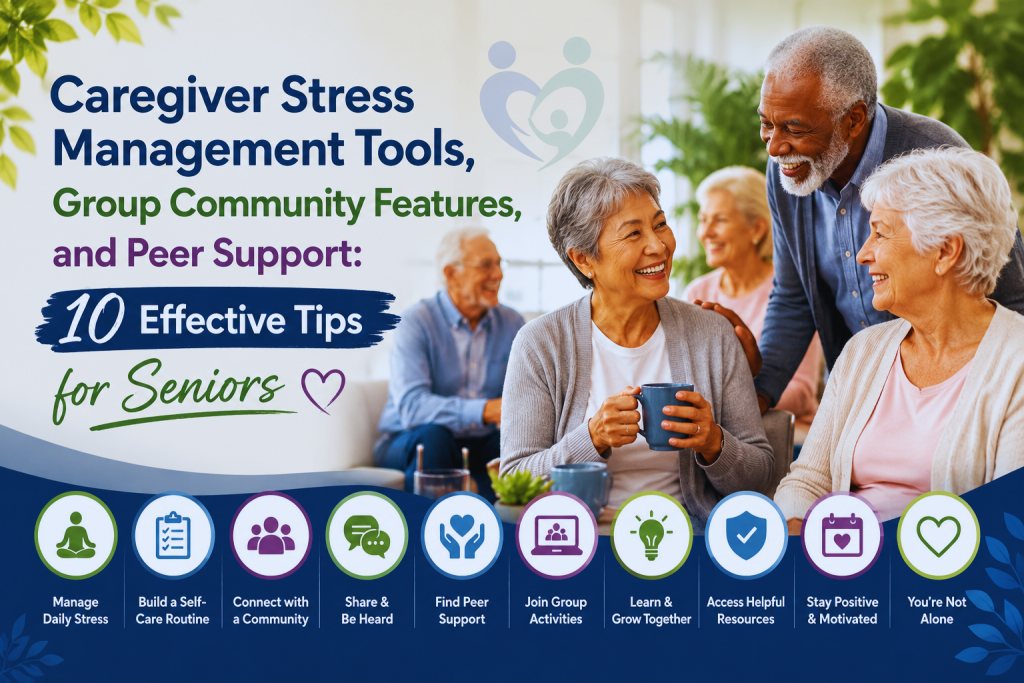
Understanding Caregiver Stress and Finding Support
Caregiver stress management tools group community features peer support can give family caregivers practical resources, emotional encouragement, and opportunities to connect with others facing similar challenges. Caring for an aging parent, spouse, relative, or another loved one can be deeply meaningful, but it can also be challenging. Family caregivers often manage medical appointments, household responsibilities, medications, transportation, personal care, and emotional support while trying to maintain their own routines. Over time, these responsibilities can contribute to caregiver stress, exhaustion, and burnout.
Fortunately, caregivers do not have to manage everything alone. Caregiver stress management tools, support groups, community features, and peer support can help caregivers organize responsibilities, find useful resources, and build connections with others. Understanding the signs of stress and knowing where to find help can make senior caregiving more manageable.
This guide explores five important areas of senior caregiving support, including caregiver stress, stress management tools, caregiver support groups, peer communities, and respite care. By understanding these resources, family caregivers can make more informed decisions about their own well-being and the care of their loved ones.

What Is Caregiver Stress and How Does It Affect Family Caregivers?
Caregiver stress refers to the physical and emotional strain that can develop when someone regularly provides care for another person. Family caregivers may experience stress when their responsibilities become difficult to balance with work, relationships, finances, and personal needs.
Caregiving demands can vary significantly. Some seniors may need occasional help with transportation or household tasks, while others may require daily assistance with bathing, dressing, meals, medications, or mobility.
Common Signs of Caregiver Stress
Recognizing caregiver stress early can help families seek support before the situation becomes overwhelming. Common signs may include:
- Feeling tired or overwhelmed most of the time
- Difficulty sleeping
- Increased irritability or frustration
- Feeling anxious or sad
- Losing interest in activities you previously enjoyed
- Having difficulty concentrating
- Feeling isolated from friends and family
- Worrying constantly about your loved one’s needs
- Finding it difficult to take breaks
- Feeling guilty when focusing on your own needs
Caregivers should not ignore persistent or severe emotional distress. Speaking with a healthcare professional or qualified counselor can be an important part of getting appropriate support.
How Can Caregiver Stress Management Tools Reduce Daily Pressure?
The right caregiver stress management tools can help families organize responsibilities, communicate more effectively, and create time for rest.
Technology and simple organizational methods can both play a role. A caregiver does not necessarily need complicated software or expensive services. Even a shared calendar, written checklist, or regular family meeting can make caregiving responsibilities easier to manage.
Useful Caregiver Stress Management Tools
Consider using:
- Shared calendars: Coordinate appointments, medications, errands, and visits.
- Task lists: Break large responsibilities into smaller, manageable tasks.
- Medication reminders: Help organize medication schedules and refill reminders.
- Care journals: Keep track of changes in symptoms, routines, meals, or other important observations.
- Communication tools: Allow family members to share updates and coordinate responsibilities.
- Care planning documents: Keep important information in one accessible place.
- Relaxation tools: Breathing exercises, meditation, gentle stretching, and short periods of quiet can provide opportunities to decompress.
Build a Realistic Routine
A routine can help reduce the feeling that everything needs to be handled at once. Start by identifying essential daily tasks and separating them from responsibilities that can wait.
For example, medication management and medical appointments may be priorities, while less urgent household tasks could potentially be delegated or scheduled for another day.
The goal isn’t to create a perfect schedule. Instead, care planning should make everyday responsibilities clearer and more manageable.
How Do Caregiver Support Groups Provide Emotional Support?
A caregiver support group brings people together who understand the challenges of caring for an aging or dependent loved one. Groups may meet in person, online, or through community organizations.
For some caregivers, simply knowing that others have experienced similar challenges can provide significant emotional relief.
What Can Caregiver Groups Offer?
Depending on the organization, a group may provide:
- Peer discussions
- Emotional encouragement
- Educational sessions
- Caregiving resources
- Community referrals
- Problem-solving ideas
- Information about local senior services
- Opportunities to build friendships
Some groups focus on specific caregiving situations, while others are open to family caregivers with different experiences.
Online vs. In-Person Support Groups
Both formats can be useful.
In-person groups may provide stronger face-to-face connections and opportunities to develop local relationships. They can also help caregivers discover nearby services.
Online groups can be convenient for caregivers who cannot easily leave home. Virtual communities may offer discussion boards, video meetings, messaging, and educational resources.
When choosing a group, consider its schedule, moderation, privacy policies, membership requirements, and the type of support offered.
What Are the Benefits of Peer Support for Family Caregivers?
Peer support is different from professional healthcare or financial advice. Instead, it allows caregivers to connect with people who have firsthand experience with caregiving challenges.
A caregiver might discover practical ideas for organizing appointments, communicating with siblings, managing difficult routines, or finding time for personal activities.
How Peer Communities Can Help
A strong caregiver community may offer several benefits:
Reduced isolation: Caregivers can connect with people who understand their experiences.
Practical ideas: Other caregivers may share strategies that have worked for them.
Emotional encouragement: Conversations with peers can help caregivers feel heard and understood.
Resource sharing: Members may discuss community organizations, support programs, home care services, or respite resources.
Motivation: Regular group participation can encourage caregivers to continue looking after their own well-being.
However, peer advice should not replace professional medical, legal, or financial guidance. Every senior’s situation is different, so caregivers should verify important recommendations with qualified professionals.
Look for Healthy Community Features
When evaluating an online or local caregiver community, look for useful group community features, such as:
- Active and respectful discussions
- Clear community guidelines
- Qualified moderators
- Privacy protections
- Searchable resources
- Educational events
- Local resource directories
- Peer-to-peer discussions
- Virtual meetings
- Easy reporting of inappropriate content
A supportive community should make caregivers feel respected rather than judged.

How Can Respite Care Help Prevent Caregiver Burnout?
One of the most valuable forms of senior caregiving support is respite care. Respite care provides temporary assistance so a family caregiver can take a break from their usual responsibilities.
A break might be used to rest, attend an appointment, go to work, spend time with family, exercise, or simply have uninterrupted personal time.
Types of Respite Care
Depending on local availability and the senior’s needs, respite options may include:
- In-home respite services
- Adult day programs
- Short-term residential care
- Assistance from relatives or friends
- Professional home care services
The appropriate option depends on the senior’s care requirements and the caregiver’s circumstances.
What Should Families Consider?
Before choosing respite care, families should research:
- Eligibility: Does the senior qualify for the service?
- Costs: Is the service private-pay, subsidized, or covered by a particular program?
- Availability: How often and how quickly can care be arranged?
- Services: What types of assistance are included?
- Staff: Are caregivers trained and qualified for the senior’s needs?
- Schedule: Can the service accommodate the caregiver’s required break?
- Location: Is the service available in the senior’s home or nearby?
Taking a break isn’t selfish. Regular respite can give caregivers an opportunity to recharge and continue providing care more sustainably.
Creating a Stronger Caregiver Support System
Managing caregiver stress usually requires more than one solution. A combination of stress management tools, caregiver support groups, peer support, care planning, and respite care can create a stronger support network.
Start by identifying the most immediate challenge. If organization is the problem, try a shared calendar or care-planning system. If isolation is the biggest concern, consider joining a caregiver group. If exhaustion is becoming difficult to manage, explore respite care or ask family members to share responsibilities.
Caregivers should also remember that asking for help early can be easier than waiting until stress becomes overwhelming.
Practical Caregiving Resources and Senior Care Options
Providing care for an older loved one involves more than managing day-to-day responsibilities. Families may also need to consider emotional and financial support, care planning, home care, respite care, senior housing, costs, amenities, and eligibility requirements.
After addressing caregiver stress and the importance of peer support, the next step is understanding the practical resources available. Choosing the right combination of services can make caregiving more organized while helping seniors receive care that matches their needs and preferences.
What Emotional and Financial Support Tools Are Available for Family Caregivers?
Family caregivers often face two major challenges: managing the emotional demands of caregiving and handling the financial impact. Finding appropriate emotional and financial support tools for family caregivers can make these challenges easier to manage.
Emotional Support for Family Caregivers
Emotional support can come from several sources, including:
- Family and friends
- Caregiver support groups
- Peer communities
- Professional counseling
- Community organizations
- Senior-care organizations
- Online caregiver communities
Regular communication can be especially helpful. Family members can divide responsibilities, discuss concerns, and make decisions together instead of expecting one person to manage everything.
A caregiver who feels overwhelmed may also benefit from speaking with a qualified mental health professional or healthcare provider.
Financial Support Resources
Caregiving can involve expenses related to transportation, medications, home modifications, professional care, equipment, and other services.
Families should investigate available programs and benefits before assuming that every cost must be paid privately. Depending on location and individual circumstances, support may be available through government programs, insurance, nonprofit organizations, community services, or other assistance programs.
How Does Care Planning Make Senior Care More Manageable?
Care planning gives families a structured way to identify a senior’s needs and determine who will provide different types of assistance.
A good care plan should be flexible because a senior’s needs can change over time.
What Should a Senior Care Plan Include?
Depending on the situation, a care plan may include:
- Medical appointments
- Medication information
- Daily routines
- Dietary needs
- Mobility requirements
- Transportation arrangements
- Emergency contacts
- Household responsibilities
- Personal care needs
- Family caregiver responsibilities
- Preferred care settings
- Important documents and contact information
It can also be helpful to identify which tasks are handled by family members and which may require professional assistance.
Review the Plan Regularly
Care planning should not be treated as a one-time task. Families can review the plan periodically and update it when circumstances change.
For example, a senior who previously needed only transportation assistance may eventually require help with personal care or household activities. Updating the care plan can help families recognize when additional home care or respite care may be appropriate.
What Home Care Options Are Available for Seniors and Their Families?
Home care can allow seniors to receive assistance while remaining in a familiar environment. Depending on the provider, services may range from basic household assistance to personal care and other forms of support.
Common Home Care Services
Potential services may include:
- Meal preparation
- Light housekeeping
- Laundry
- Companionship
- Transportation assistance
- Personal care
- Help with daily activities
- Medication reminders
The exact services available vary between providers and locations.
Families should clearly identify the senior’s needs before comparing providers. For example, a senior who primarily needs companionship may require a different service than someone who needs extensive assistance with daily activities.
How Should Families Compare Senior Housing Options, Costs, and Amenities?
Sometimes remaining at home may no longer be the most practical option. Families may then explore different housing options for seniors.
The right choice depends on the senior’s health, independence, preferences, budget, and expected future needs.
Common Senior Housing Options
Depending on local availability, families may consider:
Independent living: Generally designed for seniors who can live independently but want access to community amenities and social activities.
Assisted living: Intended for seniors who need help with certain daily activities while maintaining some independence.
Memory care: Specialized environments designed for people who require additional support related to cognitive impairment.
Continuing care communities: May provide different levels of care within one community as a resident’s needs change.
Not every option is appropriate for every senior, so families should evaluate the actual level of care available rather than choosing based solely on appearance or amenities.
Compare Costs Carefully
The advertised price of senior housing may not represent the total cost. Families should ask whether additional fees apply for services such as personal care, transportation, meals, medication assistance, or specialized support.
When comparing senior housing costs, consider:
- Monthly base fees
- Care fees
- Move-in fees
- Deposit requirements
- Meal costs
- Transportation
- Personal care
- Medication assistance
- Additional services
- Contract terms
Creating a side-by-side comparison can make differences between communities easier to understand.
Consider Amenities and Lifestyle
Amenities can also affect a senior’s quality of life. Depending on the community, amenities may include:
- Dining facilities
- Fitness areas
- Outdoor spaces
- Transportation
- Social activities
- Libraries
- Common areas
- Beauty or salon services
- Wellness programs
However, amenities should not be the only deciding factor. Families should first determine whether the community can safely meet the senior’s care needs.
What Should Caregivers Know About Eligibility for Senior Care Services?
Eligibility requirements vary considerably depending on the service, provider, location, and funding source.
A senior may qualify for one type of assistance but not another. Similarly, a program may have specific requirements related to age, income, disability, care needs, residency, insurance coverage, or other factors.

Check Eligibility Before Making Decisions
Before applying for a service, find out:
- Who can apply
- Age requirements
- Care-level requirements
- Financial requirements
- Residency requirements
- Required documentation
- Whether an assessment is needed
- How long the application process takes
- What services are actually covered
Families should verify eligibility directly with the relevant provider or program because requirements can change.
Building a Sustainable Senior Care Plan
Effective senior care often combines several forms of support rather than relying on one person or service.
For example, a family might combine:
- Family caregiving
- Professional home care
- Respite care
- A caregiver support group
- Peer support
- Community resources
- Care planning
- Financial assistance programs
This approach can distribute responsibilities and provide additional options when circumstances change.
It’s also important to revisit the plan regularly. A solution that works today may not be appropriate six months or a year from now.
Conclusion
Family caregiving can be deeply rewarding, but it can also involve significant physical, emotional, and financial demands. Understanding caregiver stress and recognizing when support is needed are important first steps toward creating a healthier and more sustainable caregiving experience.
Using caregiver stress management tools, joining supportive communities, participating in peer support groups, and exploring respite care can help caregivers feel less isolated and better prepared for their responsibilities. At the same time, emotional and financial support tools for family caregivers, care planning, home care, and senior housing options can provide practical solutions as a senior’s needs change.
When comparing care services, families should look beyond the initial price. Consider costs, amenities, eligibility, services, caregiver qualifications, location, and the senior’s current and future needs. A well-organized care plan can help families understand which responsibilities can be handled at home and when professional support may be appropriate.
Most importantly, seniors should be involved in care decisions whenever possible. Their preferences, comfort, independence, safety, and quality of life should remain at the center of the planning process.
With thoughtful planning and the right combination of caregiver support, elder care, home care, respite care, peer support, and community resources, families can create a stronger support system for everyone involved. Taking care of the caregiver is an essential part of taking care of the senior—and seeking help when needed is a sign of responsible, sustainable caregiving.
FAQs
What are the best stress management tools for caregivers?
There is no single solution that works for every caregiver. Useful caregiver stress management tools include shared calendars, care-planning apps, medication reminders, relaxation techniques, exercise, support groups, peer communities, and respite care. The best approach depends on the caregiver’s responsibilities, available support, and personal needs.
How can I find a caregiver support group?
Caregivers can look for caregiver support groups through local senior organizations, community centers, healthcare providers, nonprofit organizations, and reputable online communities. When choosing a group, consider its meeting format, schedule, community features, privacy practices, and whether it provides the emotional or practical support you need.
How does peer support help family caregivers?
Peer support can help caregivers feel less isolated by connecting them with people who understand the challenges of caregiving. Members may share practical experiences, emotional encouragement, caregiving strategies, and information about local resources. However, peer advice should not replace professional medical, legal, or financial guidance.
What financial support is available for family caregivers?
Financial assistance varies by location and individual circumstances. Families can explore government programs, insurance benefits, nonprofit organizations, community resources, and other financial support tools for family caregivers. Check eligibility requirements, covered services, application procedures, and out-of-pocket costs before relying on a particular program.
What is respite care, and how can it help caregivers?
Respite care provides temporary assistance with senior caregiving so a family caregiver can take a break. Depending on availability, respite services may include in-home care, adult day programs, short-term residential care, or assistance from other qualified caregivers. Respite care can give family caregivers time to rest, work, attend appointments, or manage personal responsibilities.
When should a family consider home care for a senior?
Families may consider home care when a senior needs regular assistance with daily activities, household tasks, companionship, transportation, or personal care that family members cannot consistently provide. Before choosing a provider, compare services, costs, caregiver qualifications, availability, and eligibility requirements.
How do I compare senior housing options, costs, and amenities?
When comparing senior housing options, consider the level of care provided, total costs, amenities, location, staff qualifications, services, contract terms, and eligibility requirements. Families should also consider the senior’s current needs and whether the community can accommodate changing care needs in the future.
Why is care planning important for seniors and caregivers?
Care planning helps families organize responsibilities, understand a senior’s needs, coordinate appointments and services, and prepare for changes in care requirements. A good care plan can also identify when additional support, such as home care or respite care, may be necessary.

Welcome to USA Senior Citizen, a trusted resource dedicated to helping older adults live healthier, happier, and more independent lives.
Our mission is to provide valuable information, practical tips, and helpful guidance for seniors and their families. We cover important topics including **senior health, retirement planning, senior living, caregiving, technology for seniors, and everyday lifestyle solutions**.
At USA Senior Citizen, we believe aging is not about slowing down — it is about embracing new opportunities, staying connected, and enjoying every stage of life. Our goal is to make life easier for seniors by sharing simple, reliable, and easy-to-understand information that supports better decisions and improved well-being.
Whether you are looking for advice on maintaining a healthy lifestyle, exploring retirement options, learning new technology skills, or finding ways to stay active and independent, USA Senior Citizen is here to guide you.
We are committed to creating a supportive online community where seniors can discover useful resources, gain confidence, and continue living life with dignity and purpose.
USA Senior Citizen — Empowering Seniors to Live Better Every Day.