
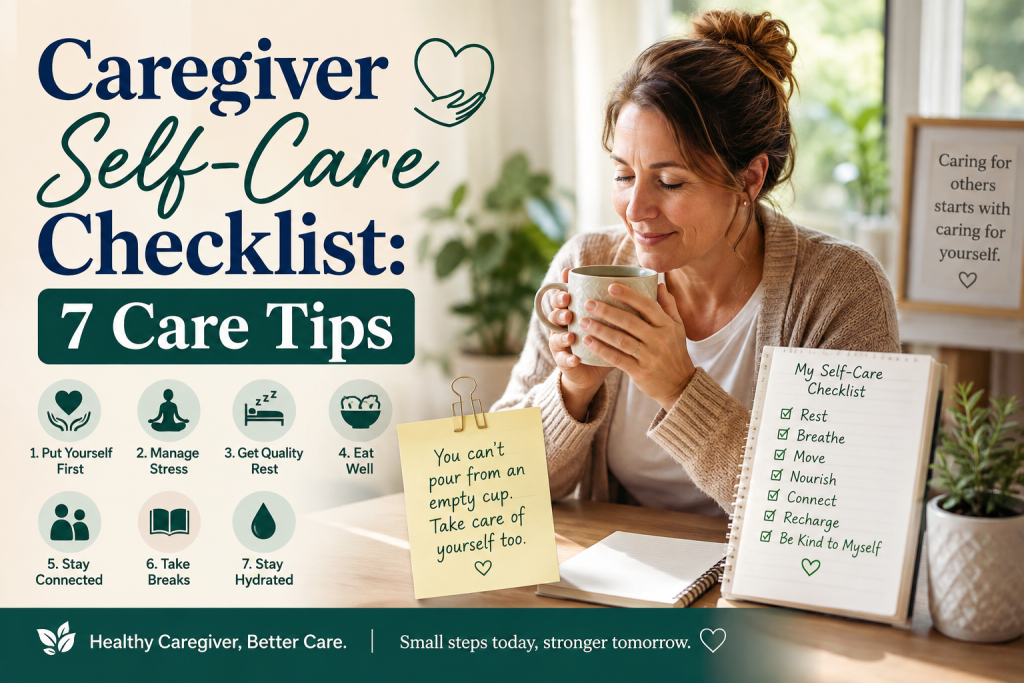
Why Self-Care Matters for Every Caregiver
Taking care of a loved one is a big responsibility. It can be hard on your body and mind if you do not take care of yourself. Many people who care for family members spend all their time thinking about their loved ones’ needs and forget about their own health and rest. A good caregiver self-care checklist helps caregivers build habits that support their well-being while still caring for their loved one.
Caregiving takes a lot of patience and strength. If you do not take care of yourself, you can get tired. Tired. By following some rules, caregivers can learn to balance their work and care for their own physical and mental health. Practicing self care for seniors includes healthy eating, regular activity, quality sleep, and meaningful social connections.
Taking care of yourself is not selfish. It is a part of being a good caregiver. When caregivers take care of themselves, they have energy and can take better care of their loved ones. Self care elderly practices encourage seniors to stay active and take greater control of their daily well-being.

What Is Caregiver Self-Care? A Guide to Maintaining Your Well-Being
Caregiver self-care means taking care of your health, feelings, and overall life while caring for someone else. It means knowing what you need and making habits that help you stay healthy. Many caregivers think they need to be available all the time and put their loved ones’ needs first. While it is good to help, ignoring your needs can hurt both you and the person you care for. A healthy caregiver knows that taking care of themselves helps them take care of their loved one.
A good caregiver self-care checklist includes things that help you feel better every day, reduce stress and balance your work and personal life. Whether you care for a parent, spouse, family member or someone who is sick, taking care of yourself should be a part of your routine.
Self Care Elderly: Building Healthy Daily Habits
Self care elderly practices can help older adults maintain independence, comfort, and a better quality of life. Simple habits such as eating nutritious meals, staying physically active, getting enough sleep, and keeping in touch with family and friends can support overall well-being. Self care elderly routines can help older adults maintain independence, comfort, and overall well-being.
Simple self care elderly habits may include healthy meals, gentle exercise, proper rest, and regular social interaction. Seniors should also make time for relaxing hobbies and enjoyable activities that keep their minds active and their daily routines positive. Following a self care elderly routine can make everyday activities safer, healthier, and more enjoyable.
Caregiving 101: Understanding the Challenges Caregivers Face
Learning about caregiving is the first step to making it healthier. Caregiving 101 is about learning how to manage your work, talk to people, handle feelings and know when you need help. Caregivers do a lot of things like helping with tasks, making doctor’s appointments and taking care of the house. These things can be overwhelming, especially if you do not have time for yourself. Caregiving 101 provides beginners with the essential knowledge needed to care for a loved one safely and confidently.
Understanding the basics of caregiving 101 can help families provide safer, more compassionate, and confident support for their loved ones. Every caregiving situation is different. Some caregivers help a little while others help a lot. No, caregivers need to take care of themselves so they can take care of their loved ones. Caregiving 101 covers basic skills that can help caregivers provide comfort, safety, and meaningful support.
One important thing about caregiving is knowing the difference between helping someone and doing everything for them. This helps build a relationship between the caregiver and the person they care for. Learning caregiving 101 can make daily care responsibilities easier and less overwhelming for new caregivers. For families new to caregiving, caregiving 101 offers a helpful starting point for understanding everyday care needs.
The Physical Impact of Caregiving Responsibilities
Taking care of someone can be hard on your body. Many caregivers get tired, have muscle pain, sleep. Less energy because they work so hard. Lifting, helping someone move, making meals and taking care of tasks can be physically demanding. If you do not rest and take care of yourself, you can get very tired. Not be able to take care of your loved one.
A good caregiver self-care checklist should always include health because caregivers need energy and strength to keep going. Taking breaks, eating well, exercising and getting rest are important to prevent tiredness. For caregivers, taking care of themselves is even more important. Practising self-care can help older adults who care for family members stay strong and independent.
The Emotional Stress of Being a Caregiver
Caregiving is not just hard on your body. Also on your feelings. Many caregivers feel worried, sad, frustrated, guilty or lonely while taking care of someone they love. It is common for caregivers to feel like they need to be strong all the time. Ignoring your feelings can make you more stressed and tired over time.
Taking care of your feelings helps you acknowledge how you feel and find ways to manage stress. Talking to friends, joining caregiver groups, practising relaxation and getting help can be very helpful. The emotional part of caregiving is important because understanding your feelings helps you be a caregiver.
Common Signs of Caregiver Stress and Burnout
Caregiver stress can build up slowly, so it can be hard to notice at first. Many caregivers keep going until they feel completely overwhelmed. Common signs of caregiver stress include being tired, sleeping differently, having trouble focusing, getting frustrated easily, losing interest in things or avoiding friends and family.
Noticing these signs early can help caregivers make changes before they get too stressed. Following a caregiver self-care checklist can help caregivers prioritise their health before they get burned out. Caregiver burnout does not mean you are failing. It means you need help, rest and time to focus on yourself.
Caregiver Self-Care Checklist: 7 Powerful Care Tips
A good self-care routine helps caregivers balance their work and personal life. The following tips focus on the important areas of caregiver wellness.
-
Take Care of Your Physical Health and Daily Wellness
Your physical health is important for caregiving. You need food, water, exercise and rest to have energy for your daily tasks. Eating well gives your body what it needs, and drinking water helps you stay focused. Exercise, even just walking, can make you stronger and less stressed. Rest is important too. Many caregivers do not sleep well because of their work. Good sleep helps you feel better and make good decisions.
-
Protect Your Mental and Emotional Health
Your mental and emotional health should be a priority. Taking time to relax and reflect can reduce stress. Make you stronger. Simple things like breathing, meditation, writing, reading or spending time alone can help you manage stress. Getting support from family and friends can also help. Caregivers who take care of their feelings are more patient and compassionate when dealing with situations.

-
Build a Support System
You do not have to do everything. Having a support system can make caregiving easier and less stressful. Family, friends and caregiver groups can give you emotional support. Sharing tasks can give you breaks. Help you not feel overwhelmed. A support system is important for caregivers because they need care and understanding too.
-
Set Healthy Boundaries in Your Caregiving Role
Setting boundaries is important for caregiver wellness. Many caregivers feel like they need to do everything and have trouble asking for help. This can lead to stress and burnout. Healthy boundaries help caregivers know what they can handle and protect their time and energy. Talking to family and healthcare providers can reduce stress. Make caregiving more balanced. Saying no to some tasks does not mean you care less. It means you can focus on things and avoid burnout.
-
Make Time for Yourself Without Feeling Guilty
Many caregivers feel guilty when they take time for themselves. Taking time for yourself is necessary for emotional balance and preventing burnout. Making time for yourself can mean doing things you enjoy, spending time with friends, reading, exercising or just relaxing. Taking breaks can give you energy and help you handle caregiving challenges. A good caregiver self-care checklist should include things that make you happy and relaxed.
When caregivers take care of themselves, they are more patient, positive and emotionally available. Taking care of yourself is especially important for adults who care for family members. Practising self-care can help older caregivers stay healthy and keep caring for their loved ones.
-
Seek Professional and Community Support
Caregivers do not have to do everything by themselves. Some people and organisations can help. Healthcare professionals can offer guidance on managing needs, and caregiver organisations can provide information and support. Do not be afraid to ask for help. It is a sign of strength, not weakness.
-
Create a Long-Term Self-Care Plan
Creating a long-term self-care plan is essential for your health and happiness. This plan should include things like rest, healthy meals, physical activity and emotional support. Small daily habits can make a difference over time. Regular rest, healthy meals, and physical activity can really help you manage your responsibilities.
Preparing for challenges is also important. Planning learning skills and understanding what resources are available can help you feel more confident. Caregiving needs may change over time. It is essential to be prepared.
Creating a Self-Care Routine for Caregivers
Caregiving is a journey that takes patience, commitment and emotional strength. While caregivers help others, they must also take care of themselves. A good caregiver self-care checklist helps caregivers make habits that prevent burnout and balance their work and personal life. Many caregivers focus on the person they care for and forget about their own well-being. Long-term caregiving requires taking care of yourself. By following caregiving rules, caregivers can learn how to manage their work and take care of themselves. Taking care of yourself is not about doing less; it is about having the strength to keep caring.
Understanding Caregiving vs Caretaking
Knowing the difference between caregiving and caretaking can help families have healthy relationships. Caregiving is about supporting someone while helping them stay independent and dignified. Caretaking is about taking control of someone’s life. A healthy caregiver helps someone while letting them stay independent. This makes both people feel better and more respected. Learning the difference between caregiving and caretaking is important because it helps caregivers support someone without losing themselves. Understanding caregiving vs caretaking can help families choose the right type of support for their loved one’s personal and daily needs.
Enjoy Personal Hobbies and Activities
It is good for caregivers to do things they enjoy. This can help them feel better and have energy to care for their loved ones. Personal interests are really important for caregivers. They help caregivers remember who they are outside of their caregiving role.
Whether you like gardening, walking or listening to music, doing things you enjoy can really help reduce stress and make you feel better emotionally. Maintaining hobbies is also a way to remind yourself that you have your own goals and dreams. This is important because caregiving can be all-consuming.
Stay Connected With Friends and Loved Ones
Staying connected with friends and family is also crucial for your health. Many caregivers become isolated because of their responsibilities. Talking to others can really help you feel less alone. Having conversations with friends, family, or other caregivers can be a great source of support.
Using Respite Care Services
Using respite care services can be a way to take a break and rest. This is really important for maintaining your emotional health. Taking time away from caregiving duties can help prevent exhaustion and give you the energy and patience you need to keep going.
Finding resources can make a big difference in your caregiving experience. Educational programs, online communities and local organisations can provide guidance and support. Including these resources in your self-care plan can help you remember that you are not alone.

Self Care for Seniors: Helping Older Adults Maintain Wellness
Self care for seniors can support physical health, emotional well-being, and greater independence in daily life. Ageing adults also need to take care of themselves. This includes maintaining routines, staying socially connected and doing things that support physical and mental wellness. For caregivers, practising self-care is especially important.
This can include things like staying active, eating healthy foods, getting proper rest and maintaining social connections. Supporting independence and emotional well-being is crucial for seniors. Encouraging them to participate in decisions and activities can really improve their confidence and emotional health.
How to Prevent Caregiver Burnout
Caregiver burnout is a thing. It can affect your health, emotional stability and ability to provide quality care. Preventing burnout requires recognising your limits and making self-care a priority. Following a self-care plan can help you identify areas where you need more support and create healthier routines.
Early warning signs of burnout include exhaustion, emotional frustration and loss of interest in activities. Recognising these signs early can help you make changes before things get out of hand. Restoring your energy and motivation requires self-care practices. Spending time with others seeking support and enjoying personal interests can really help. A caregiver who takes care of themselves is better prepared to provide effective support.
Conclusion About Caregiver Self-Care Checklist
Caregiving is a big job that needs a lot of love and care. It can be hard on your body and mind. So it is very important to take care of yourself. A caregiver self-care checklist can help you make habits to deal with stress and have the energy to take care of your loved one. Making self care for seniors a daily priority can help older adults maintain a healthier and more active lifestyle.
If you follow some caregiving rules, set good boundaries and have people who support you, you can avoid getting too tired and make caregiving easier. Taking care of yourself helps you stay patient and strong when you are caring for someone. Families can support self care elderly habits by encouraging independence while providing help when needed.
Good self care elderly practices can help seniors maintain healthy routines while enjoying greater independence. It does not matter if you are taking care of a parent, a family member who is sick or someone who needs help every day. Taking care of yourself is good for both you and the person you are caring for. Remember, taking care of yourself is not selfish. It is a part of being a good caregiver.
When caregivers take time to rest, get support and take care of their health, they can keep caring for their loved ones with confidence and compassion. If the caregiver is healthy, it makes the whole caregiving experience better for everyone. By following a caregiver self-care checklist, you can make sure you are taking care of yourself and your loved one at the same time.
Frequently Asked Questions About Caregiver Self-Care Checklist
What are three signs of caregiver stress?
Caregiver stress can show up in a lot of ways. Three common signs of caregiver stress are feeling tired all the time, feeling emotional, like frustrated or sad and not wanting to do things you used to like doing. You might also have trouble sleeping, have trouble focusing and feel like you are getting overwhelmed by taking care of someone. If you notice these signs, you can do something about it. Avoid getting burned out.
How do I take care of myself as a caregiver?
To take care of yourself as a caregiver, you should make a list of things to do to take care of yourself and stick to it. This list should include getting sleep, eating food that is good for you, getting some exercise, managing your stress and making time for things you like to do. You should also ask for help from your family, friends or people who can support you. This can make a difference in how you feel.
How can caregivers practice self-care every day?
Caregivers can take care of themselves every day by doing things that are good for them. This can be as simple as taking a break, talking to friends and family, doing something to relax and thinking about how you are feeling. A few minutes a day can give you more energy and help you feel less stressed.
How can I be a caregiver without feeling overwhelmed?
To be a good caregiver, you need to take care of the person who needs you and also take care of yourself. This means being realistic about what you can do, learning how to be a caregiver, respecting the person you are caring for and asking for help when you need it. This can help you avoid feeling tired and stressed out.
How can caregivers avoid burnout?
Caregivers can avoid burnout by setting limits, sharing what they have to do with others, taking breaks and taking care of themselves over time. It is also important to notice when you are getting stressed and get help before you get too tired. This is a part of being a good caregiver.
What is the difference between caregiving and caretaking?
Caregiving is about helping someone and also letting them do things on their own. Caretaking is when you do everything for someone, and they do not have to do anything. A good caregiver helps the person they are caring for and lets them stay in charge of their own life.
What are self-care tips for caregivers of seniors?
Caregivers of seniors should take care of their bodies, manage their stress, stay connected with friends and family, get sleep and ask for help when they need it. Seniors who care for others should also take care of themselves.
What are 10 tips for caregivers who care for people with dementia?
Caregivers of people with dementia should be patient, stick to routines, communicate clearly, make a place for the person to live, help them stay independent, manage their stress, ask for help, stay organised, take breaks and take care of themselves. Taking care of yourself helps you take care of the person with dementia.
Senior Caregiving: A Complete Guide with 15 Expert Tips for Better Elder Care in 2026

Welcome to USA Senior Citizen, a trusted resource dedicated to helping older adults live healthier, happier, and more independent lives.
Our mission is to provide valuable information, practical tips, and helpful guidance for seniors and their families. We cover important topics including **senior health, retirement planning, senior living, caregiving, technology for seniors, and everyday lifestyle solutions**.
At USA Senior Citizen, we believe aging is not about slowing down — it is about embracing new opportunities, staying connected, and enjoying every stage of life. Our goal is to make life easier for seniors by sharing simple, reliable, and easy-to-understand information that supports better decisions and improved well-being.
Whether you are looking for advice on maintaining a healthy lifestyle, exploring retirement options, learning new technology skills, or finding ways to stay active and independent, USA Senior Citizen is here to guide you.
We are committed to creating a supportive online community where seniors can discover useful resources, gain confidence, and continue living life with dignity and purpose.
USA Senior Citizen — Empowering Seniors to Live Better Every Day.