
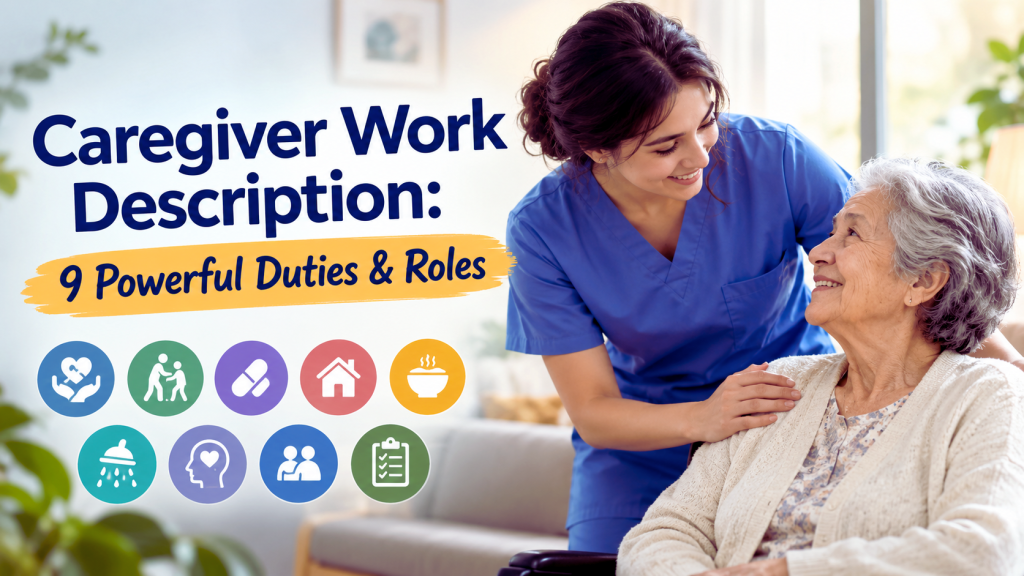
A caregiver work description explains the daily duties, responsibilities, and role of a person who provides care and support to someone who needs assistance. Caregivers may help older adults, people with disabilities, or individuals who need support with everyday activities. Their work can include personal care, meal preparation, mobility assistance, companionship, safety monitoring, and other daily tasks.
Understanding a caregiver’s role is important for families hiring care, people considering caregiving as a career, and caregivers who want to understand their responsibilities. A clear work description also helps everyone understand what care is expected and how the caregiver can support the person’s comfort, safety, dignity, and independence.

What Is a Caregiver Work Description?
A caregiver work description is a detailed explanation of the work a caregiver performs for a person who needs assistance. It usually outlines the caregiver’s daily duties, responsibilities, expected skills, and the type of support they provide. The exact job can vary depending on the person’s needs.
Some caregivers mainly provide companionship and help with household activities, while others assist with personal hygiene, mobility, meals, appointments, and medication reminders. A caregiver work description can also clarify the difference between basic caregiving support and medical services. Caregivers generally provide assistance with everyday needs, while medical tasks may require a qualified healthcare professional depending on local rules and the person’s care plan.
What Does a Caregiver Do?
If you are wondering what does a caregiver do, the answer depends on the needs of the person receiving care. In general, caregivers help people manage daily activities while providing practical, emotional, and social support. Common caregiver duties may include helping with bathing, dressing, grooming, eating, walking, and other activities of daily living.
A caregiver may also prepare meals, perform light housekeeping, provide transportation assistance, organize daily routines, and offer companionship. For older adults, caregivers may also watch for changes in behavior, appetite, mobility, or general well-being and communicate important observations to family members or appropriate professionals. The goal is not simply to complete tasks. Good caregiving focuses on helping the person remain as safe, comfortable, respected, and independent as possible.
What Is the Role of a Caregiver?
The role of a caregiver goes beyond helping with physical tasks. Caregivers often become an important source of companionship, encouragement, organization, and daily support. The role of a caregiver includes helping with daily activities, personal care, meals, mobility, and companionship. A caregiver may help create a predictable routine so the person knows what to expect throughout the day. They can encourage appropriate activities, provide conversation, assist with appointments, and help maintain a safe living environment. The role of a caregiver is to support a person’s everyday needs while promoting safety, dignity, and independence.
The role of a caregiver may also involve communicating with family members and reporting important changes in the person’s condition. Caregivers should also respect the preferences and privacy of the person they support. Whenever possible, the individual should be encouraged to make choices about meals, clothing, activities, schedules, and other personal matters. The role may also involve communicating with family members. When appropriate, caregivers can report relevant changes or concerns so the family understands how the person is doing.
Why Is a Caregiver Work Description Important?
A clear caregiver work description helps establish realistic expectations before caregiving begins. It allows families and caregivers to discuss exactly what support is needed instead of relying on assumptions. For example, one family may need a caregiver mainly for companionship and meal preparation. Another may need help with bathing, dressing, mobility, and household activities.
Clearly defining these expectations can make the caregiving arrangement more organized. A detailed description can also identify working hours, daily routines, responsibilities, required skills, and communication expectations. This can help both the caregiver and the family understand their roles. Most importantly, a well-defined caregiver role keeps the person’s needs at the center of the care arrangement.
9 Powerful Duties in a Caregiver Work Description
A caregiver may perform many different tasks during a typical day. The following are nine common caregiving duties that can appear in a caregiver work description.
Providing Personal Care and Hygiene
Personal care is one of the most common responsibilities included in caregiving. Depending on the person’s abilities and care needs, a caregiver may assist with bathing, showering, dressing, grooming, toileting, and oral hygiene. This type of support should always be provided respectfully. Personal care can feel private or uncomfortable for someone who needs assistance, so caregivers should protect the person’s dignity and give them as much independence as possible. A caregiver may also help organize clothing, hygiene supplies, towels, and other personal items to make daily routines easier.
Preparing Meals and Supporting Nutrition
Meal preparation can be another important caregiver duty. A caregiver may plan simple meals, prepare food, serve meals, and clean up afterward. The caregiver should follow any instructions or preferences provided by the person, family, or appropriate healthcare professional. This may include paying attention to food allergies, dietary restrictions, or texture requirements when these are part of the person’s established care plan. Caregivers can also encourage regular meals and adequate hydration when appropriate. However, they should not provide medical nutrition advice beyond their training or assigned responsibilities.
Helping With Mobility and Daily Activities
Some people need assistance moving safely around their homes. A caregiver may help with walking, getting in and out of a chair, or moving between different areas of the home when this falls within their training and responsibilities. Caregivers may also support everyday activities such as getting dressed, preparing for appointments, organizing personal belongings, or completing simple household routines. Safety should always come first. A caregiver should use proper techniques and follow any mobility instructions provided by qualified professionals.
Managing Medication Reminders
Medication support can sometimes be part of a caregiver’s responsibilities, but the exact duties depend on the caregiver’s training, role, and local regulations. In many situations, a caregiver may provide reminders about scheduled medications rather than independently deciding doses or changing medication instructions. A caregiver should never alter a person’s medication plan without appropriate authorization. If a person has difficulty taking medication or experiences a concerning reaction, the caregiver should follow the established care plan and contact the appropriate person or healthcare professional.
Providing Companionship and Emotional Support
Companionship is an important part of the role of a caregiver. Older adults and people who need assistance may sometimes experience loneliness or reduced social interaction. The role of a caregiver can vary depending on the person’s age, health needs, living situation, and level of independence.
A caregiver can provide conversation, play games, read books, take appropriate walks, watch television together, or participate in hobbies that the person enjoys. Understanding the role of a caregiver helps families set clear expectations about daily care and support. Emotional support does not mean a caregiver must solve every personal problem. Instead, caregivers can listen respectfully, show patience, encourage positive activities, and help the person feel valued and connected.

Monitoring Health and Safety
Caregivers often spend significant time with the person they support, so they may notice changes in everyday behavior or physical condition. For example, a caregiver might notice changes in appetite, mood, mobility, sleep, or general behavior. These observations can be communicated to family members or healthcare professionals when appropriate. Caregivers should also look for obvious safety concerns around the home, such as clutter in walking areas, poor lighting, or other hazards. They should follow the person’s established safety plan and report serious concerns promptly.
Assisting With Household Tasks
Light household assistance may also be included in a caregiver work description. Depending on the job, this can include washing dishes, doing laundry, changing bed linens, organizing commonly used items, or keeping frequently used areas tidy.
The purpose of these tasks is generally to support the person’s daily living environment rather than provide full household cleaning services. The exact expectations should be agreed upon before employment begins. This prevents confusion about whether a caregiver is responsible for personal-care support, light housekeeping, or larger household chores.
Communicating With Family Members and Healthcare Providers
Good communication is an essential part of caregiving responsibilities. Caregivers may need to communicate with family members about daily routines, appointments, concerns, or noticeable changes in the person’s condition. When healthcare professionals are involved, caregivers may also need to share relevant observations according to the person’s care plan and applicable privacy requirements. Clear communication can help prevent misunderstandings and ensure everyone involved has accurate information about the person’s needs.
Supporting Independence and Dignity
One of the most important caregiving duties is helping a person remain as independent as possible. A caregiver should not automatically take over every task. If the person can safely complete part of an activity, the caregiver can provide appropriate assistance while allowing the person to participate. For example, a caregiver might prepare clothing but allow the individual to choose what to wear. Similarly, they might prepare a meal while allowing the person to choose between suitable options. Respecting personal choices, privacy, routines, and abilities helps protect dignity and can make caregiving a more positive experience.
Key Caregiving Responsibilities
The caregiving responsibilities of a caregiver can change from one person to another. However, most caregiving roles involve a combination of practical assistance, safety support, companionship, communication, and respect for personal preferences.
Daily Care and Personal Assistance
Daily care may involve helping with activities such as bathing, dressing, grooming, eating, toileting, and mobility. The caregiver should provide only the level of assistance that the person actually needs. This approach encourages independence while ensuring the person receives appropriate support.
Health and Safety Responsibilities
Caregivers should help maintain a safe environment and follow the person’s established care instructions. They may also observe changes in everyday functioning and report concerns to the appropriate person. A caregiver should understand the limits of their role and seek professional assistance when a situation requires medical expertise.
Emotional and Social Support
Emotional and social support can make a significant difference in a person’s daily quality of life. Caregivers can encourage hobbies, conversations, social connections, and enjoyable activities. Simple interactions, such as having a conversation over a meal or helping someone participate in a favorite hobby, can make the day feel more meaningful.
Reporting Changes in a Senior’s Condition
When caring for an older adult, caregivers may notice changes that family members do not see immediately. Changes in mobility, appetite, mood, sleep, memory, or daily behavior may be worth communicating according to the care plan. Caregivers should avoid making medical diagnoses themselves. Instead, they should document or communicate relevant observations to the appropriate family member or healthcare professional.
Senior Caregiver Job Description
A senior caregiver job description explains the duties involved in supporting an older adult with everyday needs. Seniors may need different levels of assistance depending on their mobility, health, independence, and living situation. A senior caregiver may provide personal care, meal assistance, companionship, light housekeeping, mobility support, transportation assistance, and help with daily routines. The caregiver may also communicate with family members about important observations and help the senior maintain a safe and comfortable routine.
Common Tasks of a Senior Caregiver
Common tasks can include helping a senior get dressed, preparing meals, assisting with personal hygiene, organizing belongings, and providing companionship. A senior caregiver may also accompany the person to appointments or social activities when transportation or supervision is part of the agreed role. The exact task of caregiver will depend on the individual’s care plan. Not every senior requires the same type or amount of assistance.
Skills Needed for Senior Care
Senior caregivers need more than the ability to complete physical tasks. Patience, compassion, communication, reliability, and organization are valuable skills for providing consistent care. Caregivers should also understand how to respect personal preferences and maintain appropriate boundaries. If a task requires professional medical training, the caregiver should work within their qualifications and follow applicable rules.
Working With Older Adults
Working with older adults requires understanding and patience. Some seniors may need extra time to complete activities, while others may want to remain as independent as possible. A good caregiver listens to the senior and adapts support to their abilities. Instead of unnecessarily taking over, the caregiver can encourage the person to participate in safe daily activities. This approach can help preserve confidence, independence, and dignity.
In-Home Caregiver Responsibilities
An in home caregiver provides assistance in the person’s own home. This arrangement can allow an older adult or another person who needs support to remain in a familiar environment while receiving help with daily activities. In home caregiver responsibilities can include personal care, meal preparation, light housekeeping, companionship, mobility assistance, and support with everyday routines. The exact responsibilities depend on the person’s needs and the agreement between the family and caregiver.
What Is an In-Home Caregiver?
If you are wondering what is a in home caregiver, an in-home caregiver is someone who provides care and assistance within a person’s home rather than primarily in a facility. In-home caregivers can support seniors with activities they find difficult to complete independently. They may work for a specific family, caregiving agency, or other care provider depending on their employment arrangement. The caregiver’s role may range from a few hours of assistance to more regular daily support.
Common In-Home Caregiver Tasks
Typical in-home tasks may include preparing meals, doing light laundry, organizing commonly used areas, assisting with dressing and grooming, and providing companionship. Some caregivers may also provide transportation assistance or accompany the person during appointments and errands when this is included in their responsibilities. The caregiver should understand which tasks are expected before beginning the job. A detailed work description can prevent confusion about household chores, personal care, schedules, and other duties.
How In-Home Care Supports Seniors
In-home care can help seniors receive assistance while staying in a familiar environment. Familiar surroundings may make daily routines easier and allow the person to remain connected to their home and community. A caregiver can provide practical assistance while also encouraging the senior to remain involved in activities they can safely manage. The goal should be appropriate support rather than removing independence unnecessarily.
Elderly Caregiver Job Description and Duties
An elderly caregiver job description focuses on the responsibilities involved in caring for older adults. Although the duties may overlap with other caregiving roles, elderly care often requires special attention to mobility, safety, companionship, and changing daily needs. Caregivers should follow the individual’s care plan and communicate relevant concerns to the appropriate people.
Daily Responsibilities of an Elderly Caregiver
Daily responsibilities may include helping with personal hygiene, dressing, meals, mobility, household routines, and social activities. A caregiver may also help maintain a predictable schedule. Regular routines can make it easier for an older adult to understand what is happening throughout the day. The caregiver should remain attentive to the person’s preferences and provide assistance in a respectful manner.
Personal Care and Household Assistance
Personal care can include support with bathing, grooming, dressing, toileting, and other activities of daily living. Household assistance may include laundry, dishes, changing bed linens, and keeping frequently used areas organized. These responsibilities should be clearly discussed because a caregiver’s role is generally different from that of a full-time housekeeper.
Companionship and Senior Support
Companionship is an important part of many elderly caregiving roles. A caregiver can talk with the senior, participate in hobbies, read together, play games, or encourage appropriate social activities. These simple interactions can provide emotional support and reduce feelings of isolation. A caregiver should also respect the senior’s choices and personal boundaries while creating a supportive and positive environment.
Skills Needed for a Caregiver
A strong caregiver work description should identify the skills needed to perform the job effectively. Caregiving involves both practical responsibilities and interpersonal skills.
Communication Skills
Caregivers need clear communication skills to understand the person’s preferences and communicate relevant information with family members or other professionals. Good communication also involves listening carefully and allowing the person receiving care to express their needs.
Patience and Compassion
Patience is especially important when someone needs additional time or repeated assistance with everyday activities. Compassion helps caregivers provide support without making the person feel embarrassed or dependent. Treating people with kindness and respect should remain central to caregiving.
Organization and Reliability
Caregivers often manage multiple daily responsibilities, so organization is valuable. They may need to keep track of routines, appointments, meals, household tasks, and other agreed responsibilities. Reliability is equally important because the person and family may depend on the caregiver for consistent support.
Basic Care and Safety Skills
Caregivers should understand the basic care and safety skills required for their specific role. Depending on the position, this may include safe mobility assistance, personal-care techniques, emergency awareness, and other training. Caregivers should never perform tasks beyond their training or legal scope.

Who Can Use a Caregiver Work Description?
A caregiver work description can be useful for several people involved in arranging or providing care.
Families Hiring a Caregiver
Families can use a detailed work description to explain what support their loved one needs. It can help them communicate expectations about schedules, daily tasks, personal care, household assistance, and companionship. Clear expectations can also make it easier to find a caregiver whose skills match the person’s needs.
Professional Caregiving Agencies
Caregiving agencies can use job descriptions to explain available positions and identify the qualifications or skills required for different roles. A detailed description can also help agencies match caregivers with clients based on experience, availability, and required responsibilities.
Caregivers Looking for Jobs
People looking for caregiving work can use job descriptions to understand what an employer expects before accepting a position. Reviewing the responsibilities carefully can help a caregiver determine whether the job matches their experience, training, and preferred type of care.
Conclusion
A caregiver work description provides a clear understanding of the duties involved in everyday care. Caregivers may assist with personal hygiene, meals, mobility, companionship, household tasks, safety, and daily routines. Their work can help people receive the support they need while maintaining comfort and independence. The role of a caregiver goes beyond completing tasks. Patience, compassion, communication, and respect are essential when supporting another person. The role of a caregiver is to provide practical, emotional, and daily support while helping the person maintain safety, dignity, comfort, and as much independence as possible.
Clear caregiving duties and caregiving responsibilities also help families and caregivers understand expectations and create a more organized care arrangement. Whether the job involves a senior caregiver job description, in home caregiver responsibilities, or an elderly caregiver job description, the caregiver’s duties should match the individual’s specific needs and the caregiver’s training. Clear expectations benefit everyone and help ensure that care is provided with dignity, safety, and respect.
Frequently Asked Questions About Caregiver Work
What Are the Most Common Caregiver Duties?
Common caregiver duties include personal care, meal preparation, mobility assistance, companionship, light housekeeping, safety support, and help with everyday activities. Duties vary according to the person’s needs and the caregiver’s role.
What Is the Main Role of a Caregiver?
The main role of a caregiver is to provide appropriate support that helps a person manage daily activities safely and comfortably. Caregivers may also provide companionship, emotional support, and assistance with maintaining independence.
What Should Be Included in a Caregiver Job Description?
A caregiver job description should explain the person’s care needs, expected duties, working schedule, required skills, and communication expectations. It should also make clear which tasks are outside the caregiver’s role or training.
What Is the Difference Between an In-Home Caregiver and a Senior Caregiver?
An in-home caregiver is defined mainly by where the care is provided, while a senior caregiver is defined mainly by who receives the care. An in-home caregiver can support a senior, but in-home care can also be provided to other people who need assistance.
What Skills Make a Good Caregiver?
Important skills include communication, patience, compassion, reliability, organization, flexibility, and respect for the person’s dignity and independence. Appropriate training is also important for duties that require specialized knowledge.

Welcome to USA Senior Citizen, a trusted resource dedicated to helping older adults live healthier, happier, and more independent lives.
Our mission is to provide valuable information, practical tips, and helpful guidance for seniors and their families. We cover important topics including **senior health, retirement planning, senior living, caregiving, technology for seniors, and everyday lifestyle solutions**.
At USA Senior Citizen, we believe aging is not about slowing down — it is about embracing new opportunities, staying connected, and enjoying every stage of life. Our goal is to make life easier for seniors by sharing simple, reliable, and easy-to-understand information that supports better decisions and improved well-being.
Whether you are looking for advice on maintaining a healthy lifestyle, exploring retirement options, learning new technology skills, or finding ways to stay active and independent, USA Senior Citizen is here to guide you.
We are committed to creating a supportive online community where seniors can discover useful resources, gain confidence, and continue living life with dignity and purpose.
USA Senior Citizen — Empowering Seniors to Live Better Every Day.