
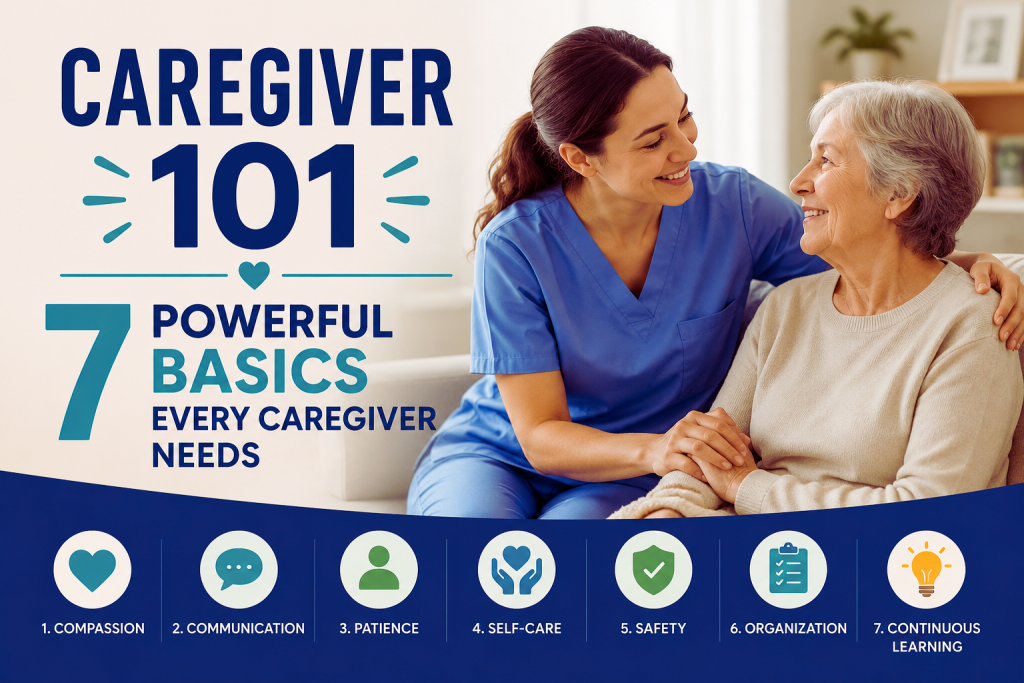
Becoming a caregiver can be rewarding, but it also comes with many responsibilities. Whether you are caring for an aging parent, supporting a family member, or starting a professional caregiving career, understanding the basics can help you provide better care with confidence.
This caregiver 101 guide explains the essential skills, responsibilities, and daily tasks that new caregivers should understand. From personal care and meal preparation to safety and emotional support, learning these fundamentals can make caregiving more organized and manageable.
What Is Caregiver 101?
Caregiver 101 is a beginner-friendly introduction to the basic knowledge and skills needed to care for another person. A caregiver may help with everyday activities, provide companionship, support mobility, prepare meals, maintain a safe environment, and communicate important changes to family members or appropriate professionals.
Caregiving can take place in a person’s home, a residential care setting, or another care environment. The exact responsibilities depend on the person’s needs, the caregiver’s role, and the level of support required.

What Does a Caregiver Do?
A caregiver helps another person with tasks they may have difficulty completing independently. These tasks can include bathing, dressing, grooming, eating, moving around, and maintaining a daily routine.
Caregivers may also provide companionship and emotional support. For example, spending time talking, reading, walking, or participating in appropriate activities can help reduce loneliness and encourage social connection.
Professional caregivers may have additional responsibilities based on their employer’s requirements and training. They should always work within their qualifications and follow applicable care plans and workplace policies.
Understanding the Basics of Caregiving 101
The foundation of caregiving is understanding the individual receiving care. Every person has different preferences, abilities, routines, and needs.
A good caregiver should learn about the person’s normal daily routine and encourage independence whenever it is safe to do so. Instead of automatically doing everything for someone, caregivers can provide appropriate assistance while allowing the person to complete tasks they can still manage.
Communication is another important part of caregiving. Caregivers should listen carefully, communicate respectfully, and report significant changes in a person’s condition or behavior to the appropriate person.
Who Can Work as a Caregiver?
Caregivers can have different backgrounds. Some are family members who provide unpaid care, while others work professionally as home care aides, personal care workers, or other care professionals.
Professional caregivers may need specific education, training, certifications, background checks, or other qualifications depending on their job and location.
Regardless of the setting, patience, reliability, communication, respect, and attention to safety are valuable caregiving qualities.
7 Essential Caregiver Basics 101 Every Beginner Should Know
Learning the following caregiver basics 101 can give beginners a strong foundation for providing everyday support.
1.Personal Care and Daily Assistance
Personal care is one of the most common areas of caregiving. Depending on the person’s needs, assistance may include bathing, dressing, grooming, toileting, eating, and other daily activities.
Caregivers should protect the person’s dignity and privacy while providing assistance. Explain what you are doing, give the person choices when possible, and avoid rushing them.
The goal is not simply to complete a task but to provide support in a respectful and comfortable way.
2.Meal Preparation and Nutrition
Preparing appropriate meals can be an important caregiver responsibility. A caregiver may help plan meals, prepare food, serve meals, and clean up afterward.
However, dietary needs can vary significantly. Some people may have food allergies, swallowing difficulties, special diets, or dietary restrictions.
Caregivers should follow the person’s established care instructions and avoid making medical or dietary decisions beyond their role. If there are concerns about eating, drinking, weight changes, or swallowing, the appropriate healthcare professional should be contacted.
3.Medication and Health Support
Medication-related tasks require particular care. Depending on the caregiver’s role and local rules, a caregiver may remind someone about medications or assist with an established medication routine.
Caregivers should not change medication doses, stop medications, or provide medical advice unless they are specifically qualified and authorized to do so.
Keeping information organized can also help. A caregiver may record relevant observations and communicate concerns to the appropriate family member, supervisor, or healthcare professional.
4.Mobility and Safety Assistance
Helping someone move safely is another important part of caregiver responsibilities. This may include supporting a person while walking, helping them use mobility equipment, or making sure commonly used items are within easy reach.
The home should also be checked for potential hazards. Loose rugs, cluttered walkways, poor lighting, and misplaced objects can create unnecessary risks.
Caregivers should follow appropriate safety procedures and never attempt a physical task they have not been trained to perform.
5.Communication and Emotional Support
Caregiving involves more than physical assistance. Emotional support and respectful communication can make a significant difference in a person’s daily experience.
A caregiver can listen to concerns, encourage conversation, participate in enjoyable activities, and provide companionship.
Good communication also means paying attention to changes. If someone who is normally talkative suddenly becomes withdrawn or behaves differently, the caregiver should document and report the concern through the appropriate channels rather than attempting to diagnose the cause.
6.Household and Organizational Tasks
Depending on the caregiving arrangement, everyday household tasks may also be part of the job.
These can include light cleaning, laundry, organizing personal belongings, grocery preparation, or keeping frequently used areas tidy.
A caregiver’s exact job responsibilities should be clearly defined. Professional caregivers should follow their job description and employer’s policies rather than assuming that every household task is automatically part of their role.
7.Monitoring and Reporting Changes
Observation is an essential caregiving skill. Caregivers spend significant time with the person they support, so they may notice changes in appetite, mood, mobility, sleep, communication, or daily behavior.
A caregiver should document relevant observations accurately and report concerns to the appropriate person.
Importantly, caregivers should distinguish between observing a change and diagnosing its cause. Healthcare decisions should be handled by qualified professionals.

Family Caregiving 101: A Beginner’s Guide
Family caregiving 101 is especially important because many people become caregivers unexpectedly when an older relative or family member begins needing additional support.
Understanding Your Family Caregiving Role
Family caregivers may help with transportation, meals, household tasks, appointments, personal care, companionship, or organizing information.
The role can change over time as the person’s needs change. Establishing clear responsibilities early can help prevent confusion among family members.
How to Share Caregiving Responsibilities
One person does not necessarily need to handle everything. Family members can divide responsibilities based on their availability, skills, and circumstances.
For example, one person might handle grocery shopping, another might provide transportation, and another might help organize appointments or paperwork.
Creating a simple schedule can make responsibilities easier to track.
Creating a Family Caregiving Plan
A basic plan can include:
- The person’s daily routine
- Important contacts
- Regular appointments
- Household responsibilities
- Transportation arrangements
- Emergency contact information
- Tasks assigned to each family member
A written plan can help everyone understand who is responsible for what.
Avoiding Common Family Caregiving Challenges
Family caregiving can become stressful when responsibilities are unclear. Communication is therefore essential.
Family members should discuss expectations openly and recognize when additional support may be needed. If caregiving demands become difficult to manage, families can explore appropriate community, professional, or respite-care resources.
Caregiver Responsibilities List: What Are the Main Duties?
A caregiver responsibilities list can vary depending on the individual and the caregiving arrangement. Common responsibilities may include:
- Helping with activities of daily living
- Preparing meals
- Providing companionship
- Supporting safe mobility
- Performing appropriate household tasks
- Observing and documenting changes
- Communicating with family members or supervisors
- Following established care instructions
- Maintaining privacy and dignity
- Supporting a safe and comfortable environment
Duties of a Caregiver
The duties of a caregiver are primarily focused on supporting the person’s daily needs while promoting safety, independence, and dignity.
A caregiver should understand which tasks are included in their specific role. Not every caregiver has the same responsibilities, and professional caregivers should follow their employer’s requirements and applicable regulations.
Caregiver Roles and Duties
Caregiver roles and duties can range from personal assistance and companionship to household support and observation.
For family caregivers, responsibilities may be flexible and change as family needs develop. For professional caregivers, duties are usually defined by the job description, care plan, employer, and applicable rules.
Caregiver Job Responsibilities
Professional caregiver job responsibilities should be clearly communicated before employment begins. Understanding these expectations helps caregivers know what they are responsible for and which tasks require additional training or authorization.
A strong caregiver combines practical skills with patience, communication, reliability, and respect. These qualities form the foundation of effective caregiving and provide a useful starting point for anyone learning the essentials of caregiver 101.
Caregiver 101 Activities for Building Essential Skills
Caregiving 101 activities can help beginners develop practical skills and become more comfortable with common caregiving situations. Caregiving 101 activities help beginners build practical skills for daily care, communication, and safety. Activities can be used at home, during caregiver training, or as part of a professional development program. Simple caregiving 101 activities can teach beginners how to handle daily routines, safety, and personal care.
Communication and Listening Activities
Communication is one of the most important caregiver skills. A simple training activity is practicing active listening.
For example, one person can describe a daily concern while the caregiver practices listening without interrupting. The caregiver can then repeat the important information to confirm that they understood it correctly.
Caregivers can also practice using respectful language, asking clear questions, and giving the person enough time to respond. Caregiving 101 activities help new caregivers learn essential skills through simple, practical exercises.
Safety and Emergency Practice Activities
Safety activities can help caregivers recognize potential hazards before they become problems.
A caregiver can walk through a home and identify possible risks such as cluttered pathways, poor lighting, or items that could cause someone to trip. Training can also include reviewing emergency contact information and learning the appropriate steps to follow during an emergency.
Caregivers should receive proper training for emergency situations rather than relying only on informal practice.
Daily Care Planning Activities
Another useful caregiving 101 activity is creating a sample daily care schedule.
A basic schedule might include:
- Morning personal-care tasks
- Breakfast and hydration
- Medication reminders when appropriate
- Planned activities
- Lunch
- Rest periods
- Appointments or errands
- Evening routines
A schedule can make responsibilities easier to organize while still allowing flexibility when the person’s needs change.
Activities for Supporting Seniors
Activities should match the person’s abilities, interests, and preferences. Examples can include reading, listening to music, simple crafts, puzzles, conversation, gardening, or taking a safe walk when appropriate.
The purpose is not to keep someone busy at all times. Meaningful activities can encourage social interaction, independence, enjoyment, and mental stimulation.
Caregiver Job Description for Resume
People applying for caregiving positions often need to explain their experience clearly on a resume. A caregiver job description for resume should focus on relevant skills, responsibilities, and achievements rather than simply listing generic qualities. Caregiving 101 activities help caregivers practice real-life situations and develop better care routines.
Fun and practical caregiving 101 activities can make caregiver training more useful, interactive, and memorable. For example, someone with professional experience might describe responsibilities such as assisting with daily activities, preparing meals according to established instructions, providing companionship, maintaining a safe environment, and communicating relevant observations.
A caregiver job description for resume should highlight your caregiving skills, experience, and key responsibilities. Use a caregiver job description for resume to showcase your daily duties, caregiving experience, and valuable skills. Keep it concise, specific, and focused on the care you provided.
Key Caregiver Skills to Include on a Resume
Useful skills may include:
- Communication
- Compassion and patience
- Time management
- Organization
- Personal-care assistance
- Meal preparation
- Mobility support
- Observation
- Dependability
- Maintaining confidentiality and dignity
Only include skills and qualifications that genuinely reflect your experience and training.
Caregiver Responsibilities for a Resume
A resume should use clear descriptions of actual responsibilities. Instead of writing only “helped seniors,” a stronger description could explain the type of support provided.
For example, a caregiver might have experience assisting with daily routines, providing companionship, completing light household tasks, documenting observations, and communicating with family members or supervisors.
Sample Caregiver Job Description
A general caregiver job description for resume could describe a caregiver as someone who provides respectful assistance with daily activities, supports safe mobility, prepares meals according to established requirements, offers companionship, maintains a clean and safe environment, and reports relevant changes to the appropriate person.
The exact wording should be adjusted according to the caregiver’s real experience. Your caregiver job description for resume should clearly explain the support and care you provided.
Carer for the Elderly Job Description
A carer for the elderly job description generally focuses on helping older adults with everyday needs while promoting independence, comfort, and safety.
The responsibilities can vary considerably depending on whether the person needs occasional assistance or more extensive daily support.
Common Duties When Caring for Older Adults
Common tasks may include:
- Helping with personal-care routines
- Preparing meals
- Providing companionship
- Supporting appropriate daily activities
- Assisting with household tasks
- Helping with transportation when part of the role
- Supporting safe movement
- Observing and reporting relevant changes
Caregivers should always follow the established care plan and stay within the responsibilities and training associated with their position.
Skills Needed for Elderly Care
Working with older adults requires more than practical abilities. Patience, empathy, reliability, communication, and respect are equally important.
A caregiver should understand that older adults have different personalities, preferences, routines, and levels of independence. Treating each person as an individual helps create a more positive caregiving relationship.
Daily Responsibilities of an Elderly Caregiver
Daily responsibilities can depend on the person’s needs. One day may involve meal preparation and companionship, while another may include transportation, household assistance, or support with personal routines.
Flexibility is therefore an important part of caregiving. A good caregiver can follow a routine while remaining attentive to changing needs.

Care Provider Job Description: Roles and Expectations
A care provider job description explains the duties and expectations associated with providing care. Although the terms caregiver and care provider are sometimes used similarly, specific responsibilities depend on the employer, position, and care setting.
What Does a Care Provider Do?
A care provider may assist a person with everyday activities, provide companionship, support their routine, and help maintain a safe environment.
Some care providers may have specialized training and responsibilities, while others focus primarily on non-medical daily assistance.
Care Provider Responsibilities
Typical responsibilities may include:
- Supporting daily routines
- Assisting with personal care when authorized
- Preparing meals
- Providing companionship
- Performing appropriate household tasks
- Supporting mobility and safety
- Observing changes
- Communicating relevant information
The exact responsibilities should always be confirmed through the specific job description and care requirements.
Difference Between a Caregiver and Care Provider
The terms can overlap, but their meaning depends on the context.
“Caregiver” is commonly used for someone who provides assistance and support to another person. “Care provider” can be a broader term describing an individual or organization providing care services.
Neither term automatically means that a person can perform medical tasks. Specific healthcare responsibilities generally require appropriate qualifications and authorization.
Caregiver Basics 101 PPT: What Should It Include?
A caregiver basics 101 PPT can be useful for introducing beginners to fundamental caregiving concepts. A presentation should be simple, practical, and focused on the most important information.
Essential Caregiving Topics for a Presentation
A beginner presentation can include slides covering:
- Introduction to caregiving
- Caregiver roles and responsibilities
- Personal-care assistance
- Nutrition and meal preparation
- Safety and mobility
- Communication
- Emotional support
- Observation and reporting
- Caregiver boundaries
- Self-care and seeking support
Using short examples, illustrations, or simple scenarios can make the presentation easier to understand.
Caregiver Responsibilities and Safety
Safety should be an important section of any caregiver training presentation.
The presentation can explain how caregivers can maintain clear pathways, organize frequently used items, follow established safety instructions, and communicate concerns appropriately.
It should also emphasize that caregivers should not perform tasks they are not trained or authorized to perform.
Training Activities and Practical Examples
A caregiver basics 101 PPT can become more engaging by including short scenarios.
For example, a slide could present a situation where a person suddenly has difficulty completing a normal daily activity. Learners can discuss what they should observe, what information should be documented, and who should be contacted.
This approach helps beginners understand how caregiving knowledge applies to everyday situations.
Tips for New Caregivers Starting Out
Starting a caregiving role can feel overwhelming, especially when someone is unfamiliar with the person’s routine. A few simple strategies can make the transition easier.
Set a Daily Care Routine
A consistent routine can help caregivers organize tasks and help the person receiving care know what to expect.
However, routines should not be so rigid that they ignore the person’s preferences or changing needs.
Keep Important Information Organized
Caregivers may need to keep track of schedules, contact information, appointments, care instructions, and other important details.
Keeping information organized can reduce confusion and make communication easier.
Communicate With Family Members and Professionals
Good communication helps everyone understand what is happening. Caregivers should share relevant observations with the appropriate family member, supervisor, or healthcare professional according to the care arrangement.
They should avoid making diagnoses or changing treatment plans unless they are specifically qualified and authorized to do so.
Know When to Ask for Help
Caregiving is not something one person always has to manage alone. If responsibilities become difficult, caregivers should communicate their concerns and look for appropriate support.
Asking for help early can make caregiving more sustainable and may help prevent avoidable problems.
Conclusion
Learning caregiver 101 is an important first step for anyone beginning a caregiving role. Understanding caregiver basics, responsibilities, communication, safety, and practical activities can make everyday care more organized and respectful.
Whether you are providing family caregiving 101 support or preparing for a professional caregiving position, remember that every person has different needs. Follow appropriate care instructions, respect the person’s independence and dignity, communicate concerns clearly, and seek help when a situation goes beyond your training or responsibilities.
FAQs
What Are the Basic Duties of a Caregiver?
Basic duties can include assisting with daily activities, providing companionship, preparing meals, supporting safety and mobility, completing appropriate household tasks, and reporting relevant changes.
What Are the 7 Responsibilities of a Caregiver?
Seven common areas include personal care, meal support, medication-related assistance within the caregiver’s role, mobility and safety, emotional support, household assistance, and monitoring and reporting.
The exact duties vary according to the person’s needs and the caregiver’s position.
What Should a Beginner Caregiver Know?
A beginner should understand the importance of safety, communication, dignity, privacy, organization, and staying within their training and responsibilities.
What Is Included in Family Caregiving 101?
Family caregiving 101 can include understanding the person’s needs, creating routines, dividing responsibilities among family members, organizing important information, and recognizing when additional support may be necessary.
What Activities Are Useful for Caregiver Training?
Useful caregiving 101 activities include communication exercises, safety assessments, daily care planning, scenario-based practice, and activities that teach caregivers how to observe and report relevant changes. Caregiving 101 activities make it easier for beginners to practice important caregiving tasks with confidence.

Welcome to USA Senior Citizen, a trusted resource dedicated to helping older adults live healthier, happier, and more independent lives.
Our mission is to provide valuable information, practical tips, and helpful guidance for seniors and their families. We cover important topics including **senior health, retirement planning, senior living, caregiving, technology for seniors, and everyday lifestyle solutions**.
At USA Senior Citizen, we believe aging is not about slowing down — it is about embracing new opportunities, staying connected, and enjoying every stage of life. Our goal is to make life easier for seniors by sharing simple, reliable, and easy-to-understand information that supports better decisions and improved well-being.
Whether you are looking for advice on maintaining a healthy lifestyle, exploring retirement options, learning new technology skills, or finding ways to stay active and independent, USA Senior Citizen is here to guide you.
We are committed to creating a supportive online community where seniors can discover useful resources, gain confidence, and continue living life with dignity and purpose.
USA Senior Citizen — Empowering Seniors to Live Better Every Day.