
Introduction
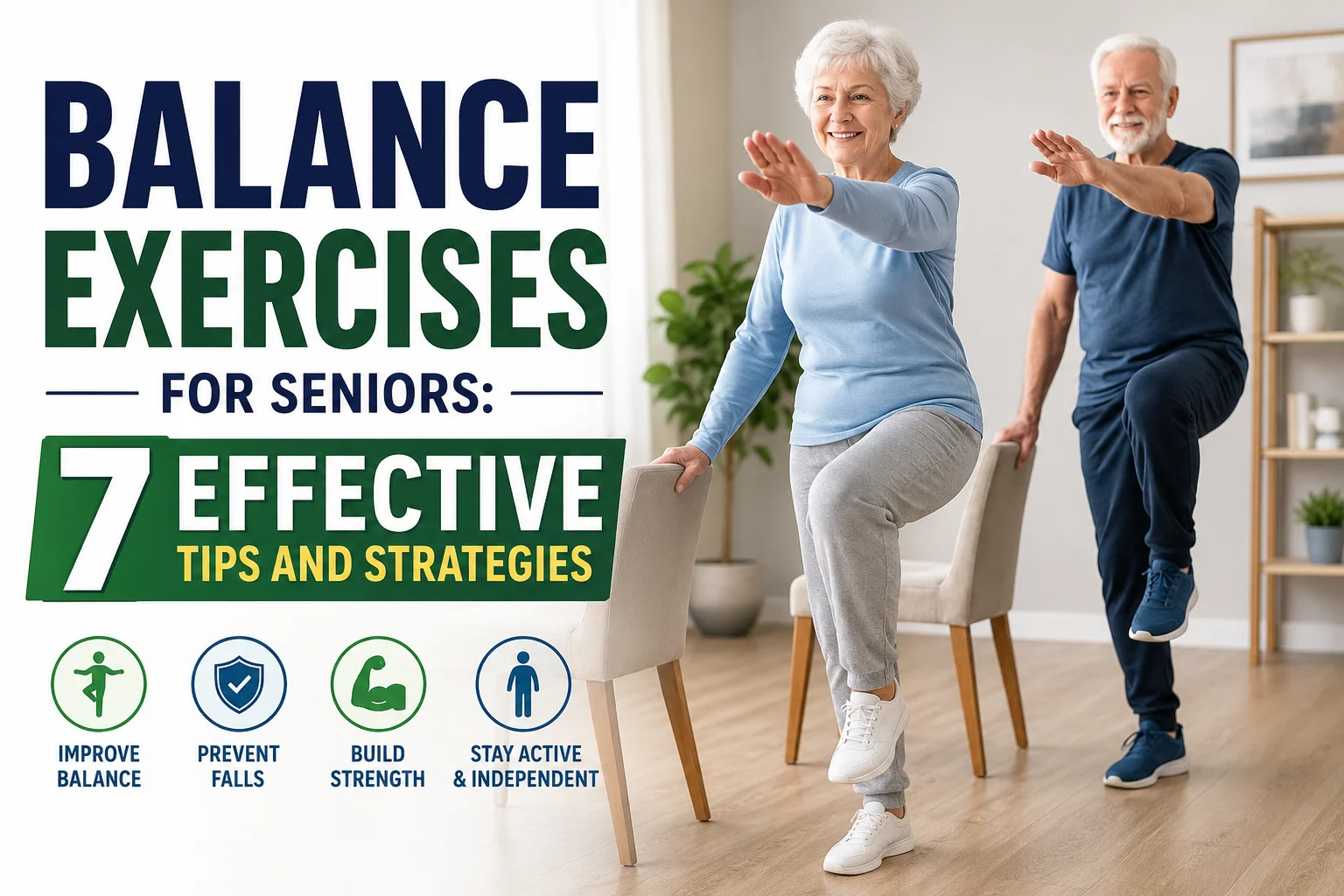
As people get older, maintaining good balance becomes an important part of staying active, independent, and confident. Simple daily activities such as walking, standing from a chair, climbing stairs, getting out of bed, or reaching for something require balance and coordination. This is why balance exercises for seniors can be an important part of a healthy lifestyle.
Many older adults notice that their balance is not as strong as it once was. Changes in muscle strength, flexibility, coordination, vision, and reaction time can affect stability. However, getting older does not mean that seniors should stop being active. In fact, regular physical activity can help older adults maintain their strength and mobility.
The good news is that balance exercises for seniors do not have to be complicated. Many exercises can be performed at home with a sturdy chair, countertop, or wall nearby for support. With consistent practice, these exercises can help older adults improve stability, coordination, leg strength, and confidence.
Whether you are a beginner looking for simple balance exercises for elderly adults or an active senior who wants to improve overall fitness, balance training can be adapted to different ability levels. Adding balance exercises for seniors to a regular Exercise & Fitness routine can also complement walking, strength training, and flexibility exercises.
In this guide, we will explore seven practical balance exercises for seniors, explain their benefits, provide safety tips, and discuss how older adults can make balance training part of their everyday routine.

What Are Balance Exercises for Seniors?
Balance exercises for seniors are movements that help the body maintain stability while standing, walking, changing direction, or shifting weight. These exercises train the muscles, joints, and nervous system to work together more effectively.
Balance is not controlled by one part of the body. It depends on the cooperation of your legs, hips, core muscles, feet, eyes, and inner ear. When these systems work together, your body can make small adjustments that help you remain stable.
Regular balance exercises for seniors can help train these adjustments. For example, standing on one leg requires the muscles around the ankle, knee, hip, and core to keep the body upright. Heel-to-toe walking challenges coordination and body control.
The purpose of balance exercises for seniors is not to perform advanced athletic movements. Instead, the goal is to develop better control over everyday movements. Simple and consistent exercises can be useful, especially when they are performed correctly.
How Balance Exercises Improve Stability and Coordination
One of the major reasons to perform balance exercises for seniors is to improve stability. When your muscles become more accustomed to controlling your body weight, everyday movements may feel easier and more controlled.
Coordination is another important benefit. Many balance exercises for seniors require the brain to control different movements at the same time. This may include lifting one leg, shifting body weight, or walking in a straight line.
Over time, regular practice may help seniors feel more comfortable with movement. This increased familiarity can make activities such as walking around the house, standing in the kitchen, or getting up from a chair feel more manageable.
Why Balance Becomes More Important With Age
Age-related changes can affect several factors that contribute to balance. Muscle strength may decrease if a person becomes less physically active. Flexibility and joint mobility can also change. In addition, reaction speed may become slower.
This makes balance exercises for seniors particularly valuable as part of an active aging routine. Rather than waiting until balance becomes a major concern, seniors can practice balance regularly to keep their physical abilities active.
Balance Exercises for Seniors and Everyday Independence
Good balance supports independence because many everyday tasks require stable movement. Getting dressed, carrying groceries, entering a shower, walking outdoors, and moving around the home all involve balance.
When seniors include balance exercises for seniors in their routine, they are training skills that are closely connected to everyday movement. Alongside strength and mobility exercises, balance training can support a more active lifestyle.
7 Best Balance Exercises for Seniors
There are many different types of balance exercises for seniors, but beginners can start with simple movements. The following seven exercises can be modified according to ability and comfort level.

Single-Leg Stands
The single-leg stand is one of the most popular balance exercises for seniors because it is simple and requires no special equipment.
Stand behind a sturdy chair and place your hands on the chair for support. Keep your posture upright and slowly lift one foot from the floor. Hold the position for several seconds, then place the foot back down and repeat with the other leg.
If you are new to balance exercises for seniors, begin with both hands on the chair. As you become more comfortable, you may use one hand for support. Never remove the support if doing so makes you feel unstable.
This exercise challenges the muscles around your ankles, legs, hips, and core while teaching the body to maintain stability on one leg.
Heel-to-Toe Walking
Heel-to-toe walking is another effective example of balance exercises for seniors. It challenges coordination while requiring the body to maintain a narrow base of support.
Stand beside a wall or sturdy countertop. Place the heel of one foot directly in front of the toes of the opposite foot. Continue moving forward slowly, placing each heel directly in front of the opposite toes.
Take only a few steps at first. As your confidence improves, gradually increase the distance.
This exercise can be especially useful for seniors who want to practice controlled walking. Because it challenges balance, always perform it in a safe environment.
Sit-to-Stand Exercises
Sit-to-stand movements are excellent balance exercises for seniors because they combine balance with lower-body strength.
Sit in a sturdy chair with your feet flat on the floor. Lean forward slightly and push through your feet to stand. Pause once you are upright and then slowly sit down again.
This movement is highly practical because seniors perform it throughout the day.
Repeated sit-to-stand exercises can strengthen the thighs, hips, and other muscles involved in standing. Stronger lower-body muscles can also complement other balance exercises for seniors.
Side Leg Raises
Side leg raises are another easy movement that can be included in a routine of balance exercises for seniors.
Stand behind a sturdy chair and hold it for support. Slowly move one leg outward to the side while keeping your upper body straight. Return the leg to its starting position and repeat.
Side leg raises work the muscles around the hips. These muscles help stabilize the body when you stand and walk.
Perform the movement slowly and avoid swinging the leg. Controlled movement is more important than lifting the leg very high.
Heel and Toe Raises
Heel and toe raises are simple balance exercises for seniors that focus on the feet, ankles, and lower legs.
Hold a stable support and slowly raise your heels so that you are standing on your toes. Lower the heels and then lift the front of your feet while keeping the heels on the ground.
Repeat the movement at a comfortable pace.
Strong and responsive ankle muscles can contribute to better stability. Including exercises like these in a routine of balance exercises for seniors can help seniors pay more attention to foot and ankle control.
Marching in Place
Marching in place is an easy exercise for older adults. It can also be used as one of the most accessible balance exercises for seniors.
Stand near a sturdy support and slowly lift one knee, followed by the other. Continue alternating your legs while keeping your upper body upright.
Beginners can hold the chair with both hands. As confidence improves, one hand may provide sufficient support.
Marching in place also adds a light cardiovascular component to a senior Exercise & Fitness routine.
7. Standing Hip Exercises
Standing hip exercises can strengthen the muscles around the hips while challenging stability. They are useful additions to balance exercises for seniors.
Hold a sturdy chair and slowly move one leg backward. Keep your torso upright and avoid arching your lower back.
Return the leg to its starting position and repeat on the opposite side.
The movement should be slow and controlled. The goal is not to move the leg as far as possible but to maintain good posture and body control.
Balance Exercises for Elderly Adults: How to Get Started Safely
Starting balance exercises for elderly adults should always involve a focus on safety. Balance training should improve confidence rather than create unnecessary risk.
Before beginning balance exercises for seniors, choose movements that match your current fitness and mobility level.

Choose a Safe and Comfortable Exercise Area
A clear exercise space is essential when performing balance exercises for seniors. Remove loose rugs, clutter, electrical cords, and objects that could cause you to trip.
Make sure the room has good lighting. A sturdy countertop, heavy chair, or wall should be available nearby for support.
Use a Chair or Counter for Support
Support is extremely useful when starting balance exercises for seniors. A strong chair or countertop can help you remain stable while learning a new movement.
There is no need to feel embarrassed about using support. Holding a chair is a smart safety strategy, especially for beginners.
Start Slowly and Increase Difficulty Gradually
One of the most important rules for balance exercises for seniors is gradual progression.
Begin with a small number of repetitions or a short balance period. As the exercise becomes easier, you can gradually increase the duration or repetitions.
For example, you might begin a single-leg stand with both hands supported on a chair. Later, you may use only one hand. Progress should always happen at a comfortable pace.
How Often Should Seniors Practice Balance Exercises?
Consistency is important. Including balance exercises for seniors several times during the week can make balance practice a regular habit.
A routine might combine balance exercises with walking, strength training, stretching, and mobility work. The exact amount of exercise should depend on an individual’s fitness level and health needs.
Balance Exercises Older Adults Can Do at Home
One of the biggest advantages of balance exercises older adults can perform is that many of them require no gym membership or expensive equipment.
Simple Exercises for Small Spaces
Seniors living in apartments or smaller homes can still perform effective balance exercises for seniors. Marching in place, heel raises, side leg raises, and sit-to-stand exercises require limited space.
Creating a small, clear exercise area can make it easier to stay consistent.
Seated Balance Exercises for Beginners
Not every senior is ready for standing balance exercises. Seated movements can provide an easier introduction to physical activity.
Seated marches involve lifting one foot at a time while sitting in a sturdy chair. Other seated movements can include controlled leg lifts and gentle torso rotations.
For seniors with limited mobility, adapted balance exercises for seniors may provide a more comfortable starting point.
Creating a Simple Home Exercise Routine
A home routine can be short and practical. Start with a gentle warm-up, perform several balance activities, and finish with stretching.
For example, a senior could begin with five minutes of easy walking or seated marching. Next, they could perform single-leg stands, sit-to-stands, side leg raises, heel raises, and marching.
The best balance exercises for seniors are exercises that can be performed safely and consistently.
Benefits of Balance Exercises for Seniors
There are several reasons older adults should consider making balance exercises for seniors part of their regular activity routine.
Reduce the Risk of Falls
Fall prevention is one of the main reasons seniors practice balance training. Better balance, strength, and coordination can support safer movement.
Although balance exercises for seniors cannot eliminate every risk of falling, they can be an important part of a broader approach to mobility and safety.
Improve Strength and Flexibility
Many balance exercises for seniors also involve strengthening the legs, hips, and core.
For example, sit-to-stands strengthen the lower body, while side leg raises work the hip muscles. Adding gentle stretching can further support flexibility.
Support Better Walking and Mobility
Walking involves constant balance adjustments. The body shifts weight from one leg to another with every step.
Because many balance exercises for seniors involve controlled weight shifting, they can complement regular walking practice.
Boost Confidence and Independence
Confidence is an important part of senior health and wellness. When older adults feel more stable while moving, they may be more willing to participate in activities outside the home.
Regular balance exercises for seniors can become a positive routine that supports confidence and independence.
Improve Overall Senior Health and Wellness
Balance should not be considered separately from other aspects of healthy aging. It works together with strength, flexibility, cardiovascular fitness, nutrition, sleep, and social activity.
Adding balance exercises for seniors to a broader senior health and wellness plan can help create a well-rounded approach to active aging.
How to Make Balance Training More Effective
Once basic balance exercises for seniors become comfortable, you can gradually make your routine more challenging.
Combine Balance Exercises With Strength Training
Strength and balance support each other. Stronger legs and hips can make it easier to maintain stability.
Sit-to-stands, leg raises, and supported squats can be combined with balance exercises for seniors to create a more complete workout.
Add Flexibility and Mobility Exercises
Flexibility and mobility are also important for movement. Gentle stretching can complement balance exercises for seniors.
Focus on comfortable movements rather than forcing joints into extreme positions.
Practice Good Posture and Body Alignment
Good posture can make balance exercises for seniors more effective. Keep your head upright, shoulders relaxed, and torso controlled.
Avoid leaning too far to one side. During exercises, focus on steady and deliberate movements.
Gradually Increase Challenge and Repetitions
Progress should be gradual. You might increase the number of repetitions first and later increase the amount of time spent balancing.
For example, a single-leg stand could progress from a few seconds to a longer hold as strength and confidence improve.
There is no need to make balance exercises for seniors difficult simply for the sake of difficulty. Safe and consistent practice is more important.
Safety Tips Before Doing Balance Exercises
Safety should always be a major part of any routine involving balance exercises for seniors.
Older adults should consider their current mobility, strength, and health before beginning new exercises.
When Seniors Should Talk to a Doctor or Physical Therapist
Anyone with major balance difficulties, a recent injury, significant dizziness, unexplained weakness, or serious mobility limitations should consider discussing exercise with a healthcare professional.
A physical therapist can help create individualized balance exercises for seniors based on specific needs.
Common Mistakes to Avoid
One common mistake is progressing too quickly. Another is exercising near unstable furniture.
When performing balance exercises for seniors, use sturdy support and avoid rushing through movements.
It is also important to avoid performing difficult exercises when you are extremely tired.
What to Do If You Feel Dizzy or Unsteady
Stop exercising if you suddenly feel dizzy, weak, unusually short of breath, or unsafe.
Sit down or hold a stable support until you feel secure. Persistent or unexplained symptoms should be discussed with an appropriate healthcare professional.
How to Exercise Safely With Limited Mobility
Limited mobility does not necessarily mean that older adults cannot perform balance training.
Seated exercises, supported standing movements, and supervised exercise may provide suitable alternatives. Adapted balance exercises for seniors should match the individual’s abilities.
The aim is to improve physical function without forcing the body into unsafe positions.
Conclusion: Building Better Balance for a Healthier Senior Life
Maintaining balance is an important part of staying active and independent throughout the senior years. Balance exercises for seniors offer a practical way to train stability, coordination, strength, and confidence without requiring complicated equipment.
The seven exercises discussed in this article provide a useful starting point. Single-leg stands, heel-to-toe walking, sit-to-stands, side leg raises, heel and toe raises, marching in place, and standing hip exercises can all be adapted to different fitness levels.
The most important part of balance exercises for seniors is consistency. Rather than trying to perform difficult movements immediately, seniors should start with exercises they can control comfortably and gradually increase the challenge.
Combining balance exercises for seniors with walking, strength training, flexibility exercises, and other healthy habits can create a more complete senior health and wellness routine.
Older adults should always prioritize safe movement, use support when necessary, and stop exercising if they experience unusual symptoms. With the right approach, balance exercises for seniors can become a valuable part of an active lifestyle and help older adults feel more confident in their everyday movement.
A regular routine of balance exercises for seniors is not about becoming an athlete. It is about maintaining the physical skills needed for daily life. Small amounts of consistent practice can contribute to stronger movement habits and help seniors continue doing the activities they enjoy.
Frequently Asked Questions About Balance Exercises for Seniors
What are the best balance exercises for seniors?
Some useful beginner-friendly balance exercises for seniors include single-leg stands with support, heel-to-toe walking, sit-to-stands, side leg raises, heel and toe raises, marching in place, and standing hip exercises.
The best exercises are those that can be performed safely and consistently at an appropriate difficulty level.
How often should seniors do balance exercises?
Seniors can include balance exercises for seniors regularly as part of a broader fitness routine. Consistent practice throughout the week can be more practical than occasional long workouts.
The ideal schedule depends on individual fitness, health, and exercise tolerance.
Can balance exercises help prevent falls?
Regular balance exercises for seniors can support balance, strength, coordination, and mobility. These are important components of reducing fall risk.
However, no exercise program can guarantee that falls will never occur. Home safety and other health factors are also important.
What is the easiest balance exercise for elderly adults?
For many beginners, supported standing exercises or seated marching can be accessible starting options.
A sturdy chair can provide support while the senior becomes familiar with the movement.
Can seniors do balance exercises every day?
Some gentle balance exercises for seniors may be appropriate for frequent practice, but the ideal schedule depends on the exercise intensity and the individual’s health.
Rest and recovery are still important when developing a balanced Exercise & Fitness routine.
Are balance exercises suitable for older adults with limited mobility?
Yes, many balance activities can be adapted. Balance exercises older adults can perform may include seated movements, supported standing exercises, and supervised activities.
The key is choosing exercises that are appropriate for the individual’s mobility and ability.

Welcome to USA Senior Citizen, a trusted resource dedicated to helping older adults live healthier, happier, and more independent lives.
Our mission is to provide valuable information, practical tips, and helpful guidance for seniors and their families. We cover important topics including **senior health, retirement planning, senior living, caregiving, technology for seniors, and everyday lifestyle solutions**.
At USA Senior Citizen, we believe aging is not about slowing down — it is about embracing new opportunities, staying connected, and enjoying every stage of life. Our goal is to make life easier for seniors by sharing simple, reliable, and easy-to-understand information that supports better decisions and improved well-being.
Whether you are looking for advice on maintaining a healthy lifestyle, exploring retirement options, learning new technology skills, or finding ways to stay active and independent, USA Senior Citizen is here to guide you.
We are committed to creating a supportive online community where seniors can discover useful resources, gain confidence, and continue living life with dignity and purpose.
USA Senior Citizen — Empowering Seniors to Live Better Every Day.