
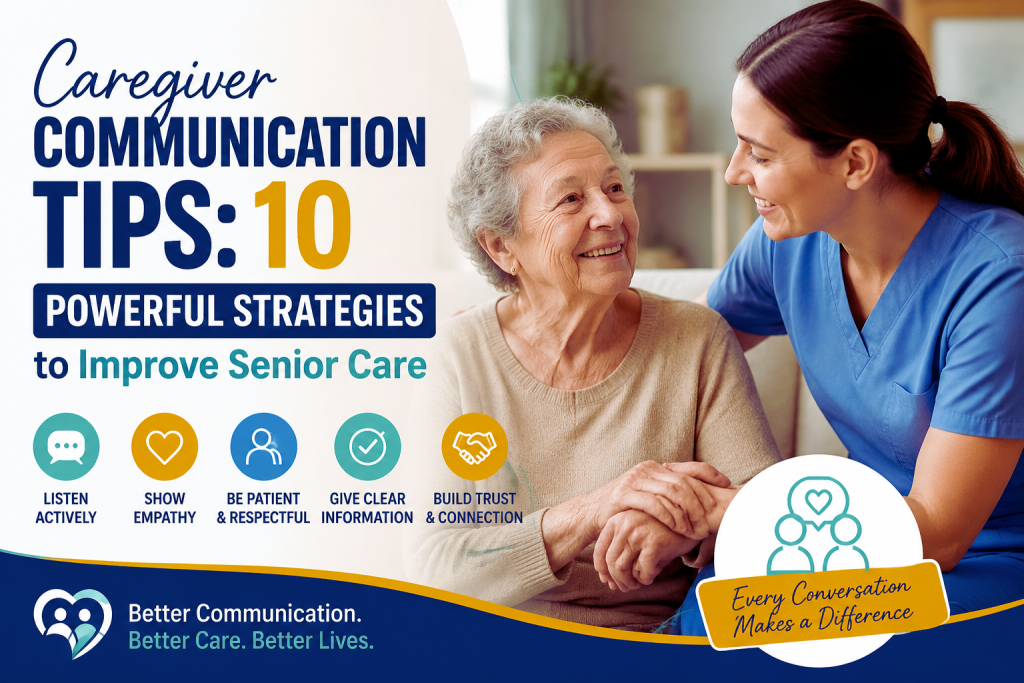
Introduction
Providing care for an aging loved one is a meaningful thing to do, but it can be tough, too. One of the important things a caregiver needs to know is how to communicate well. Good communication helps caregivers understand what older adults need, how they feel, and what they are worried about. It also helps create a respectful space for them. Whether you are talking to your parents, your spouse, or another family member, the way you talk and listen can really affect their emotional well-being and quality of life.
These caregiver communication tips are here to help families build relationships, avoid misunderstandings, and provide better care. As people get older, they may have trouble hearing, their memory may not be as good, and they may feel anxious or frustrated. This can make conversations harder. Learning how to talk to aging parents in a respectful way helps caregivers give them emotional support and also helps them work together better.
Why Good Communication Matters in Caregiving
Communication is not about sharing information. For caregivers, it is the foundation of every relationship and every decision they make with an adult. From talking about things to making healthcare decisions, being able to communicate well affects trust, cooperation, and emotional well-being. Using good caregiver communication tips can make caregiving less stressful. Create a more supportive environment for everyone.
Older adults often go through emotional and cognitive changes that affect how they express themselves. A caregiver who understands these changes can be patient of getting frustrated. This helps improve the caregiving experience and strengthens family relationships. Talking to parents with respect helps them keep their dignity and confidence even when they need more help. Good communication skills are essential when communicating with elderly parents because they help reduce misunderstandings and build stronger emotional connections.
Common Communication Challenges Caregivers Face

Even the dedicated caregivers have trouble communicating sometimes. Aging affects everyone differently. Understanding these challenges helps caregivers respond with patience and compassion. Communicating with elderly parents becomes easier when caregivers use simple language, maintain eye contact, and show genuine interest in their experiences. Knowing what the common obstacles are is one of the valuable caregiver communication tips because it helps families handle conversations better.
Memory Loss and Cognitive Decline
Conditions like dementia and Alzheimer’s disease can make conversations confusing or repetitive. Older adults may forget things that happened recently, ask the same questions over and over, or have trouble finding the right words. These changes can be frustrating for both caregivers and seniors if they are not handled with understanding.
When talking to parents who are experiencing memory loss, caregivers should not correct every mistake or argue about forgotten things. Instead, they should focus on reassuring them using language and staying calm. Gentle reminders and positive reinforcement can help make conversations more meaningful without causing stress.
Supporting people with decline also helps with senior mental health care by reducing feelings of embarrassment and confusion. Compassionate communication helps seniors keep their confidence even when they are having trouble thinking clearly.
Hearing and Vision Problems
As people get older, they may have trouble hearing or seeing, which can cause misunderstandings during conversations. Seniors may mishear words, miss information, or stop talking because it gets too hard.
Caregivers can improve conversations by speaking face-to-face with the person they are talking to and keeping background noise down. Good lighting can also help seniors read expressions and lip movements. These simple caregiver communication tips reduce frustration. Make conversations more comfortable.
Talking to parents is easier when caregivers are patient instead of repeating things loudly or showing irritation. Making adjustments can make a big difference in keeping interactions positive.
Emotional Stress and Anxiety
Many older adults experience changes because of declining health, losing independence, grieving, or feeling isolated. These emotions can show up as anger, sadness, fear, or withdrawal. Caregivers who recognize these feelings can respond with empathy or judgment.
Giving support to seniors starts with acknowledging their feelings instead of dismissing them. Simple statements like “I understand this is hard for you” can validate their feelings and encourage communication. This emotional connection strengthens relationships. Improves senior mental health care.
Learning how to talk to aging parents during times requires patience and reassurance. In addition to just focusing on solving problems, caregivers should create opportunities for seniors to express their emotions freely.
Resistance to Care
One of the challenges in caregiving is when older adults resist help. They may not want help because they are afraid of losing independence or feel embarrassed about needing support. Arguing usually does not solve these situations. Can make things worse.
Instead, caregivers should involve seniors in decision-making whenever possible. Giving them choices of orders allows older adults to keep some control. Explaining the reasons behind recommendations in a way that encourages cooperation without causing conflict.
Following these caregiver communication tips helps families turn conversations into collaborative discussions that respect the senior’s dignity while keeping them safe.
Communicating with Parents Effectively
As parents get older, the way they communicate with their children naturally changes. Their physical health, emotional experiences, and cognitive changes can affect how conversations go. Many adult children struggle with balancing their concern for their parents’ well-being with respecting their independence. Developing communication skills helps families navigate these changes with compassion and confidence.
Using practical caregiver communication tips helps create relationships built on honesty, patience, and mutual respect. When trying to control conversations, caregivers should focus on being supportive partners who empower their loved ones to make informed decisions.
How to Start Conversations
Many caregivers put off important discussions because they are afraid of upsetting their loved ones. Topics like declining health, driving safety, finances, or future care arrangements can be uncomfortable for everyone. However, avoiding these conversations often creates challenges later.
When talking to parents, choose a quiet place where everyone feels relaxed and can focus. Start by expressing concern or criticism. Explain that your goal is to support their health, comfort, and independence. This helps reduce defensiveness.
Understanding how to talk to aging parents also means asking questions rather than making assumptions. Encourage them to share their thoughts before offering suggestions. Listening carefully shows respect. Helps caregivers address concerns more effectively.
Patience is key during these discussions. Seniors may need time to process information or express their emotions. Letting the conversation develop naturally often leads to better outcomes than rushing to make decisions.
Talking About Health and Safety
Conversations about health and safety are among the important things caregivers do. Whether discussing medications preventing falls, nutrition, or medical appointments, clear communication promotes outcomes and protects a seniors independence.
Focusing on limitations emphasizes ways to maintain quality of life. Explain how certain recommendations can help seniors keep doing things they enjoy safely. This positive approach makes conversations feel supportive and non-restrictive.
Providing support during health discussions is just as important. Medical changes can create anxiety, fear, or uncertainty. A calm and reassuring attitude helps older adults feel understood and encourages them to participate in healthcare decisions.
These conversations also contribute to improved mental health care as older adults who feel involved in decision-making often have more confidence and emotional stability.
Discussing Future Care Plans
Planning for care is not easy, but having conversations early helps families make thoughtful decisions before emergencies happen. Topics may include home care services, assisted living, financial planning, legal documents, or healthcare preferences.
When talking to parents, frame these discussions as opportunities to honor their wishes instead of taking away their independence. Encourage them to describe how they see their future and what kind of support they would prefer if they need care.
Learning how to talk to aging parents about planning requires honesty and compassion. Avoid creating fear by focusing on worst-case scenarios. Instead, explain that planning ahead gives everyone peace of mind and ensures their preferences are respected.
Open conversations about care reduce uncertainty and strengthen family trust, improving long-term caregiving relationships.
Maintaining Respect and Dignity
Respect is the foundation of every caregiving relationship. Older adults deserve to be treated with the kindness and consideration they have shown throughout their lives. When physical or cognitive limitations increase, preserving dignity should remain a top priority.
The best caregiver communication tips always emphasize respect through words and actions. Address seniors politely, and do not interrupt them. Include them in conversations that affect their lives. Celebrate their experiences, acknowledge their wisdom, and recognize the contributions they continue to make.
Providing emotional support helps seniors maintain confidence despite life’s challenges. Respectful communication also strengthens mental health care by reducing feelings of loneliness, helplessness, and isolation.
Ultimately, talking to parents is about more than just sharing information. It is about preserving relationships built on trust, compassion, and understanding. When caregivers practice patience, empathy, and respect every day, they create an environment where older adults feel safe, valued, and empowered to live with dignity.
How to Talk to Aging Parents About Topics

As parents get older, certain conversations become more difficult but also more necessary. Discussions about driving, health conditions, finances, and living arrangements require patience, empathy, and understanding. Many adult children struggle with knowing the words to use because they do not want their parents to feel controlled or judged.
Learning how to talk to aging parents about topics requires a balance between showing concern and respecting independence. The goal is not to make decisions for them but to create conversations where they feel heard and involved. Using caregiver communication tips can help families approach challenging subjects with compassion while maintaining trust and dignity.
Sensitive discussions become easier when caregivers focus on support and criticism. Older adults are more likely to accept help when they feel respected and included in the decision-making process. Open communication also plays a role in senior mental health care because it reduces anxiety and helps seniors feel secure about their future.
Driving and Mobility
When talking to parents about driving, it is essential to approach the conversation with empathy and understanding. Instead of simply taking away their keys, caregivers should focus on finding alternative transportation solutions that respect their independence. This might include exploring public transportation options, hiring a driver, or using ride-sharing services.
Caregivers should also emphasize the importance of safety on the road, not only for the senior but also for other drivers and pedestrians. By framing the conversation around safety and mobility rather than just taking away their driving privileges, caregivers can help their parents understand the reasoning behind the decision.
It is also crucial to involve parents in the decision-making process and give them a sense of control. This can be done by asking for their input on transportation options or allowing them to choose which days they would like to go out. By doing so, caregivers can help their parents feel more comfortable with the transition and reduce the risk of resistance.
In addition to transportation, caregivers should also consider their parents’ overall mobility and how it may be impacting their lives. This can include discussing ways to make their home more accessible, such as installing handrails or a walk-in shower, or exploring exercise programs that can help improve their balance and strength.
By taking a supportive approach, caregivers can help their elderly parents navigate the challenges of driving and mobility while also maintaining their independence and dignity.
Driving is an emotional topic for families to discuss with their aging parents. For seniors, driving is about being independent, having freedom, and feeling confident. If someone suggests that they should change their driving habits, it can feel like they are losing control. That is why this conversation needs to be handled.
When talking to parents about driving, caregivers should not start the conversation by criticizing or scaring them. Instead of saying they are not capable of driving, they should focus on safety and ask how they feel about driving. They should ask if they feel driving or if they have noticed any challenges while driving.
Using communication can make this discussion more positive. Caregivers can suggest alternatives like transportation services, family support, or community programs that allow seniors to stay active without compromising their safety. The goal is not to take their independence but to find safe solutions that allow older adults to keep doing the things they enjoy. Providing reassurance and emotional support during these conversations helps seniors adjust to changes with confidence.
Medication Management
Managing medications can be complicated for seniors because they often take prescriptions for different health conditions. Forgetting doses, mixing medications incorrectly, or not understanding instructions can create health risks. However, discussing medication management requires sensitivity because many older adults value their independence.
When learning how to talk to aging parents about medication concerns caregivers should approach the conversation as a partnership. When taking control immediately, they should ask how they currently organize their medications and if they have any difficulties. Good communication tips include listening, asking questions, and offering assistance without making seniors feel incapable. Tools like medication organizers, reminders, and regular check-ins can provide support while allowing older adults to remain involved in their healthcare decisions.
Medication conversations also provide opportunities for senior mental health care. Some seniors may feel overwhelmed or worried about their health conditions. A supportive conversation can reduce stress. Help them feel more confident managing their daily routines.
Financial Decisions
Money is another subject that requires trust and respect. Many older adults consider financial independence an important part of their identity, making conversations about budgeting, expenses, or future planning challenging. Many families improve their relationships by learning better ways of communicating with elderly parents through patience, respect, and emotional awareness.
When communicating with parents about finances, caregivers should avoid making assumptions or approaching the discussion as if they cannot manage their own affairs. Instead, they should explain that planning ahead can protect their wishes and reduce stress for the family. Understanding how to talk to aging parents about decisions means focusing on preparation rather than control. They should discuss topics gradually and allow them time to share their thoughts. If necessary, they can involve trusted professionals who can provide guidance.
Respectful communication around finances also provides support for seniors because it helps them feel valued and involved. Planning together creates confidence. Ensures that their preferences remain central to future decisions. Successful communicating with elderly parents focuses on understanding their perspective rather than simply giving advice or making decisions for them.
Living Arrangements
Deciding where an older adult should live is often one of the emotional caregiving conversations. Some seniors prefer to remain in their homes, while others may benefit from additional support or alternative living arrangements. Understanding how to talk with aging parents about sensitive topics like health, finances, and living arrangements can help families build trust and avoid unnecessary conflict.
When discussing living options, caregivers should focus on comfort, safety, and quality of life rather than limitations. These conversations should happen before a crisis occurs, whenever possible, giving seniors time to express their preferences. Following communication tips means allowing older adults to share their concerns and fears. Many seniors worry that moving means losing independence or becoming disconnected from their surroundings. Listening to these concerns helps families find solutions that respect their needs.
A thoughtful approach to living arrangements supports senior mental health care because seniors feel involved instead of forced into decisions. The right conversation can transform a change into a positive transition.
Providing Emotional Support for Seniors
Caregiving is not about helping with physical needs. Emotional connection, companionship, and understanding are equally important. Many seniors experience changes such as retirement, health challenges, loss of loved ones, or reduced social interaction, which can affect their well-being.
Providing emotional support for seniors requires caregivers to recognize that feelings matter just as much as physical health. A simple conversation, a listening ear or a moment of encouragement can have an impact on a senior’s overall quality of life. Strong communication tips focus on building connections rather than only discussing tasks and responsibilities. Seniors need to feel appreciated, respected, and valued as individuals.
Recognizing Emotional Needs
Adults may experience emotions that they do not always express openly. Feelings of loneliness, fear, frustration, or sadness can sometimes appear as anger, withdrawal, or changes in behavior.
When communicating with parents, caregivers should pay attention not only to words but also to changes in mood and actions. Asking questions about how they feel can encourage honest conversations. Understanding how to talk to aging parents emotionally requires patience. Of immediately offering solutions, sometimes the most helpful thing a caregiver can do is listen and acknowledge their feelings.
Recognizing needs is an important part of senior mental health care because early support can help prevent feelings of isolation and hopelessness.
Reducing Loneliness Through Communication
Loneliness is a challenge among older adults and can negatively affect emotional and physical health. Regular communication is one of the most powerful ways to reduce isolation. When communicating with parents, make time for meaningful conversations rather than only discussing daily responsibilities. Ask about memories, hobbies, opinions, and personal experiences.
Learning how to talk to aging parents involves creating moments of connection that go beyond caregiving duties. Sharing stories, discussing interests, or simply spending quality time together can improve mood. Strengthen relationships. Consistent communication supports mental health care by encouraging emotional connection and reducing feelings of loneliness. Even small conversations can make seniors feel supported, respected, and cared for.
Caregiver Communication Tips for Seniors with Dementia
Communicating with seniors who have dementia requires patience, understanding, and flexibility. Memory loss and cognitive changes can affect how older adults understand information, express their thoughts, and respond to conversations. For caregivers, adapting communication methods is essential for maintaining trust and providing support. Using communication tips can make daily interactions easier while reducing frustration for both caregivers and seniors. Consistent and respectful communicating with elderly parents helps seniors feel included, supported, and confident in sharing their needs and concerns.

The goal is not simply to exchange information but to create moments of connection, comfort, and reassurance. With the approach, caregivers can continue building meaningful relationships even as dementia progresses. Dementia can change the way seniors process conversations. It does not remove their need for respect, kindness, and emotional connection. Providing emotional support for seniors with dementia helps them feel safe, valued, and understood.
Using Simple Language
When communicating with someone who has dementia, complex explanations and lengthy conversations can become overwhelming. Using clear language allows seniors to process information more easily and participate in discussions. Short sentences, words, and a calm tone of voice are important communication tips for dementia care. Communicating with elderly parents about health, safety, and lifestyle changes can be challenging, but a compassionate approach can make these conversations easier.
When giving multiple instructions at once, caregivers should focus on one idea or request at a time. This reduces confusion and helps seniors respond more comfortably. When communicating with parents experiencing memory changes, patience is essential. Allow time for responses and avoid rushing conversations. Seniors may need moments to understand questions or find the right words.
Understanding how to talk to aging parents with dementia also means focusing on meaning rather than perfect answers. When memories become unclear, seniors can still recognize kindness, comfort, and affection. Simple communication techniques contribute to senior mental health care because they reduce anxiety and create a more supportive environment.
Avoiding Arguments
One of the challenging situations for dementia caregivers is handling disagreements. Seniors with memory loss may believe something that’s inaccurate or become upset about situations they misunderstand. Correcting them repeatedly can increase frustration and emotional distress. A better approach is to avoid arguments and focus on reassurance. Providing emotional support for seniors is an essential part of caregiving because it helps older adults feel valued, understood, and connected while improving their overall emotional well-being.
These communication tips help caregivers respond with compassion rather than attempting to prove someone wrong. When communicating with parents who have dementia, acknowledge their feelings first. Caregivers can provide emotional support for seniors by listening with patience, showing empathy, and creating a safe environment where seniors feel comfortable sharing their thoughts and feelings. If they express fear, sadness, or frustration, respond to the emotion behind their words. For example of immediately correcting a misunderstanding offers comfort and redirects the conversation gently.
Learning how to talk to aging parents with challenges requires flexibility. Sometimes, maintaining peace and emotional comfort is more important than correcting every detail. This approach provides emotional support for seniors and helps maintain a positive relationship despite communication difficulties. Emotional support for seniors plays an important role in creating meaningful connections, reducing loneliness, and helping older adults feel cared for and respected.
Managing Repetitive Questions
Repetitive questions are common among seniors with dementia. A person may ask the question several times because they have forgotten the previous conversation or because they are seeking reassurance. For caregivers, repeated questions can become tiring. Responding with frustration may increase anxiety for the senior. Practicing patience is one of the important communication tips in these situations. Communicating with elderly parents is an ongoing process that requires understanding, flexibility, and a willingness to adapt as their needs and abilities change over time.
When communicating with parents, try answering each time calmly or using reminders such as notes, calendars, or visual cues. Understanding that repetition is often caused by memory changes rather than intentional behavior can help caregivers respond more positively. Knowing how to talk to aging parents with dementia means recognizing their needs. Sometimes the repeated question is not about information but also about seeking comfort and security. Providing reassurance supports mental health care by helping seniors feel safe and reducing unnecessary stress.
Responding with Compassion
Compassion is the foundation of dementia communication. Seniors with dementia may experience confusion, fear, frustration, or embarrassment because they notice changes in their abilities. Caregivers should respond with kindness and understanding rather than frustration or annoyance. By doing so, they can create a safe and supportive environment that allows seniors to feel comfortable and valued. Learning how to talk with aging parents about emotional and practical concerns helps create open communication and stronger connections between generations.
When communicating with parents who have dementia, it is essential to be patient and understanding. Caregivers should focus on providing support and reassurance rather than trying to correct or argue with them. By using language to avoid arguments and managing repetitive questions, caregivers can create a positive and supportive environment for seniors with dementia. This approach helps to reduce anxiety and stress and promotes senior mental health care.
Caregivers should also recognize the needs of seniors with dementia and respond with compassion and kindness. This helps to create a sense of safety and security and supports the well-being of the senior. In conclusion, communicating with seniors who have dementia requires an approach that is centered on compassion, patience, and understanding. By using the communication techniques, caregivers can create a positive and supportive environment that promotes better senior mental health care and overall well-being.
Caregivers should talk to seniors with kindness. Do not make them feel bad about how they are feeling. When caregivers are nice and gentle, it helps seniors feel better even when they are having trouble talking. Strong communication between caregivers and seniors is very important. It helps seniors keep their dignity and get the support they need. When caregivers are patient and understanding, it helps seniors feel better and strengthens their relationship with the caregiver.
Communicating with Doctors and Healthcare Professionals
Caregivers need to talk to doctors and healthcare professionals to take care of seniors. Doctors need to know what is going on with the senior so they can give them the care. Effective communicating with elderly parents helps strengthen family relationships and creates a supportive environment where seniors feel respected and valued.
Many caregivers do not know what to say to doctors or what questions to ask. When they know how to communicate well, they can help the senior get the right treatment and care. Caregivers can be helpers for their loved ones when they know how to talk to doctors and healthcare professionals. When communicating with elderly parents, it is important to speak clearly, listen carefully, and give them enough time to express their thoughts.
Asking the Right Questions
Many caregivers are afraid to ask questions during doctor visits because they do not want to take up much time. Asking questions is very important to understand what is going on and what needs to be done. Caregivers should ask about medicines, side effects, and what the senior can do to stay healthy. When caregivers ask questions, it helps them understand what is going on and make decisions. Caregivers should ask questions to understand, not to question the doctor.
Keeping Accurate Health Records
Caregivers should keep track of the senior’s health information, including medicines, doctor visits, and test results. This helps caregivers see how the senior is doing and what they need to do to help them. When caregivers have all the information, they can help doctors make decisions. This is especially important for seniors who have health problems or take many medicines. Communicating with elderly parents requires patience, empathy, and active listening to understand their feelings, concerns, and changing needs
Mistakes Caregivers Should Avoid
When caregivers are trying their best, they can still make mistakes. It is good to know what these mistakes are so caregivers can avoid them. One mistake is interrupting the senior when they are talking. This can make the senior feel like they are not being heard. Knowing how to talk with aging parents allows adult children to approach difficult discussions with compassion rather than making their parents feel pressured or controlled.
Caregivers should let the senior finish talking before they say something. Another mistake is talking fast. This can be hard for seniors to understand, especially if they have trouble hearing. Caregivers should talk slowly. Clearly, so the senior can understand. When learning how to talk with aging parents, it is important to listen actively, acknowledge their feelings, and involve them in decisions about their future.
Caregivers should also pay attention to how the senior is feeling, not just what they are saying. If the senior looks sad or scared, the caregiver should ask them what is wrong. Try to help them. Assuming what the senior wants or needs is another mistake. Caregivers should ask the senior what they want and need and listen to what they say. Communicating with elderly parents requires patience, understanding, and compassion to help them feel heard, respected, and supported during every stage of aging.
Improved Family Relationships
Caregiving can be hard on families, especially when they have to make decisions about the senior’s health or living situation. When family members communicate well, they can work together better. Caregivers should include the senior in conversations. Listen to what they want and need. This helps them feel respected and valued. When family members communicate well, they can avoid misunderstandings. Work together better. Strong communication helps families handle caregiving challenges and keep their relationships positive.
Better Health Outcomes
When caregivers communicate well with doctors and seniors, it helps the senior get care. Caregivers can help doctors understand what is going on with the senior and what they need. This helps doctors make decisions and give the senior the right treatment. By focusing on kindness and respect, communicating with elderly parents can become a meaningful way to provide emotional support, maintain trust, and strengthen family bonds. When seniors are involved in conversations about their health, they can understand what is going on and what they need to do. This helps them feel more in control and confident.
Conclusion
Caregiving can be hard and stressful. Good communication can help. When caregivers know what the senior needs and can talk to them about it, it makes caregiving easier. Caregivers can ask for help and share responsibilities when they communicate well. Strong communication skills allow caregivers to offer better emotional support for seniors, especially when dealing with aging challenges, health changes, or memory problems. The key to how to talk with aging parents successfully is combining honesty with kindness while ensuring they feel respected throughout every conversation.
When caregivers communicate well, they can reduce stress. Feel more confident. They can also take care of themselves better. Build stronger relationships with the senior and other family members. Good communication is one of the most important things caregivers can do to help seniors. Learning how to talk with aging parents requires patience, empathy, and respect to ensure they feel heard and valued during important conversations.
It helps build trust and understanding and gives seniors the support they need. Caregivers should be patient, kind, and understanding. Communicate well with seniors and doctors. This helps seniors feel valued and respected and gets them the care they need. Caregiving is a journey, and good communication is key to making it successful. Caregivers can improve communicating with elderly parents by practicing empathy and recognizing the emotional challenges that often come with aging.
FAQs
What are the important caregiver communication tips for seniors?
The important caregiver communication tips for seniors include listening carefully to what they have to say, speaking clearly so they can understand, showing them that you care about how they feel, respecting their independence, and being patient when you talk to them. Caregivers should try to understand what seniors are feeling and what they need, and make them feel safe and supported. Caregiver communication tips are very important for seniors.
Why is communication important in caregiving?
Communication is important in caregiving because it helps caregivers understand what seniors need physically, emotionally, and personally. When caregivers communicate well, they can avoid misunderstandings, build trust, make decisions, and give seniors the kind of care that is right for them. Caregiver communication is the key to caregiving.
How can caregivers communicate better with parents?
Caregivers can communicate better with elderly parents by listening to them without interrupting, using simple words, being patient, and encouraging them to talk openly. Communicating with parents works best when caregivers respect what they think and include them in decisions about their daily life and care. This is especially important for caregiver communication tips.
How do you talk with aging parents about topics?
When you need to talk with aging parents about topics, choose a good time and place, start by showing you care, and focus on how they feel instead of trying to make them decide something. You should talk about things like health, money, or where they live as a conversation, not as a demand. This will help you learn how to talk with aging parents.
Why is communication important for mental health care?
Communication is important for mental health care because it helps reduce feelings of loneliness, anxiety, and emotional stress. When seniors talk to their caregivers and family members regularly, they can express their feelings, feel valued, and stay connected emotionally. This is a part of senior mental health care.
How can caregivers provide support for seniors?
Caregivers can provide emotional support for seniors by spending quality time with them, listening to what they are concerned about, helping them stay connected with others, and showing appreciation for their life experiences. Just talking to them and reassuring them can make a difference in how confident and emotionally well they feel. This is a part of caregiver communication tips.
How can caregivers communicate with seniors who have dementia?
Caregivers should use words to speak calmly, avoid arguing, and focus on reassuring seniors who have dementia. Understanding how they feel and responding with patience can make conversations easier. Help them feel comfortable and secure. This is a part of communicating with seniors who have dementia.
What communication mistakes should caregivers avoid?
Caregivers should avoid interrupting seniors speaking quickly ignoring their nonverbal signals making assumptions or dismissing their feelings. These mistakes can cause frustration. Reduce trust between caregivers and seniors. Caregivers should be careful to avoid these mistakes.

Welcome to USA Senior Citizen, a trusted resource dedicated to helping older adults live healthier, happier, and more independent lives.
Our mission is to provide valuable information, practical tips, and helpful guidance for seniors and their families. We cover important topics including **senior health, retirement planning, senior living, caregiving, technology for seniors, and everyday lifestyle solutions**.
At USA Senior Citizen, we believe aging is not about slowing down — it is about embracing new opportunities, staying connected, and enjoying every stage of life. Our goal is to make life easier for seniors by sharing simple, reliable, and easy-to-understand information that supports better decisions and improved well-being.
Whether you are looking for advice on maintaining a healthy lifestyle, exploring retirement options, learning new technology skills, or finding ways to stay active and independent, USA Senior Citizen is here to guide you.
We are committed to creating a supportive online community where seniors can discover useful resources, gain confidence, and continue living life with dignity and purpose.
USA Senior Citizen — Empowering Seniors to Live Better Every Day.