
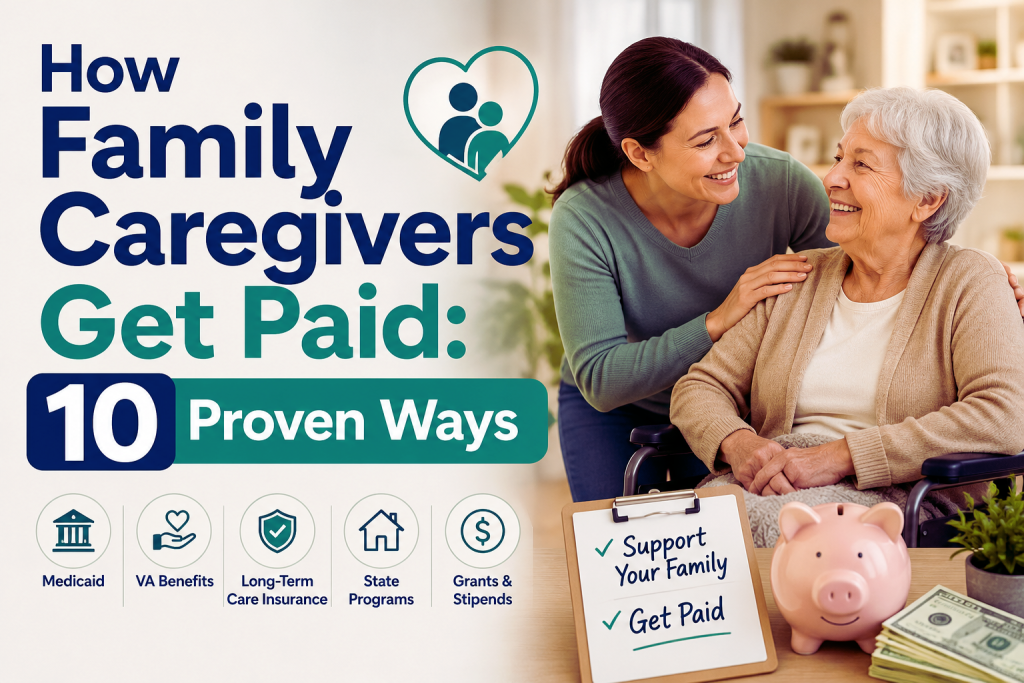
Takeaways: How Family Caregivers Can Receive Payment
How family caregivers get paid is an important question for millions of families supporting elderly loved ones. Many family caregivers provide essential care every day but are unaware of Medicaid caregiver benefits, caregiver tax credit options, and other financial help available to reduce their burden. Family caregiving is a big job that requires a lot of time, patience, and dedication. Many people take care of their aging parents, spouses, or relatives without getting paid, which can cause problems over time. However, some programs and options can help family caregivers get paid through government assistance, insurance benefits, tax advantages, and private agreements.
Exploring caregiver tax credit options is an important step for families looking for ways to lower expenses and receive financial support for caregiving responsibilities. Programs like Medicaid caregiver benefits, Veterans Affairs support, caregiver agreements, and financial assistance programs can help eligible caregivers get paid for the work they do. Understanding these options can help families manage the cost of paying for senior care while making sure their loved ones get the support they need.

Why Family Caregivers Should Consider Getting Paid
Millions of family members take care of adults who need help with daily activities, medical support, mobility, transportation, and personal care. Even though caregiving is often an act of love, it can also affect a caregiver’s income, career, and personal financial stability. The caregiver tax credit is one potential resource that can help reduce the financial stress associated with providing long-term care for seniors.
Many caregivers have to reduce their working hours or quit their jobs to take care of their loved ones. Expenses like healthcare, transportation, home modifications, and everyday necessities can add up quickly. Cause financial pressure. This is why it is so important for families to understand how family caregivers can get paid.
Getting paid as a family caregiver does not mean that the value of caregiving is about money. Instead, it recognizes the time, effort, and responsibilities that come with providing professional-level care. Available programs can provide help for caregivers and make it easier for families to take care of their loved ones without experiencing severe financial stress.
10 Ways Family Caregivers Can Get Paid
Medicaid Self-Directed Care Programs
One of the common ways family caregivers get paid is through Medicaid self-directed care programs. These programs allow eligible older adults and individuals with disabilities to choose who provides their care, including family members.
Through Medicaid self-directed care, recipients may receive funding from their state Medicaid program. Use those funds to hire an approved caregiver. In some cases, a family member like an adult child, spouse, or relative may qualify to receive payment for providing daily care services.
Medicaid caregiver benefits can cover types of support including help with bathing, dressing, meal preparation, medication reminders, transportation, and other daily activities. These programs are designed to help seniors stay safely at home rather than move into expensive care facilities.
The rules for Medicaid caregiver payments vary by state. Some states require caregivers to complete training, pass background checks, or work through an approved financial management service. Because eligibility requirements differ, families should research their state’s Medicaid programs to understand options.
Steps to Become a Paid Family Caregiver Through Medicaid
The process of receiving Medicaid caregiver payments usually starts by determining whether the care recipient qualifies for Medicaid services. Eligibility is often based on income, assets, age, disability status, or medical needs.
After confirming eligibility, families can explore self-directed Medicaid programs in their state. The caregiver and care recipient may need to create an approved care plan that explains the type of assistance required and the number of hours of care needed.
Once approved, caregivers may receive payment through an agency or a Medicaid-approved payment system. These programs provide a source of financial help for caregivers who dedicate their time to supporting elderly family members.
Veterans Affairs Caregiver Programs
Families caring for veterans may have opportunities to receive financial support through Veterans Affairs caregiver programs. These programs recognize the important role family members play in helping veterans manage health conditions, disabilities, and daily living needs.
Eligible caregivers may receive assistance through VA programs depending on the veteran’s service history, medical condition, and level of care required. Support may include caregiver payments, education, counseling, respite services and access to healthcare resources.
For families looking for ways to get paid, VA caregiver programs can provide financial assistance while helping veterans stay in a comfortable home environment.
To apply, caregivers generally need to confirm the veteran’s eligibility, complete the required application process, and provide information about the care being provided. Once approved, caregivers can access benefits designed to reduce the burden of caregiving.
Create a Personal Care Agreement
Another option for family caregivers to get paid is to create a private personal care agreement. This is a written contract between the caregiver and the person receiving care that outlines responsibilities, services, and payment arrangements.
A personal care agreement is often used when an elderly parent or family member has savings, retirement income, or other financial resources available for care expenses. Instead of hiring an outside caregiver, the family can create a formal arrangement where the relative providing care receives compensation.
A written caregiver agreement should explain the type of services provided, payment amount, schedule, and expectations of both parties. It can help prevent misunderstandings and provide documentation for tax purposes.
This option can also support families who are managing the challenge of paying for care by allowing available resources to be used for a trusted family caregiver.
Use Long-Term Care Insurance Benefits
Long-term care insurance is another option for families exploring how family caregivers get paid. Some long-term care insurance policies allow benefits to be used for payments to family members who provide caregiving services.
Coverage depends on the insurance policy. Some policies may allow reimbursement for care assistance with daily activities and home-based caregiving services. However, not every policy includes payments for relatives, so families should carefully review the policy terms.
To access these benefits, caregivers usually need to contact the insurance provider, confirm eligibility, submit required documents, and follow the company’s approval process. For families struggling with the rising costs of care, long-term care insurance can provide additional support and reduce the financial challenges associated with caregiving.
Understanding how a caregiver tax credit works can help families discover additional ways to manage the costs of senior care. For many families, a caregiver tax credit can be an important source of financial assistance when providing daily care and support to an elderly loved one. Checking eligibility for a caregiver tax credit can help caregivers save money while handling the responsibilities of long-term family care.

Take Advantage of Caregiver Tax Credits and Deductions
While not all caregivers receive payments, tax benefits can provide valuable financial relief. A caregiver tax credit may help eligible individuals reduce their tax burden when supporting a qualifying family member.
Tax rules for caregivers can vary depending on income, relationship status, and the type of expenses involved. Some caregivers may qualify for deductions or credits related to costs of dependent care, healthcare expenses, or other caregiving-related payments.
Understanding tax benefits is an important part of learning how family caregivers get paid because reducing expenses can provide similar financial value as receiving direct compensation. A caregiver tax credit can help eligible family caregivers reduce their financial burden by providing tax savings for certain caregiving expenses and support costs.
Caregivers should keep records of caregiving expenses, medical bills, transportation costs, and other related payments. Consulting a tax professional can help families understand which benefits they may qualify for and how to properly claim them.
By learning about caregiver tax credit programs, family caregivers can better plan their finances and access available support.
Apply for Paid Family Leave Programs
Paid family leave programs are another option for caregivers who need time away from work to care for an aging parent, spouse or family member. These programs allow eligible employees to receive income while taking approved leave to provide caregiving support.
Many caregivers face a choice between earning an income and supporting a loved one. Paid family leave can help reduce this pressure by providing temporary wage replacement while allowing caregivers to focus on essential responsibilities.
The availability of paid family leave depends on the caregiver’s state, employer policies, and eligibility requirements. Some programs may cover time spent caring for parents, family members with serious health conditions, or relatives who need ongoing assistance.
For individuals researching how family caregivers get paid, paid family leave can be an option because it provides financial support without requiring caregivers to leave their jobs permanently.
Steps to Access Paid Family Leave Benefits
To apply for paid family leave, caregivers usually need to confirm whether their state or employer offers a qualifying program. The caregiver may need to provide documentation showing that the family member requires care.
After completing the application process, eligible caregivers can receive payments during their leave period. The amount and duration of benefits vary depending on location and program rules.
Paid family leave is not a caregiver salary, but it can provide important financial help for caregivers during periods when caregiving responsibilities become more demanding.
Explore State and Local Caregiver Assistance Programs
Many states and local communities offer caregiver assistance programs designed to support families caring for adults. These programs can provide resources, services, and direct financial support for caregivers.
Local organizations such as Area Agencies on Aging and Aging and Disability Resource Centers help families identify benefits and support options in their communities.
These programs may assist with:
- Caregiver training and education
- Respite care services
- Transportation support
- Home care resources
- Support groups and counseling
Although not every program provides caregiver payments, they can offer valuable financial help for caregivers by reducing the cost of essential services.
For families searching for how family caregivers get paid, exploring programs is important because some states have unique caregiver compensation options that are not widely advertised.
Consider Structured Family Caregiving Programs
Family caregiving programs allow eligible individuals to receive care from family members while providing compensation to those caregivers. These programs are designed to support seniors and individuals with disabilities who prefer receiving care at home.
Under these programs, caregivers may receive payments while following an approved care plan. The caregiver may also receive training, supervision, and ongoing support to ensure quality care.
Structured family caregiving programs typically require the caregiver to:
- Meet program eligibility requirements
- Paying for senior care
- Complete required training
- Provide approved caregiving services
- Maintain documentation of care activities
These programs can be a solution for families looking for Medicaid caregiver benefits and other forms of compensation while keeping loved ones in a familiar home environment.
Look Into Adult Foster Care Programs
Adult foster care programs are another option for family caregivers to get paid. These programs allow eligible caregivers to provide care for adults with disabilities or older adults in their homes.
Caregivers may receive payment for providing room, board, and personal care services. The amount of payment varies depending on the program and the level of care required.
To apply, caregivers usually need to meet program eligibility requirements, complete training, and pass a background check. Once approved, caregivers can receive payment for providing care to adults.
Explore Other Local Resources
Finally, family caregivers can explore local resources that may provide financial assistance or support. These may include:
- non-profit organizations that offer caregiver support and resources
- Community-based programs that provide financial assistance for caregivers
- Employer-sponsored benefits that offer paid leave or other forms of support
By exploring these options, family caregivers can find the help they need to continue providing care for their loved ones while also managing their own financial well-being.
Adult foster care programs provide another way for family members to get paid for taking care of their loved ones. These programs let adults who need help live in a home instead of a traditional care facility.
In some states, family members can become caregivers and get paid for helping with daily tasks. The family caregiver may help with things like care, household chores, supervision, transportation and other important needs.
The rules for adult foster care vary by state and may include things like home inspections, caregiver training, background checks, and approval from a state agency.
For families who’re worried about the high cost of senior care, adult foster care programs can be a more affordable option that lets seniors stay close to their family.
Employer and Community Support Programs
Some employers and nonprofit organizations help employees who are taking care of family members. As caregiving responsibilities get bigger, more workplaces are offering benefits that help employees balance work and family care.
Employer support for family caregivers may include things like work schedules, paid time off to care for a family member, employee assistance programs, and access to caregiving resources.
Community organizations may also offer grants, financial help, transportation programs and education for family caregivers. While these options may not always give family caregivers payments, they can reduce the cost of caregiving and provide extra support.
Combining workplace benefits with government programs can help families find ways to get paid for caregiving or reduce the financial burden of taking care of a loved one.
How to Qualify for Paid Family Caregiver Programs
To qualify for paid family caregiver programs, family caregivers must meet requirements that depend on the program, state rules, and the needs of the person being cared for.
Things that may determine eligibility include the family caregiver’s relationship to the person being cared for, the senior’s medical condition, income level, disability status, and the amount of care needed.
Many programs require family caregivers to provide paperwork showing that the person needs help with tasks. Some programs may also require family caregiver training, background checks, or approval from healthcare professionals.
Understanding these requirements can help families choose the program and increase their chances of getting paid.

How Much Can Family Caregivers Get Paid?
The amount of money family caregivers can get paid varies depending on the program, location, and level of care provided. Some family caregivers may get paid by the hour while others may get a payment through government programs, insurance benefits, or private agreements.
Things that affect how family caregivers get paid include:
* The location of the family caregiver
* The number of hours spent caregiving
* The type of help needed
* The funding available through the program
* The eligibility of the person being cared for
Medicaid programs, VA benefits, and private agreements may all have payment structures. Families should research options to understand what compensation may be available in their area.
Taxes and Legal Considerations for Paid Family Caregivers
Are Payments to Family Caregivers Taxable?
One important thing to consider when learning how family caregivers get paid is understanding the tax impact of caregiver compensation. Some payments may be considered income while others may have different tax rules depending on the program providing the funds.
Family caregivers should keep records of payments received, caregiving agreements, and related expenses to properly manage tax responsibilities.
Understanding Tax Credit Opportunities for Family Caregivers
A tax credit for family caregivers may help eligible individuals reduce the impact of caregiving. Tax benefits can provide support for family caregivers who spend money on expenses, healthcare services, and other necessary care-related costs.
Tax rules change regularly, so family caregivers should review guidelines or speak with a tax professional to understand available benefits.
Protecting Yourself With a Legal Caregiver Agreement
A written caregiver agreement can protect both the family caregiver and the person being cared for. It clearly explains responsibilities, payment terms, and expectations.
A formal agreement can help prevent family conflicts and provide paperwork showing that payments are for caregiving services. For families using arrangements, this step is especially important when managing paying for senior care through personal finances.
Financial Help for Family Caregivers Beyond Direct Payments
Not every caregiver program provides compensation, but many resources can reduce the costs associated with caregiving. Additional forms of help for family caregivers may include assistance with healthcare costs, food programs, transportation services, home modifications, and respite care.
Respite care is especially valuable because it allows family caregivers to take breaks while ensuring their loved one continues receiving support. Taking advantage of resources can prevent caregiver burnout and make long-term caregiving more manageable.
How Paying for Senior Care Can Become More Affordable
The cost of care keeps going up, making financial planning an important part of family caregiving. Families can reduce expenses by combining support options, including Medicaid programs, insurance benefits, tax advantages, and community resources. Understanding how family caregivers get paid allows families to make decisions about care arrangements.
Rather than relying on one source of support, many families combine multiple programs to create a more sustainable caregiving plan. Whether through Medicaid caregiver benefits, a tax credit for family caregivers, or other assistance programs, exploring options can make quality senior care more affordable.
Conclusion
Being a family caregiver is a responsibility that requires a lot of dedication, patience, and compassion. Many people care for their loved ones because they love them and want to help. Caring for someone can be expensive and cause a lot of stress. Family caregivers need to know how they can get paid for taking care of their loved ones.
There are ways that family caregivers can get paid. These include Medicaid caregiver benefits, VA caregiver programs, private caregiver agreements, and paid family leave. There is also a caregiver tax credit that some people can get. Each of these programs has rules, so family caregivers need to learn about the options available in their state and situation. Many family caregivers may qualify for a caregiver tax credit, which can provide valuable financial relief while they manage the costs of caring for an elderly loved one.
Finding the way to get paid can be hard. Family caregivers may need to use a combination of programs to get the help they need. These programs can include government assistance, insurance benefits, and tax advantages. These resources can make it easier for family caregivers to pay for care. This way, older adults can keep getting the care they need from people they trust.
By doing some research and planning, family caregivers can protect their financial well-being. They can also keep providing the comfort, safety, and support that their loved ones need. Family caregivers can do this by learning about the programs available and finding the ones that work best for them.
FAQs
Can a family member get paid for taking care of a parent?
Yes, many family members can get paid for caring for a parent. Some programs allow family members to get paid for caregiving. These include Medicaid self-direction programs, VA caregiver benefits, long-term care insurance, and private caregiver agreements. Whether or not a family member can get paid depends on the state they live in, the care recipient’s needs, and the programs that are available.
How do I get paid if I am taking care of a family member?
Family caregivers can get paid in different ways. They can get paid through government programs, insurance benefits, paid family leave, or private arrangements. One common way that family caregivers get paid is through Medicaid caregiver benefits. Some states allow eligible seniors to hire family members as paid caregivers through self-directed care programs.
Can my mom pay me to be her caregiver?
Yes, a parent can pay a family member for caregiving services. This is usually done through a personal care agreement. This agreement should clearly explain the caregiver’s duties, payment amount, and responsibilities. It is a good idea to have a written agreement to avoid misunderstandings. It can also be important for tax and legal purposes.
Can you get paid for looking after your parents?
Yes, caregivers can get paid for looking after their parents. Some programs allow caregivers to get paid for caregiving. These include Medicaid programs, veterans benefits, long-term care insurance, and private family agreements. Whether or not a caregiver can get paid depends on where they live, the type of care needed, and the programs that are available.
Does Medicare pay family caregivers?
No, Medicare does not usually pay family members for providing caregiving services. However, Medicare may cover healthcare services that support seniors and their caregivers. This can include medical care when eligibility requirements are met.
How do I apply for Medicaid caregiver benefits?
To apply for Medicaid caregiver benefits, families should contact their state Medicaid office. They should ask about self-directed care programs. The process usually involves checking eligibility, creating a care plan, completing required paperwork, and meeting caregiver requirements.
What states pay family caregivers?
Many states offer programs that allow family caregivers to receive payment. The rules and compensation amounts differ from state to state. Some states provide Medicaid self-direction programs, structured family caregiving options, or other financial assistance programs for caregivers.
How much do family caregivers get paid?
The amount that family caregivers receive depends on the program, state, hours of care provided, and the needs of the person receiving care. Some caregivers are paid hourly while others may receive compensation through Medicaid, VA programs, insurance benefits or private agreements.
What is the best way to get paid as a family caregiver?
The best option depends on the caregiver’s situation. Medicaid caregiver benefits, VA programs, private caregiver agreements, and long-term care insurance are some of the common ways that families receive financial support while providing care. Family caregivers should research the options available and find the ones that work best for them.
Senior Caregiving: A Complete Guide with 15 Expert Tips for Better Elder Care in 2026

Welcome to USA Senior Citizen, a trusted resource dedicated to helping older adults live healthier, happier, and more independent lives.
Our mission is to provide valuable information, practical tips, and helpful guidance for seniors and their families. We cover important topics including **senior health, retirement planning, senior living, caregiving, technology for seniors, and everyday lifestyle solutions**.
At USA Senior Citizen, we believe aging is not about slowing down — it is about embracing new opportunities, staying connected, and enjoying every stage of life. Our goal is to make life easier for seniors by sharing simple, reliable, and easy-to-understand information that supports better decisions and improved well-being.
Whether you are looking for advice on maintaining a healthy lifestyle, exploring retirement options, learning new technology skills, or finding ways to stay active and independent, USA Senior Citizen is here to guide you.
We are committed to creating a supportive online community where seniors can discover useful resources, gain confidence, and continue living life with dignity and purpose.
USA Senior Citizen — Empowering Seniors to Live Better Every Day.