
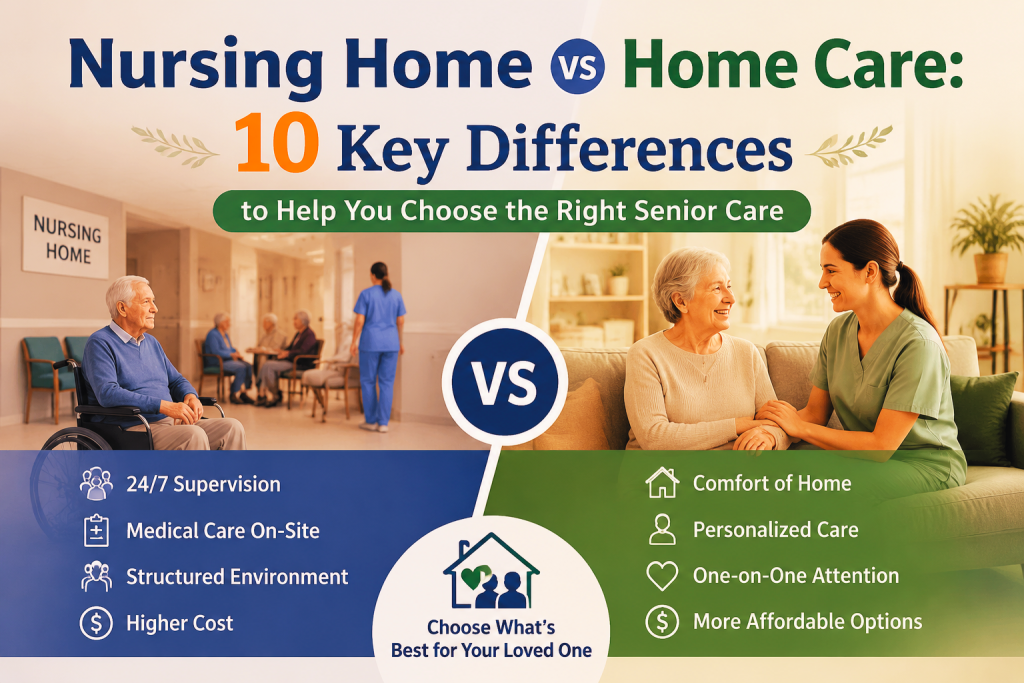
Introduction: Understanding Nursing Home vs Home Care Options
Choosing the right care option for an aging loved one is one of the most important decisions families face. As seniors experience changes in their health, mobility, and daily needs, families often compare nursing home vs home care to determine which option provides the best support, comfort, and quality of life.

Both nursing homes and home care services have unique benefits and challenges. A nursing home may provide advanced medical support and 24-hour supervision, while home care allows seniors to remain in a familiar environment with personalized assistance. The right choice depends on a senior’s health condition, level of independence, financial situation, and personal preferences.
Understanding the differences between these senior care services can help families make an informed decision. Whether you are exploring long-term care options or looking for daily assistance, knowing what each service provides is the first step toward finding the right solution.
What Is the Difference Between a Nursing Home and Home Care?
The main difference between a nursing home and home care is where care is provided and the level of support available.
A nursing home is a residential facility where seniors live and receive professional care around the clock. These facilities are designed for older adults who need regular medical attention, rehabilitation, or assistance with most daily activities.
Home care, on the other hand, allows seniors to remain in their own homes while receiving help from professional caregivers. Home care services can include assistance with personal tasks, companionship, meal preparation, medication reminders, and support with everyday routines.
When comparing nursing home vs home care, families should consider whether their loved one needs continuous medical supervision or mainly requires help with daily living while maintaining independence.
What Is Nursing Home Care?
A nursing home provides residential care for seniors who need a higher level of assistance than can usually be provided at home. These facilities include trained healthcare professionals who help residents manage medical conditions, mobility challenges, and personal care needs.
Who Typically Needs Nursing Home Services?
Nursing homes are often suitable for seniors who:
- Need 24-hour supervision
- Require regular medical monitoring
- Have difficulty completing daily activities independently
- Need rehabilitation after illness, surgery, or injury
- Have advanced conditions such as severe dementia or complex health problems
Unlike basic home assistance, nursing homes provide a structured environment where healthcare professionals are available to respond to emergencies and changing medical needs.
Medical Support Available in Nursing Homes
Many nursing homes offer services such as:
- Medication management
- Physical therapy
- Wound care
- Health monitoring
- Assistance with chronic conditions
- Emergency medical support
For seniors with serious health concerns, the availability of professional care at all times can provide families with greater peace of mind.
What Is Home Care?
Home care allows seniors to receive assistance while continuing to live in their own homes. This option is popular among older adults who want to maintain independence and stay connected to their familiar surroundings.
Professional caregivers visit the senior’s home and provide support based on their specific needs. Care plans can range from a few hours per week to daily or full-time assistance.
Types of Home Care Services
Home care may include:
- Help with bathing and dressing
- Meal preparation
- Light housekeeping
- Transportation assistance
- Medication reminders
- Companionship and emotional support
- Assistance with mobility
For many seniors, home care provides the comfort of receiving support without leaving the home they know and love.
Nursing Home vs Home Care: 10 Key Differences
Level of Medical Care and Health Support
One of the biggest differences between nursing home and home care is the level of medical assistance available.
Nursing homes are designed for seniors who need ongoing healthcare support. Nurses and trained staff are available to monitor health conditions, manage medications, and provide medical care when needed.
Home care usually focuses more on personal assistance and daily living support. While some home care providers may offer limited healthcare services, many caregivers are not equipped to handle complex medical situations.
When choosing senior care services, families should evaluate whether their loved one requires medical supervision or mainly needs help with daily activities.
Personal Care and Daily Assistance
Many seniors need help with everyday tasks as they age. Both nursing homes and home care can provide personal assistance, but the approach is different.
In nursing homes, residents receive support according to facility schedules and care plans. Staff members assist multiple residents throughout the day.
With home care, seniors often receive one-on-one attention from a caregiver. This personalized approach allows caregivers to focus directly on the senior’s needs and preferences.
Personal care assistance may include:
- Bathing
- Dressing
- Grooming
- Eating assistance
- Toileting support
- Mobility assistance
For seniors who value personalized attention, home care can offer a more customized experience.
Independence and Quality of Life
Maintaining independence is an important factor when comparing nursing home vs home care.
Many seniors prefer staying at home because they feel more comfortable in a familiar environment. Home care allows older adults to maintain their routines, enjoy personal freedom, and make decisions about their daily activities.
Nursing homes provide a safe and supportive environment, but residents usually follow facility schedules for meals, activities, and daily routines.
The best choice depends on the senior’s personality, health condition, and ability to live safely with support.
Social Interaction and Emotional Well-Being
Social connection plays an important role in senior health and happiness.
Nursing homes often provide built-in opportunities for social interaction through:
- Group activities
- Exercise programs
- Community events
- Shared dining areas
- Senior friendships
These activities can help reduce loneliness and encourage emotional well-being.
Home care provides a different type of social support. A caregiver can offer companionship, conversation, and emotional encouragement. However, seniors may need additional opportunities to interact with friends, family, or community groups.
Families should consider their loved one’s social needs when choosing between these care options.
Safety and Emergency Support
Safety is another major factor families should consider when comparing senior care services.
Nursing homes are designed with senior safety in mind. They typically have:
- Emergency response systems
- Safety equipment
- Trained staff available at all times
- Support for seniors with mobility issues
Home care can also be safe when the home environment is properly prepared. Families may need to make changes such as installing grab bars, improving lighting, removing fall hazards, and creating emergency plans.
For seniors with serious health risks or frequent emergencies, a nursing home may provide additional security.
Cost Comparison: Nursing Home vs Home Care
Cost is often one of the biggest considerations when choosing senior care services. Choosing senior care services involves finding a trustworthy provider that offers compassionate, personalized, and reliable support for older adults. Understanding the benefits and challenges of each option is essential when choosing senior care services that best fit your family’s needs.
Nursing homes can be expensive because they include housing, meals, medical support, and 24-hour care. The total cost depends on location, facility quality, and the level of assistance required.
Home care costs vary depending on:
- Number of caregiver hours needed
- Type of services provided
- Caregiver qualifications
- Frequency of visits
Some families find part-time home care more affordable, while others may need extensive daily support that becomes costly over time.
Before making a decision, families should compare costs, insurance options, and available financial assistance programs.

Caregiver Availability and Personal Attention
The amount of personal attention a senior receives can differ significantly between nursing homes and home care.
Families can make better decisions by researching and comparing providers before choosing senior care services for their elderly loved ones. Choosing senior care services is an important decision that can improve a senior’s comfort, independence, and overall quality of life. In a nursing home, caregivers and nurses support multiple residents, meaning attention is shared among many people.
With home care, seniors often receive direct one-on-one support from a caregiver. This allows the caregiver to understand the senior’s habits, preferences, and specific needs. Before choosing senior care services, evaluate your loved one’s medical needs, daily routines, budget, and preferred living environment.
However, finding reliable caregivers requires careful research. Families should focus on finding trustworthy caregivers by checking experience, qualifications, background checks, and references.
Flexibility and Customized Care Plans
Another important factor when comparing nursing home vs home care is the flexibility of care services. Every senior has different needs, preferences, and routines, so choosing a care option that can adapt over time is essential.
Personalized Care Through Home Care Services
One of the biggest advantages of home care is the ability to create a customized care plan based on the senior’s lifestyle. Caregivers can provide support according to the individual’s schedule rather than following a fixed facility routine.
For example, a home caregiver can help with:
- Morning and evening routines
- Meal preparation based on personal preferences
- Transportation to appointments
- Medication reminders
- Household activities
- Personal hobbies and daily interests
This flexibility allows seniors to maintain a sense of control and independence.
Structured Care Plans in Nursing Homes
Nursing homes also provide personalized care plans, but daily routines are usually more structured. Residents typically follow schedules for:
- Meals
- Medication
- Activities
- Therapy sessions
- Medical appointments
A structured environment can be beneficial for seniors who need consistent supervision and professional support.
When choosing senior care services, families should consider whether their loved one prefers flexibility at home or the organized environment of a nursing facility. Choosing senior care services becomes easier when you understand the different options available, including home care, nursing homes, and assisted living.
Family Involvement and Caregiver Responsibilities
Family involvement is another important consideration when deciding between nursing home and home care.
Many families want to remain actively involved in their loved one’s care, but managing senior care responsibilities alone can become challenging over time.
Family Role in Home Care
With home care, family members often remain closely involved. They can:
- Visit regularly
- Communicate with caregivers
- Help make care decisions
- Participate in daily activities
However, family caregivers may experience stress or burnout if they take on too many responsibilities without professional support.
Family Role in Nursing Home Care
Nursing homes handle many daily care responsibilities, allowing family members to focus more on emotional support rather than constant caregiving tasks.
Families can spend quality time with their loved ones without the pressure of managing every aspect of care.
The best option depends on the family’s availability, resources, and ability to provide support.
Long-Term Care Needs and Future Planning
A senior’s current needs may change over time, making future planning an important part of choosing the right care option.
When comparing nursing home vs home care, families should think about not only what support is needed today but also what may be required in the future.
Signs Home Care May No Longer Be Enough
Home care may become challenging if a senior:
- Needs constant medical supervision
- Has frequent falls or emergencies
- Requires extensive assistance with daily activities
- Experiences advanced memory problems
- Needs specialized healthcare services
In these situations, transitioning to a nursing home may provide safer and more appropriate care.
Planning for Senior Care
Families should discuss:
- Healthcare needs
- Financial planning
- Personal preferences
- Future living arrangements
Early planning can make the transition easier and reduce stress during emergencies.
Pros and Cons of Home Care
Benefits of Choosing Home Care
Home care offers several advantages for seniors who want to remain in a familiar environment.
Comfort of Staying at Home
Many seniors feel more comfortable surrounded by their own belongings, memories, and familiar surroundings. Remaining at home can provide emotional security and reduce stress.
Challenges of Home Care
Although home care provides many benefits, families should also consider potential challenges.
Limited Medical Support
Most home caregivers focus on personal care and daily assistance rather than complex medical treatment.
Managing Caregiver Availability
Finding backup care during caregiver vacations, illness, or emergencies can sometimes be challenging.
Pros and Cons of Nursing Homes
Choosing a nursing home is a decision. You need to think about the good and the bad things. Nursing homes can help seniors who need care with daily things and a safe place to live. Families should know the downsides before they decide.
Benefits of Nursing Home Care
24/7 Professional Supervision
One of the things about nursing homes is that they have people to help all the time. Staff are there day and night to assist with things, check on health, and help in emergencies. This makes nursing homes a good choice for seniors who need a lot of support.
Access to Healthcare Services
Nursing homes have healthcare services that you might not get at home. Seniors can get help with medicine, therapy, and health problems. This can make seniors safer and healthier.
Social Activities and Community Support
Nursing homes have things for seniors to do together, like exercises, events, and meals. These things can help seniors make friends, stay active, and not feel lonely.
Safe Living Environment
Nursing homes are made for adults, especially those who have trouble moving around or have health problems. They have safety features like emergency systems, easy-to-get-around spaces, and staff to help.
Challenges of Nursing Home Care
Higher Costs
One of the things about nursing homes is that they cost a lot. Since nursing homes provide a place to live, food, healthcare, and help all the time, it can be expensive. Families should think carefully about their money before choosing a nursing home.
Adjusting to a New Place
Moving from home to a nursing home can be hard for seniors. They might need time to get used to a new place, new routines, and living with others. If families help seniors with this change, it can be easier.
Less Freedom
Nursing homes have schedules for meals, activities, and daily things. Some seniors might feel like they do not have as much control over their lives as they did at home.
How to Choose Between a Nursing Home and Home Care
Choosing between a nursing home and home care is about understanding what your senior needs, what they like, what their health is like, and what they will need in the future. You want to pick an option that keeps them safe, comfortable, independent, and supported.
Questions to Ask Before Hiring a Caregiver
Asking the right questions to ask before hiring a caregiver helps families find a qualified professional who can provide safe and dependable senior care. The questions to ask before hiring a caregiver should focus on experience, training, availability, and the caregiver’s ability to meet your loved one’s unique needs. If you decide that home care is the right choice for your loved one, selecting a reliable caregiver is one of the most important steps.
The right caregiver should have the necessary experience, skills, and compassion to provide safe and respectful support. Asking the right questions during the hiring process can help you understand whether a caregiver is a good match for your senior’s needs. Knowing the important questions to ask before hiring a caregiver can help you evaluate their skills, reliability, and approach to elderly care.
Before making a decision, ask about their experience and training. Find out how long they have worked with older adults, whether they have cared for seniors with similar health conditions, and what certifications or professional training they have completed. A caregiver with proper experience will be better prepared to handle the challenges of senior care.
It is also important to understand the type of services they provide. Ask whether they can assist with daily activities such as bathing, dressing, meal preparation, mobility support, and medication reminders. Knowing their abilities in advance helps ensure they can meet your loved one’s specific care requirements. Families should prepare a list of questions to ask before hiring a caregiver to ensure they choose someone trustworthy, compassionate, and experienced.
Safety should always be a priority when hiring a caregiver. Ask how they handle emergencies, whether they have first aid or CPR training, and how they communicate important updates or concerns with family members. A responsible caregiver should have a clear approach to maintaining your loved one’s safety.
Finally, ask about references and background checks. Speaking with previous clients can provide valuable information about their reliability, professionalism, and quality of care. Confirm whether they have experience working independently and whether they can be trusted to provide consistent support. The right questions to ask before hiring a caregiver can reveal important details about qualifications, background checks, emergency handling, and caregiving experience.
By asking these important questions before hiring a caregiver, families can make a more confident choice and find someone who provides dependable, compassionate, and high-quality care for their loved one. If you are comparing senior care options, learning how to choose a caregiver is a crucial step toward finding the right support for your loved one. How to choose a caregiver starts with identifying your senior’s needs and selecting someone who provides patience, empathy, and professional care.
How to Choose a Caregiver You Can Trust
Knowing how to choose a caregiver helps families select a reliable professional who can provide safe, compassionate, and personalized support for seniors. Learning how to choose a caregiver involves evaluating their experience, qualifications, communication skills, and ability to meet your loved one’s specific needs. When deciding on senior care, understanding how to choose a caregiver is essential for ensuring comfort, safety, and high-quality daily assistance.
How to choose a caregiver depends on several factors, including background checks, references, training, and the caregiver’s approach to elderly care. Families should know how to choose a caregiver by asking important questions about experience, availability, services offered, and caregiving responsibilities. Finding the right caregiver requires more than checking qualifications. A good caregiver should also show patience, compassion, and respect toward seniors.
Tips for Finding Trustworthy Caregivers
Finding the trustworthy caregivers is an important step in ensuring your loved one receives safe, respectful, and compassionate support. A trustworthy caregiver should have the right experience, skills, and personality to meet the senior’s unique needs. Finding trustworthy caregivers is an important step in ensuring your loved ones receive safe, compassionate, and reliable support that meets their unique health and daily living needs.
Before hiring a caregiver, take time to review their experience and qualifications. Someone who has worked with older adults will better understand common challenges related to aging, mobility issues, personal care, and emotional support. When it comes to senior care, finding trustworthy caregivers requires careful research, background checks, and choosing professionals who provide quality and compassionate care.
It is also important to check references, reviews, or feedback from previous clients. Speaking with families who have worked with the caregiver can help you understand their reliability, professionalism, and quality of care.
Good communication is another essential quality of a caregiver. A dependable caregiver should be able to communicate clearly with both the senior and family members, provide updates about the senior’s condition, and respond appropriately to concerns.
Compassion and patience are equally important in senior care. Older adults may need extra time, understanding, and emotional support while adjusting to changes in their health and daily routines. A caring caregiver should treat seniors with kindness, dignity, and respect. Finding trustworthy caregivers can help families feel confident that their elderly loved ones are receiving safe, respectful, and personalized care at home
Finally, choose a caregiver whose personality matches your loved one’s preferences. A positive relationship between the caregiver and senior can create trust, improve comfort, and make daily care experiences more enjoyable.
When Is Home Care Better Than a Nursing Home?

Choosing between nursing home vs home care depends on the senior’s health needs, personal preferences, and level of independence. Home care is often a better option for older adults who want to continue living in a familiar environment while receiving the support they need.
Home care may be the right choice for seniors who prefer to stay in their own homes and need assistance with daily activities such as bathing, dressing, meal preparation, medication reminders, and household tasks. It can be especially beneficial for seniors who are still mostly independent but need some extra help to maintain a safe and comfortable lifestyle.
This option may also work well for older adults who have family members nearby who can provide additional support when needed. With a professional caregiver providing personalized attention, seniors can receive care that matches their specific routines, preferences, and daily requirements. Finding trustworthy caregivers involves checking experience, qualifications, references, and the ability to provide compassionate support for seniors.
For families searching for senior care solutions, finding trustworthy caregivers is essential to maintaining comfort, safety, and a better quality of life for older adults. For many older adults, home care offers a balance between maintaining independence and receiving the assistance needed to live safely and confidently.
When Is a Nursing Home the Better Choice?
A nursing home may be the better option when a senior requires a higher level of care, medical support, or continuous supervision that cannot be easily provided at home.
Nursing homes are often suitable for seniors who need 24-hour assistance, regular medical monitoring, or help managing complex health conditions. They can also provide specialized care for individuals with advanced dementia, severe mobility issues, or those who are unable to safely live alone.
A nursing home may also be a good choice for seniors who require rehabilitation services after an illness, surgery, or injury. Access to trained healthcare professionals and structured care plans can help improve safety and recovery. Before making a decision, consider the questions to ask before hiring a caregiver to ensure your senior receives personalized and high-quality support. Finding trustworthy caregivers is one of the most important decisions families make when comparing nursing home vs home care options.
In these situations, professional residential care can provide the support, security, and medical attention needed to improve a senior’s overall quality of life. Families should carefully evaluate their loved one’s needs and choose the option that provides the safest and most comfortable environment.
Conclusion
Choosing between nursing home vs home care is a personal decision that depends on your loved one’s health condition, level of independence, lifestyle preferences, and long-term care needs. There is no single option that works for every senior, so families should carefully evaluate the type of support, safety, comfort, and medical assistance required.
Home care can be an excellent choice for seniors who want to remain in a familiar environment while receiving personalized assistance with daily activities and companionship. On the other hand, nursing homes may be the better option for seniors who need 24-hour supervision, professional healthcare support, and a structured care setting. With proper research and planning, finding trustworthy caregivers can make the transition to home care smoother and more comfortable for seniors.
Choosing senior care services requires careful planning to find the right option that matches your loved one’s health needs, lifestyle, and personal preferences. When choosing senior care services, families should take time to research available options, ask the right questions, and focus on finding trustworthy caregivers who provide compassionate and reliable support. Understanding the differences between these care options can make the decision process easier and less stressful.
Understanding how to choose a caregiver can make the process easier and help seniors receive the respectful and dependable care they deserve. Ultimately, the goal is to choose a care solution that protects your loved one’s dignity, improves their quality of life, and provides the comfort, safety, and support they deserve.
FAQs
What is the difference between a nursing home and home care?
The main difference between a nursing home and home care is where and how care is provided. A nursing home is a residential facility that offers 24-hour supervision, medical support, and assistance with daily activities. Home care allows seniors to remain in their own homes while receiving help from caregivers with personal care, household tasks, companionship, and daily routines.
The right choice depends on a senior’s health needs, independence level, and the amount of support required.
What are the four main types of senior care?
The four common types of senior care include:
- Independent living: Designed for seniors who can live independently but want access to community activities and support.
- Assisted living: Provides help with daily activities such as bathing, dressing, and medication reminders while maintaining independence.
- Home care: Allows seniors to receive personal assistance and companionship while staying at home.
- Nursing home care: Provides skilled medical care and 24-hour supervision for seniors with complex health needs.
Understanding these options helps families choose the most suitable senior care service.
When is it time to consider a nursing home for a loved one?
A nursing home may be needed when a senior requires more support than can safely be provided at home. Common signs include:
- Frequent falls or safety concerns
- Need for 24-hour supervision
- Difficulty managing medications
- Advanced dementia or memory problems
- Need for regular medical care
- Challenges with daily activities such as bathing or eating
Families should consider the senior’s health, comfort, and personal preferences before making a decision.
What are the disadvantages of a nursing home?
Although nursing homes provide professional care and safety, they may have some disadvantages, including:
- Higher costs compared to some home care options
- Difficulty adjusting to a new environment
- Less privacy and independence
- Fixed schedules for meals and activities
- Emotional challenges from leaving home
However, nursing homes can be the best choice for seniors who need continuous medical support.
What is the biggest complaint about nursing homes?
Some common complaints about nursing homes include concerns about limited personal attention, staffing shortages, communication problems, and residents feeling a loss of independence.
Families can reduce these concerns by researching facilities carefully, visiting locations, checking reviews, and asking questions about staff experience and care quality.
How long does the average person live after moving into a nursing home?
Life expectancy after entering a nursing home varies greatly depending on age, overall health, medical conditions, and the reason for admission.
Some seniors may live for many years with proper care and support, while others with serious health conditions may have shorter stays. The quality of care, emotional well-being, and medical support can influence a senior’s overall health.
What are the biggest challenges in senior care today?
Some of the biggest challenges in senior care include:
- Finding qualified caregivers
- Rising healthcare costs
- Managing chronic health conditions
- Supporting seniors with dementia
- Preventing loneliness and social isolation
- Ensuring safe and quality care
Finding trustworthy caregivers and choosing the right care option are important steps in overcoming these challenges.
What are the top qualities of a good caregiver?
The most important qualities of a caregiver include:
- Compassion and patience
- Good communication skills
- Reliability and responsibility
- Experience with senior care
- Respect for personal dignity
- Ability to handle emergencies
A good caregiver should not only provide physical assistance but also offer emotional support and companionship.
What are the 5 C’s of care?
The 5 C’s of care are commonly described as:
- Compassion: Showing kindness and understanding
- Communication: Listening and sharing information clearly
- Competence: Having the skills and knowledge needed
- Commitment: Providing consistent and reliable support
- Confidence: Creating trust and security for seniors
These qualities help ensure seniors receive safe and respectful care.
How do I choose between nursing home and home care?
To choose between nursing home and home care, consider:
- The senior’s medical needs
- Level of daily assistance required
- Budget and financial resources
- Personal comfort and preferences
- Family availability
- Safety concerns
Home care may be better for seniors who want independence, while nursing homes may be more suitable for those requiring constant medical supervision.
What questions should I ask before hiring a caregiver?
Before hiring a caregiver, ask questions such as:
- How much experience do you have with senior care?
- Are you trained or certified?
- What services do you provide?
- How do you handle emergencies?
- Can you provide references?
- Have you cared for seniors with similar conditions?
These questions help families find trustworthy caregivers who match their loved one’s needs.
How can I find trustworthy caregivers for seniors?
To find a reliable caregiver:
- Check qualifications and experience
- Request references
- Conduct background checks
- Interview multiple candidates
- Look for patience, kindness, and good communication skills
- Choose someone who understands the senior’s specific need
A trustworthy caregiver can greatly improve a senior’s comfort, safety, and quality of life.
Senior Caregiving: A Complete Guide with 15 Expert Tips for Better Elder Care in 2026

Welcome to USA Senior Citizen, a trusted resource dedicated to helping older adults live healthier, happier, and more independent lives.
Our mission is to provide valuable information, practical tips, and helpful guidance for seniors and their families. We cover important topics including **senior health, retirement planning, senior living, caregiving, technology for seniors, and everyday lifestyle solutions**.
At USA Senior Citizen, we believe aging is not about slowing down — it is about embracing new opportunities, staying connected, and enjoying every stage of life. Our goal is to make life easier for seniors by sharing simple, reliable, and easy-to-understand information that supports better decisions and improved well-being.
Whether you are looking for advice on maintaining a healthy lifestyle, exploring retirement options, learning new technology skills, or finding ways to stay active and independent, USA Senior Citizen is here to guide you.
We are committed to creating a supportive online community where seniors can discover useful resources, gain confidence, and continue living life with dignity and purpose.
USA Senior Citizen — Empowering Seniors to Live Better Every Day.