
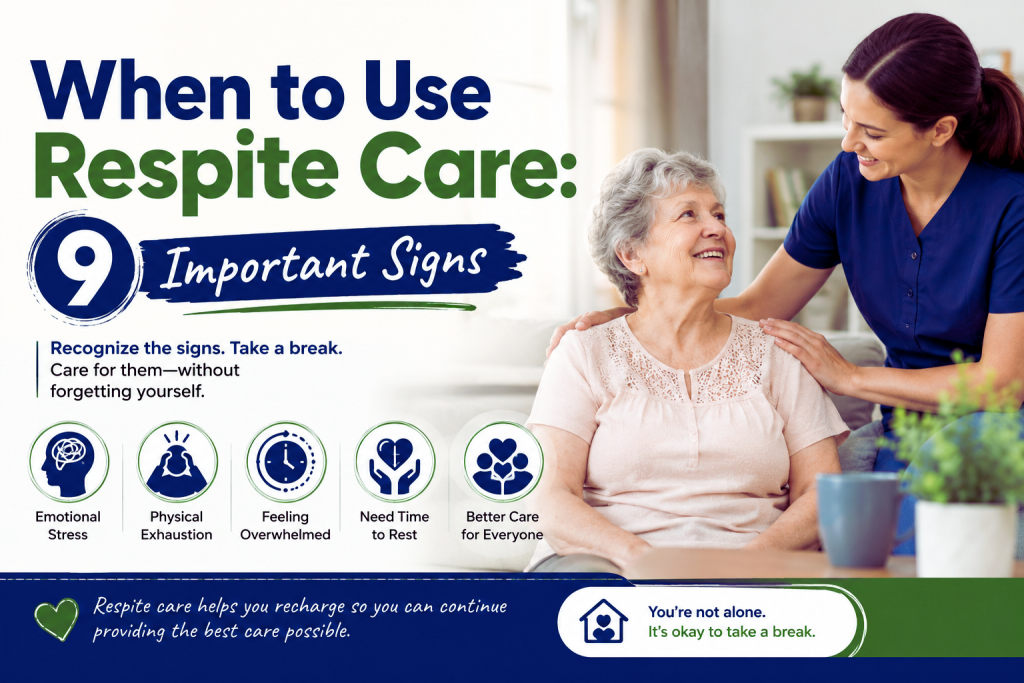
Understanding When Respite Care Is Needed
When to Use Respite Care begins when family caregivers need temporary relief from daily caregiving responsibilities, allowing them to rest, manage personal commitments, or recover while ensuring their loved one continues to receive safe, quality care. Taking care of an aging loved one can be very rewarding. It can also be really tough on you physically, emotionally, and mentally over time.
Many family caregivers spend a lot of time caring for their loved ones, ensuring they are safe and comfortable. Even the most dedicated caregivers need to take a break, take care of themselves, and do their own things. This is where Respite Care comes in. It is very important to understand when you need to use Respite Care.When to Use Respite Care depends on the needs of both the caregiver and the person receiving care, providing temporary support during stressful or demanding situations.
Respite Care gives family caregivers a break from caring for their loved ones. It lets them rest, focus on their health, and do things they need to do without worrying about their loved ones. Planning ahead and thinking about long-term care can help families figure out when they need help. Of waiting until things get too tough, families can look at different care options and choose what is best for their loved ones.

Whether families are trying to decide between living on their own and getting help or between getting help at home and living in a community, Respite Care can be very helpful. It can help them understand what their loved ones need and make decisions for the future. When to Use Respite Care is an important question for family caregivers who need short-term relief while ensuring their loved one continues to receive safe and compassionate care.
What Is Respite Care?
Respite Care is a service that gives family caregivers a break while making sure their loved ones are taken care of. It can be for a hours a few days, or even longer, depending on what the senior and caregiver need. Many people think Respite Care is for emergencies, but it can be helpful in many everyday situations. Caregivers might use Respite Care when they need to go to appointments, take a vacation, or just need some time to rest.
When to use respite care depends on the caregiver’s needs, the senior’s health condition, and the level of daily support required to maintain quality care. When to Use Respite Care becomes especially important during caregiver burnout, medical appointments, travel, emergencies, or when extra support is needed at home. The main goal of Respite Care is to help both seniors and caregivers.
Seniors get the help. Care they need, and caregivers get to rest and take care of themselves. Respite Care can happen in places like the seniors’ home, a day program for adults, or a short stay in a community that helps seniors. When to Use Respite Care should be considered when caregivers feel overwhelmed, need time for personal responsibilities, or require a break to maintain their own health and well-being.
Types of Respite Care Services
There are kinds of Respite Care services, and understanding them can help families choose what is best for them. Each type has its benefits depending on how much help is needed. When to use respite care is an important question for families seeking temporary relief while ensuring their loved one continues to receive safe, compassionate, and professional care.
In-Home Respite Care
In-Home Respite Care lets seniors stay in their homes and get help from caregivers who come to visit. This is especially helpful for seniors who want to stay at home and need help with things like cooking, taking medication, and getting around.
For families who are trying to decide between getting help at home and living in a community, In-Home Respite Care can give them a chance to try out help without making a big move. It can also help caregivers figure out if their loved ones need help at home in the future.
Adult Day Respite Care
Adult Day Respite programs give seniors a place to go during the day where they can get care, eat meals, and do activities with others. These programs are helpful for caregivers who need help during the day or who need to take breaks during the week. These services also help seniors stay social, do things they enjoy, and meet people in a safe place.
Short-Term Residential Respite Care
Short-Term Residential Respite Care lets seniors stay in a community that helps them for a time. This can be helpful when family caregivers need a break or when seniors need extra help after being sick or hurt.
Short-term stays can also give families a chance to try out a community before making a decision. For families who are researching care options, a short stay can give them a sense of what daily life is like in a community.
Specialized Respite Care
Some seniors need help because of health problems or other challenges. Specialized Respite Care providers are trained to give help based on what each senior needs. This type of care can give caregivers peace of mind knowing their loved ones are getting the help while they take care of themselves.
How Does Respite Care Work?
To get Respite Care, families usually start by figuring out what their loved ones need and the help they require. They should think about things like activities, health needs, and personal preferences before choosing a care service. When to use respite care becomes clear when family caregivers need a short break due to stress, illness, travel, or other personal responsibilities without interrupting quality care.

After understanding these needs, families can look at providers, compare services, and choose what is best for them. Some caregivers might need help a few hours a week, while others might need longer stays. Respite Care is flexible. Can be customized to fit each family’s needs. Some seniors might do well with visits at home, while others might prefer to stay in a community for a while.
When to use respite care can make a significant difference in preventing caregiver burnout while providing seniors with a safe and supportive environment. Many families include Respite Care in their long-term care planning because it helps them get ready for changes. By looking at care options, families can avoid making rushed decisions during stressful times.
How Respite Care Supports Long-Term Care Planning
Long-term care planning helps families get ready for the possibility that their loved ones’ needs might change over time. As people age, they might need help with daily things, health problems, and getting around. It is essential to think about care options before a crisis happens.
Respite Care can be a part of this planning process. It lets seniors and caregivers try out care arrangements and figure out what works best for them.
For example, a family might use Respite Care in a community before deciding if it is a fit for their loved one. This experience can help seniors feel more comfortable with the idea of moving to a community and can help families understand their care options better.
By planning, families can make thoughtful decisions based on what their loved ones want rather than waiting until they need urgent care.
9 Important Signs It Is Time to Use Respite Care
Recognizing when it is time for help is crucial for caregivers. Many caregivers keep going until they are exhausted or burned out. However, noticing warning signs can help protect both the caregiver and the senior.
1. When Caregiver Stress and Burnout Become Overwhelming
One of the signs that it might be time for Respite Care is when caregiver stress becomes too much. Taking care of a loved one requires patience, energy, and emotional strength. Over time, caregivers might start feeling tired, frustrated, isolated, or unable to manage their responsibilities. Independent living vs assisted living is one of the most important comparisons families make when choosing the right senior care option.
Independent living vs assisted living depends on a senior’s level of independence, medical needs, and daily support requirements. Caregiver burnout can affect emotional health. Constant tiredness, difficulty sleeping, mood changes, and losing interest in activities are common signs that a caregiver might need help.
Using Respite Care lets caregivers take breaks and come back to their responsibilities with renewed energy. Temporary professional help does not reduce the quality of care; it helps caregivers provide support in the long run. Independent living vs assisted living highlights the differences between a maintenance-free lifestyle and personalized assistance with daily activities.
2. When You Need to Take Care of Your Physical and Mental Health
Family caregivers often put their needs aside while focusing on their loved ones. Over time, ignoring health can lead to serious stress and exhaustion.
Respite Care can give caregivers time to attend appointments, exercise, relax, maintain friendships, or focus on emotional well-being. Taking care of yourself is essential to providing compassionate care.
Many caregivers hesitate to ask for help because they feel responsible for managing everything. However, understanding when to use Respite Care can help families create a caregiving balance. Independent living vs assisted living can help families understand which option offers the best balance of freedom, safety, and care.
3. When You Need a Break or Vacation
Caregivers deserve time away from their responsibilities. Taking a vacation or even a short break can improve health and reduce stress. Respite Care gives families peace of mind because seniors continue receiving help while caregivers take time to rest and recharge.
Regular breaks can prevent exhaustion. Help caregivers come back with more patience, energy, and focus. Including Respite Care in long-term care planning ensures caregivers have support when they need it most.
4. When You Have Important Personal or Family Responsibilities
Life goes on even when someone becomes a caregiver. Work commitments, family events, emergencies, and personal responsibilities might make it difficult to provide care. Independent living vs assisted living is a key factor in creating a long-term care plan that meets both current and future healthcare needs.
In these situations, Respite Care provides a solution. Temporary support ensures seniors remain safe while caregivers handle responsibilities without unnecessary stress. Whether a caregiver needs help for an hour or several days, Respite Care offers flexibility and reassurance during challenging periods. Long-term care options play a vital role in helping seniors age with dignity while receiving the personalized support they deserve.
5. When Your Loved One Needs Support That You Can Provide
As seniors age, their needs might change. Tasks that were once simple might become more challenging. While family caregivers often do everything to help, there might come a time when additional professional support is needed.
One important sign that it might be time for Respite Care is when the level of care required becomes difficult to manage. Increased supervision needs, frequent health concerns, mobility issues, or memory-related challenges can put pressure on caregivers.
Long-term care options provide seniors with ongoing support for daily living, medical needs, and personal care, helping them maintain the best possible quality of life. Respite Care provides professional help while allowing families to evaluate the best next steps. It can also help caregivers understand whether their loved ones might benefit from long-term care options in the future.
By using Respite Care families can avoid waiting until caregiving responsibilities become overwhelming. It creates an opportunity to provide seniors with the level of support while maintaining their comfort, safety, and dignity.
6. When You Want to Explore Long-Term Care Options
Long-term care options become essential when older adults require continuous assistance with daily activities, chronic health conditions, or specialized medical care. Long-term care options include assisted living, nursing homes, in-home care, memory care, and continuing care retirement communities, allowing families to choose the right level of support.Choosing the care arrangement for an aging loved one is a significant decision.
Many families struggle with understanding which option will provide the quality of life, independence, and support. This is where Respite Care can become a part of long-term care planning. Long-term care options offer flexible solutions that meet the changing needs of seniors while providing families with peace of mind and reliable professional support.
A short-term break at a care home allows seniors and their families to see what it is like to have care before they make a decision to move in permanently. This gives them a chance to get a feel for the routine, the services that are available, and the overall atmosphere of the place.
For example, families who are thinking about moving into an assisted living home can use a term stay as a trial run. Seniors can get to know the community, meet the caregivers, and decide if they feel comfortable living. Long-term care options should be carefully evaluated based on a senior’s health, independence, budget, and personal preferences to ensure the most appropriate care plan.
This can make things easier in the run because seniors and their families have already looked into their options instead of having to make a decision during a crisis.
7. When You Are Comparing Assisted Living vs Home Care
Assisted living vs home care is an important comparison for families deciding the best care option for an aging loved one. Assisted living vs home care depends on a senior’s health, level of independence, personal preferences, and daily care needs. When you are trying to decide between assisted living and home care, it can be a difficult choice. Understanding the differences between the two can help families make the decision for their loved one.
Home care lets seniors stay in their homes while still getting help from professional caregivers. This might be an option for seniors who like being at home and only need a little help with daily tasks. Assisted living vs home care helps families understand the differences between receiving care in a residential community and staying at home with professional support.
Assisted living, on the other hand, provides a community environment where seniors can get personal care, take part in activities, and socialize with others. This might be a choice for older adults who need more consistent supervision. Assisted living vs home care can help you choose the right solution based on safety, cost, medical needs, and quality of life.
Assisted living vs home care is a common question when seniors begin needing assistance with daily activities or ongoing health management. A short-term break at a care home can give families a chance to try out both types of care before making a long-term commitment. A senior might try home care first. Then have a short stay in an assisted living home to see which one they prefer.
This can make the decision-making process easier. Assisted living vs home care should be evaluated carefully to ensure seniors receive the appropriate level of support while maintaining dignity and independence. Help families choose the care that is right for their loved one’s needs. Assisted living vs home care compares the benefits of social engagement in a care community with the comfort and familiarity of remaining at home.
8. When Recovery or Medical Support Is Needed After Hospitalization
After a hospital stay, many seniors need help while they recover. Going home might not always be the safest option, especially if they need help with getting around, taking medication, or doing daily tasks.
A short-term break at a care home can provide the support that seniors need during their recovery. Professional caregivers can help seniors follow their doctor’s orders, keep up with their routine, and get their confidence back after an illness or surgery.
This can also take some pressure off family members who might not have the experience or time to provide care. Including care in long-term care planning can help families get ready for unexpected health changes and make sure that seniors have access to the help they need when they need it.
9. When You Need Help Creating a Long-Term Care Plan
Many families do not think about term care until there is a crisis. Planning ahead can make things easier and less stressful for everyone involved. Understanding when to use a short-term break at a care home can help families start talking about their care needs. A temporary care experience can show what level of help a senior might need as they get older.
When planning for long-term care, families should think about their loved one’s health needs, financial situation, personal preferences, and what care services are available. Looking into care options ahead of time can help seniors and their caregivers make informed decisions together. Having a plan in place can give everyone confidence. Make sure that care decisions are based on the seniors’ needs, not just on what is available during a crisis.

Benefits of Respite Care for Seniors and Family Caregivers
A short-term break at a care home can be very helpful for both seniors and their families. It is not a temporary solution, but also a way to support caregivers and promote healthier relationships. Independent living vs assisted living is an essential topic for seniors planning their future and looking for the most suitable living arrangement.
Benefits for Family Caregivers
For family caregivers, a short-term break can give them a chance to rest, focus on their goals, and take care of their own health. Regular breaks can reduce caregiver burnout. Improve their emotional well-being.
When caregivers have time to rest, they often come back to their responsibilities with patience, energy, and confidence. A short-term break can also help caregivers keep up with their relationships, work, and personal responsibilities without feeling overwhelmed.
Benefits for Seniors
Seniors can also benefit from a short-term break at a care home. They can get help, companionship, and chances to socialize with others. Temporary care services can help seniors stay independent while getting help with tasks that might be challenging. Many care homes offer activities, meals, transportation, and chances to connect with others. For seniors who might need care in the future, a short-term break can be a comfortable way to get used to professional care services. Independent living vs assisted living often comes down to whether a senior can safely manage daily tasks without regular assistance.
How to Choose the Right Respite Care Service
To choose the right care home, families should think carefully about their loved one’s needs, preferences, and comfort level. The first step is to understand what kind of help is needed. Some seniors might only need companionship and basic support, while others might need help with care, mobility, or medical needs. Families should research care homes, look at the services they offer, and ask questions about the caregivers’ experience, safety procedures, and care plans.
Common Challenges With Respite Care
Cost is also a thing to think about. The cost of a short-term break at a care home can vary depending on the type of service, how long it is needed, and what level of help is required. Including care costs in term care planning can help families get ready financially. Even though a short-term break at a care home can be very helpful, some families might face challenges when using care.
Feeling Guilty About Taking a Break
Many caregivers feel guilty about taking a break from their responsibilities. They might worry that using help means they are not doing enough. Taking breaks is an important part of being a successful caregiver. A short-term break at a care home can give caregivers a chance to protect their health while making sure their loved one is still getting quality care.
Finding Reliable Care Services
Choosing a trustworthy care home is essential. Families should look for caregivers, safe environments, and services that match their loved ones’ specific needs. Researching care homes ahead of time can make it easier to find support when it is needed.
Helping Seniors Adjust to Temporary Care
Some seniors might feel unsure about trying a short-term break at a care home for a time. Families can make the transition easier by explaining the benefits of visiting the care home beforehand and keeping routines. A positive introduction can help seniors feel comfortable and confident with care arrangements.
Conclusion
Understanding when to use a short-term break at a care home can help families create a more balanced caregiving experience. Caring for an aging loved one requires dedication, patience, and emotional strength. Caregivers also need time to rest and take care of themselves.
A short-term break at a care home can give caregivers a chance to recharge while making sure their loved one is still getting professional care. Independent living vs assisted living focuses on the amount of support available, with assisted living providing help with personal care, medication, and daily routines.
Including a short-term break at a care home in term care planning can help families get ready for future needs instead of making decisions during stressful situations. By looking into care options, families can better understand what kind of support works best for their loved one. Independent living vs assisted living allows older adults to evaluate housing, healthcare services, social opportunities, and overall quality of life.
Independent living vs assisted living should be considered carefully to ensure seniors receive the right level of care while maintaining as much independence as possible. Recognizing the signs that extra support is needed can help prevent caregiver burnout and improve the quality of care. With planning, open communication, and the right care resources, families can create a sustainable caregiving journey that supports both seniors and their caregivers.
FAQs
What are the criteria for a short-term break at a care home?
The criteria for a short-term break at a care home depend on the needs of the senior and the caregiver’s situation. Generally, a short-term break is an idea when a senior needs temporary help with daily tasks, supervision, companionship, or specialized support.
What are the signs that it is time for a short-term break at a care home?
Common signs that it might be time for a short-term break at a care home include caregiver exhaustion, increased stress, difficulty managing responsibilities, lack of personal time, and feeling overwhelmed by caregiving duties.
How long can a short-term break at a care home last?
The length of a short-term break at a care home can vary depending on the type of service and the needs of the family. It can last for an hour a single day, several days, weeks, or longer periods.
Who qualifies for a respite grant?
Eligibility for a respite grant depends on the organization, location, and specific program requirements. Many programs provide assistance to family caregivers who support seniors, individuals with disabilities, or people with chronic health conditions.
Who benefits from a short-term break at a care home?
Both seniors and caregivers benefit from a short-term break at a care home. Seniors get support, companionship, and a safe care environment while caregivers get time to rest, manage personal responsibilities, and reduce stress.
How good is a short-term break at a care home?
A short-term break at a care home can be very helpful when it matches the senior’s needs and is provided by caregivers. It helps prevent caregiver burnout, improves quality of care, and gives seniors opportunities for interaction and professional support.
What should you not say to a family caregiver?
Family caregivers often experience physical challenges, so it is best to avoid comments that minimize their responsibilities. Instead, offer understanding, encouragement, and practical support.
Can a short-term break at a care home help with long-term care planning?
Yes, a short-term break at a care home can help families plan for long-term care by giving them a chance to try out care options and see what works best for their loved one. Yes, respite care is a help when it comes to planning for long-term care. It gives seniors and their families a chance to try out kinds of care before they make a final decision. This way, they can see what works best for them. For example, they can compare living on their own to assisted living or assisted living to care at home. This helps them make choices about what they will need in the future.
Is respite care for seniors?
Respite care is not just for seniors. It is for anyone who needs some help for a little while, like people with disabilities or health problems. Usually, it is seniors who use it because their family members who take care of them need a break sometimes.
How do I find a respite care service?
To find a good respite care service, you should look around your area and see what is available. Check to see if the caregivers are qualified to do their jobs. Look at what services they offer and think about what the senior person needs. It is an idea to compare a few different services so you can pick the one that is safe, kind, and tailored to the seniors’ needs.

Welcome to USA Senior Citizen, a trusted resource dedicated to helping older adults live healthier, happier, and more independent lives.
Our mission is to provide valuable information, practical tips, and helpful guidance for seniors and their families. We cover important topics including **senior health, retirement planning, senior living, caregiving, technology for seniors, and everyday lifestyle solutions**.
At USA Senior Citizen, we believe aging is not about slowing down — it is about embracing new opportunities, staying connected, and enjoying every stage of life. Our goal is to make life easier for seniors by sharing simple, reliable, and easy-to-understand information that supports better decisions and improved well-being.
Whether you are looking for advice on maintaining a healthy lifestyle, exploring retirement options, learning new technology skills, or finding ways to stay active and independent, USA Senior Citizen is here to guide you.
We are committed to creating a supportive online community where seniors can discover useful resources, gain confidence, and continue living life with dignity and purpose.
USA Senior Citizen — Empowering Seniors to Live Better Every Day.