
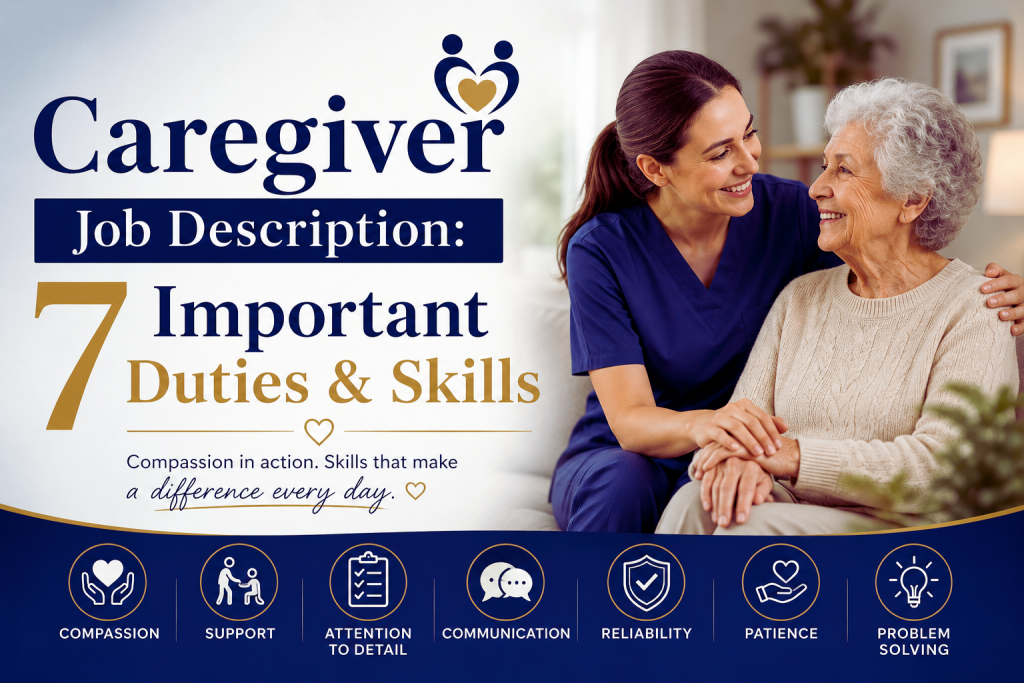
A caregiver job description explains the main tasks, responsibilities, and skills required to support someone who needs help with daily living. Caregivers may assist older adults, people with disabilities, or individuals recovering from illness or injury.
The exact duties can vary depending on the person’s needs and where the caregiver works. However, most caregivers provide practical assistance, companionship, personal care, and safety support.
Understanding a caregiver job description can help families know what to expect and can also help job seekers prepare for caregiver positions. This guide explains a caregivers duties description, common caregiver job responsibilities, essential skills, and resume examples.

What Is a Caregiver Job Description?
A caregiver job description is a summary of the work a caregiver performs while helping another person with everyday needs. It commonly includes personal care, meal preparation, mobility assistance, companionship, household tasks, and safety monitoring.
A caregiver may work in a private home, assisted living community, nursing home, or another care setting.
The caregiver job responsibilities depend on the person’s condition and level of independence. Some people may only need help with household activities, while others may require regular assistance with personal care and mobility.
A professional caregiver should always understand the limits of their role and follow the instructions and requirements of their employer and applicable regulations.
7 Essential Duties of a Caregiver
Caregivers perform many different tasks throughout the day. The following are seven of the most common duties of a caregiver.
1.Helping With Personal Care
One of the most important caregiver duties is helping with personal hygiene and everyday self-care.
Depending on the person’s needs, this may include:
- Helping with bathing or showering
- Assisting with dressing
- Helping with grooming
- Supporting toileting
- Assisting with oral hygiene
- Helping with other personal-care routines
Personal care should always be provided respectfully and with attention to the person’s privacy and dignity.
2.Preparing Meals and Supporting Nutrition
Meal preparation is another common part of a caregiver’s duties. Some older adults or people with disabilities may have difficulty shopping for food, preparing meals, or remembering to eat regularly.
Caregivers may help by:
- Preparing simple and nutritious meals
- Following dietary instructions provided by the appropriate professional
- Preparing snacks
- Encouraging regular meals
- Helping with grocery shopping
- Making sure the person has access to fluids
Caregivers should follow any specific dietary instructions given by the person’s healthcare team or family according to the care plan.
3.Providing Medication Reminders
Medication support can be part of caregiving responsibilities, but the exact role depends on the caregiver’s training, employer, and local rules.
In many situations, a caregiver may remind a person about their medication schedule or help organize information about medications.
A caregiver should not independently change medication doses or make medical decisions unless they are specifically authorized and qualified to do so.
If a person experiences a concerning reaction or there is a medication-related problem, the caregiver should communicate the issue to the appropriate healthcare professional or responsible person.
4.Assisting With Mobility and Daily Activities
Some people need assistance moving safely around their homes or completing everyday activities.
Caregiver duties may include helping with:
- Walking
- Getting in and out of a chair
- Moving between areas of the home
- Using approved mobility equipment
- Getting ready for daily activities
- Completing simple household routines
The goal is not simply to do everything for the person. Whenever possible, caregivers should encourage safe independence and allow the individual to participate in activities they can manage themselves.
5.Providing Companionship and Emotional Support
Caregiving is not only about physical assistance. Companionship can also be an important part of a caregiver’s role.
A caregiver may spend time talking with the person, reading, playing games, taking walks, watching television together, or participating in hobbies.
Good communication, patience, empathy, and respect can make a significant difference in the person’s daily experience.
This part of the caregiver work description is especially important for people who spend a lot of time alone.
6.Maintaining a Safe and Clean Environment
A caregiver may also help maintain a safe and organized living environment.
Common household tasks can include:
- Light cleaning
- Laundry
- Changing bed linens
- Washing dishes
- Organizing commonly used items
- Taking out trash
- Keeping walkways clear
Safety is an important consideration. Caregivers should pay attention to possible hazards such as clutter, slippery surfaces, poor lighting, or objects that could create a fall risk.
However, the exact housekeeping duties should be clearly defined in the caregiver’s job description.
7.Monitoring and Reporting Changes
Caregivers often spend significant time with the person they support, which means they may notice changes in behavior, mobility, appetite, mood, or daily routines.
A caregiver may be expected to document or report relevant observations to the family, supervisor, or appropriate healthcare professional.
For example, they may notice that a person is:
- Having difficulty walking
- Eating less than usual
- Acting unusually confused
- Sleeping differently
- Experiencing a change in mood
- Having difficulty completing normal activities
Caregivers should report concerning changes rather than attempting to diagnose or treat a medical condition themselves.
Caregiver Job Responsibilities
The specific caregiver job responsibilities can differ from one position to another. However, a typical caregiver may be responsible for supporting the person’s comfort, safety, independence, and daily routine.
Common responsibilities include:
- Providing personal care assistance
- Preparing meals
- Supporting daily activities
- Offering companionship
- Assisting with mobility
- Providing medication reminders when permitted
- Performing light housekeeping
- Helping with errands
- Observing and reporting changes
- Following the person’s care plan
- Communicating with family members or supervisors
- Maintaining the person’s privacy and dignity
A clear caregiver duties list should explain exactly which tasks are expected from the caregiver.
Caregiver Responsibilities List
Here is a simple caregiver responsibilities list that can help job seekers and families understand the role:
- Assist with personal hygiene and grooming.
- Help with dressing and daily routines.
- Prepare meals and snacks.
- Provide companionship and emotional support.
- Assist with safe mobility.
- Perform appropriate light housekeeping.
- Help with errands and shopping when required.
- Provide medication reminders when permitted.
- Monitor and report important changes.
- Maintain a safe and comfortable environment.
- Respect the person’s privacy and independence.
- Communicate important information with the appropriate people.
The responsibilities may change depending on whether the caregiver provides in-home care, works in a nursing home, or supports someone with specialized needs.
Caregiver Roles, Skills & Resume Description
The responsibilities of a caregiver can change depending on where they work and the needs of the person they support. An in-home caregiver, for example, may provide assistance in a person’s home, while a nursing home caregiver may support several residents as part of a larger care team.
Understanding these differences can help employers create a clear job description and help job seekers understand what is expected in the role.
Caregiver Roles and Duties in Different Settings
Caregivers can work in several environments. Their daily tasks depend on the person’s needs, the workplace, and the caregiver’s training.
In-Home Caregiver Responsibilities
An in-home caregiver provides support in a person’s home. The goal is often to help the individual continue living safely and comfortably in familiar surroundings.
Common in-home caregiver responsibilities include:
- Helping with bathing, dressing, and grooming
- Preparing meals and snacks
- Assisting with everyday activities
- Providing companionship
- Helping with light housekeeping
- Supporting safe movement around the home
- Accompanying the person to appointments or errands when required
- Providing medication reminders when permitted
- Observing and reporting changes
- Maintaining a clean and safe environment
The exact caregiver roles and duties should be discussed clearly before employment begins.
What Does a Caregiver Do in a Nursing Home?
A nursing home caregiver supports residents who may need help with daily activities and personal care.
Their duties can include assisting residents with:
- Personal hygiene
- Dressing and grooming
- Eating and drinking
- Mobility
- Recreational activities
- Basic daily routines
- Maintaining a comfortable environment
Nursing home caregivers may work alongside nurses and other healthcare professionals. They should communicate important observations to the appropriate staff members rather than making medical decisions outside their role.
Elderly Caregiver Duties
When caring for an older adult, caregivers may provide support with both everyday activities and social needs.
Elderly caregiver duties can include:
- Helping with personal care
- Preparing meals
- Supporting mobility
- Providing companionship
- Helping with household activities
- Assisting with shopping or errands
- Encouraging safe independence
- Monitoring changes in daily behavior or routine
Every older adult has different needs, so the caregiver’s responsibilities should be based on the individual’s care plan.

Essential Skills for a Caregiver
A successful caregiver needs more than the ability to complete daily tasks. Strong interpersonal and practical skills are also important.
Communication
Caregivers need good communication skills to understand the person’s needs and share important information with family members, supervisors, or healthcare professionals.
Patience
Some people may need extra time to complete everyday activities. Patience allows caregivers to provide assistance without making the person feel rushed or uncomfortable.
Empathy
Empathy helps caregivers understand how another person may be feeling. It can also help build trust between the caregiver and the person receiving care.
Organization
Caregivers may need to manage several tasks during the day. Being organized helps them maintain routines and complete responsibilities efficiently.
Time Management
A caregiver may have meal preparation, personal care, household tasks, appointments, and other activities to manage. Good time management helps keep the day structured.
Reliability
People receiving care often depend on their caregivers for important daily support. Being dependable and arriving on time are important qualities.
Observation
Caregivers should pay attention to changes in a person’s behavior, mood, appetite, mobility, or routine and report relevant concerns to the appropriate person.
Physical Stamina
Some caregiver positions require standing, walking, bending, or assisting with daily activities. The physical requirements vary depending on the position.
Caregiver Job Description for Resume
A caregiver job description for resume should clearly show your experience, responsibilities, and relevant skills. When creating a resume, use a concise caregivers duties description to show employers what tasks you have performed and what skills you can offer.
Instead of simply writing “helped elderly people,” use specific descriptions of the work you performed.
For example, you could describe responsibilities such as:
- Assisted clients with personal care and daily activities.
- Prepared meals according to individual needs.
- Provided companionship and emotional support.
- Assisted with mobility and household routines.
- Maintained a clean and safe living environment.
- Communicated important observations to family members or supervisors.
Choose responsibilities that accurately describe your actual experience.
Caregiver Job Description Example for Resume
Here is a simple example that can be adapted for a resume:
Caregiver
- Provided compassionate assistance with personal care and daily living activities.
- Prepared meals and supported clients with household routines.
- Assisted with safe mobility and transportation when required.
- Provided companionship and encouraged social activities.
- Performed light housekeeping and maintained a safe home environment.
- Observed changes in clients’ routines and communicated relevant concerns.
- Maintained professionalism, privacy, dignity, and respectful communication.
Caregiver Skills for Resume
A resume can also include a dedicated skills section.
Useful caregiver skills may include:
- Personal care assistance
- Communication
- Companionship
- Meal preparation
- Mobility assistance
- Time management
- Organization
- Patience
- Empathy
- Reliability
- Observation
- Household assistance
Only list skills that you genuinely possess and can demonstrate through your experience.
Caregiver Job Duties and Responsibilities: Quick Checklist
Use this checklist to quickly understand the most common caregiver duties:
- Personal hygiene assistance
- Dressing and grooming support
- Meal preparation
- Mobility assistance
- Companionship
- Light housekeeping
- Laundry
- Errands and shopping
- Medication reminders when permitted
- Safety monitoring
- Reporting relevant changes
- Supporting independence
- Following the care plan
- Communicating with family or supervisors
Not every caregiver performs all of these tasks. Responsibilities should always match the specific position and the person’s needs.
What Qualifications Does a Caregiver Need?
Caregiver qualifications vary depending on the employer, position, location, and type of care provided.
Some positions may require previous caregiving experience, while others may provide on-the-job training.
Common requirements may include:
- Basic caregiving knowledge
- Good communication skills
- Reliability and professionalism
- Ability to follow instructions
- Experience working with older adults or people who need assistance
- Relevant training or certification when required
- Ability to perform the physical tasks associated with the position
Before applying for a position, check the employer’s specific requirements and any applicable local regulations.

Caregiver Daily Duties Example
A caregiver’s day can vary considerably, but a typical schedule might look like this:
Morning:
Help the person get up, complete personal care, get dressed, and prepare breakfast.
Late morning:
Assist with household activities, errands, appointments, or a planned activity.
Afternoon:
Prepare lunch, provide companionship, assist with mobility, and complete appropriate household tasks.
Evening:
Prepare dinner, help with evening routines, tidy the living area, and make sure the person’s immediate needs are addressed.
This is only an example. A caregiver’s actual schedule should be based on the individual’s needs and the agreed-upon responsibilities.
Final Thoughts on Caregiver Job Responsibilities
A caregiver plays an important role in helping people manage their daily lives with greater comfort, safety, and independence. As discussed in this guide, a caregiver job description can include personal care, meal preparation, mobility assistance, companionship, light housekeeping, safety monitoring, and reporting important changes. A clear caregivers duties description should explain the daily tasks, responsibilities, and expectations of the caregiving position.
The exact duties of a caregiver depend on the person’s needs and the care setting. An in-home caregiver may provide support in a private residence, while caregivers in nursing homes may assist residents as part of a larger care team. Regardless of the setting, patience, empathy, communication, reliability, and organization are valuable caregiving skills.
Understanding caregiver job responsibilities is also useful when creating a resume or applying for a caregiving position. A clear caregiver job description for resume should accurately highlight your experience, skills, and responsibilities without exaggerating your qualifications.
Ultimately, good caregiving is about providing respectful, dependable support while encouraging the person to remain as safe, comfortable, and independent as possible.
Frequently Asked Questions About Caregiver Job Description
How Would You Describe a Caregiver on a Resume?
A caregiver can be described on a resume as a reliable professional who assists individuals with personal care, daily activities, meal preparation, mobility, companionship, and household tasks. When writing a caregiver job description for resume, focus on your actual experience, responsibilities, and relevant skills.
How Can You Be a Good Caregiver?
To be a good caregiver, you should be patient, compassionate, reliable, respectful, and attentive to the person’s needs. Good communication and organization are also important. A good caregiver supports independence while providing safe and respectful assistance.
What Are the Basic Skills of a Caregiver?
Basic caregiver skills include communication, patience, empathy, organization, time management, reliability, observation, problem-solving, and basic personal-care assistance. The skills required can vary depending on the caregiver position and the person’s needs.
What Are 5 Qualities of a Good Caregiver?
Five important qualities of a good caregiver are compassion, patience, reliability, empathy, and good communication. These qualities help caregivers build trust and provide respectful support to the people they care for.
What Are the Main Duties of a Caregiver?
The main duties of a caregiver may include helping with personal hygiene, preparing meals, assisting with mobility, providing companionship, performing light housekeeping, supporting daily activities, and maintaining a safe environment.
What Are 5 Responsibilities of Caregivers?
Five common caregiver responsibilities are providing personal care, preparing meals, assisting with daily activities, offering companionship, and supporting safety. Depending on the position, caregivers may also help with errands, housekeeping, mobility, and medication reminders when permitted.
What Does an In-Home Caregiver Do?
An in-home caregiver provides support in a person’s home. In-home caregiver responsibilities may include personal care, meal preparation, companionship, mobility assistance, light housekeeping, errands, and helping the person maintain a safe and comfortable daily routine.
What Should Be Included in a Caregiver Job Description?
A good caregiver job description should explain the position’s main duties, responsibilities, required skills, qualifications, work setting, and expectations. It should clearly describe what the caregiver is expected to do and any specific requirements for the position.
What Is the Minimum Salary of a Caregiver?
Caregiver salaries vary significantly depending on location, experience, employer, work setting, hours, and qualifications. Because wages can change over time, job seekers should check current local job listings and official wage information when researching caregiver pay.
What Are the 10 Basic Skills of a Caregiver?
Ten useful caregiver skills are communication, patience, empathy, reliability, organization, time management, observation, problem-solving, flexibility, and teamwork. Developing these skills can help caregivers handle their daily responsibilities more effectively.
Read more:
- https://usaseniorcitizen.com/senior-caregiving-senior-caregiving/
- https://usaseniorcitizen.com/caregiver-101/
- https://usaseniorcitizen.com/what-is-a-caregiver/
- https://usaseniorcitizen.com/caregiver-stress-management-tools-group-community-features-peer-support/
- https://usaseniorcitizen.com/caregiver-self-care-checklist/

Welcome to USA Senior Citizen, a trusted resource dedicated to helping older adults live healthier, happier, and more independent lives.
Our mission is to provide valuable information, practical tips, and helpful guidance for seniors and their families. We cover important topics including **senior health, retirement planning, senior living, caregiving, technology for seniors, and everyday lifestyle solutions**.
At USA Senior Citizen, we believe aging is not about slowing down — it is about embracing new opportunities, staying connected, and enjoying every stage of life. Our goal is to make life easier for seniors by sharing simple, reliable, and easy-to-understand information that supports better decisions and improved well-being.
Whether you are looking for advice on maintaining a healthy lifestyle, exploring retirement options, learning new technology skills, or finding ways to stay active and independent, USA Senior Citizen is here to guide you.
We are committed to creating a supportive online community where seniors can discover useful resources, gain confidence, and continue living life with dignity and purpose.
USA Senior Citizen — Empowering Seniors to Live Better Every Day.