
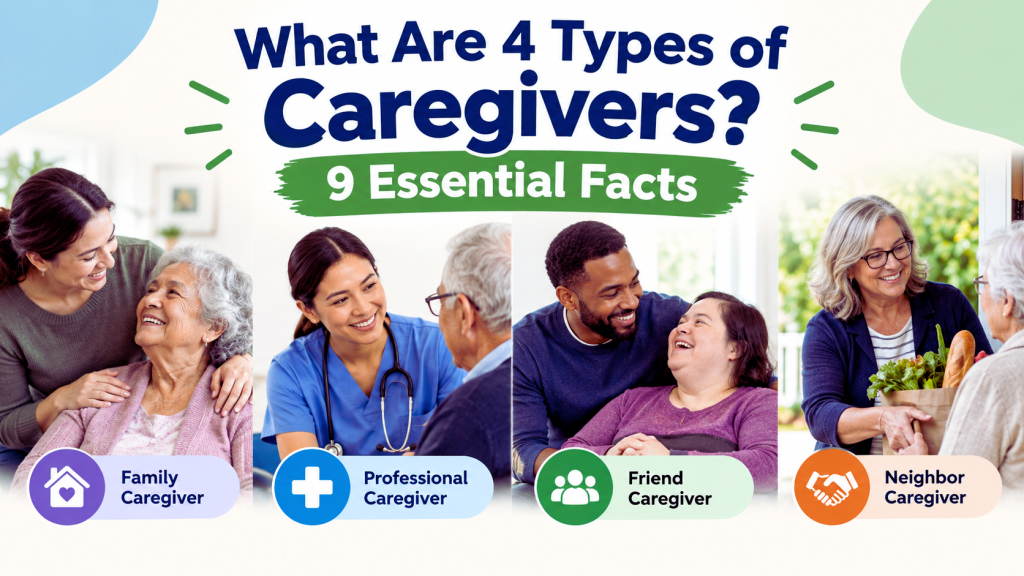
Introduction: What Are 4 Types of Caregivers?
If you are asking what are 4 types of caregivers, it is important to understand that caregiving can take several forms. A caregiver is someone who provides help and support to a person who needs assistance with daily activities, health needs, personal care, or emotional support.
The four types of caregivers commonly discussed are family caregivers, professional caregivers, private caregivers, and independent caregivers. Each type can have different responsibilities, qualifications, schedules, and levels of involvement. Understanding the different types of caregivers can help families decide what kind of support may be appropriate for an older adult, person with a disability, or someone who needs assistance at home.

What Is a Caregiver?
A caregiver is a person who helps another individual manage daily life when that person cannot fully care for themselves. Caregiving may involve practical, personal, emotional, or health-related assistance. Some caregivers provide support occasionally, while others help every day. The amount of assistance depends on the person’s needs.
For example, a caregiver may help with preparing meals, shopping, transportation, dressing, bathing, household tasks, medication reminders, or companionship. Caregiving does not always mean providing medical treatment. Many caregivers focus on helping a person remain safe, comfortable, independent, and involved in everyday activities.
What Are 4 Types of Caregivers?
When people ask what are 4 types of caregivers, they are usually looking for a simple explanation of the main caregiver categories.
Although caregiving arrangements can vary, four common categories include:
1.Family Caregivers
Family caregivers are relatives or close family members who provide care and support to someone they know personally. A family caregiver may be a spouse, adult child, sibling, grandchild, or another relative. They may help with everyday activities, transportation, meals, household responsibilities, or personal care.
Many family caregivers provide their time without working as paid professional caregivers. Their involvement can range from occasional assistance to full-time support. Family caregiving can be especially helpful because the caregiver often understands the person’s preferences, routines, and needs.
2.Professional Caregivers
Professional caregivers provide caregiving services as part of their employment. Depending on their role and training, they may work in private homes, assisted living settings, residential care facilities, or other care environments. Their responsibilities can include helping with personal care, mobility, meals, household activities, companionship, and other daily needs.
The exact duties of a professional caregiver depend on their qualifications and the care plan. Some healthcare tasks may require a licensed healthcare professional rather than a general caregiver. Professional caregivers can be useful when a person needs regular assistance and family members cannot provide all the required support.
3.Private Caregivers
Private caregivers are caregivers hired directly by an individual or family rather than necessarily receiving their work assignment through a large caregiving organization. A family may choose a private caregiver when they want more control over scheduling, daily routines, and the type of assistance provided.
Private caregiving arrangements can be flexible, but families should carefully check qualifications, experience, references, responsibilities, payment arrangements, and applicable employment requirements. The exact arrangement depends on the caregiver and the family.
4.Independent Caregivers
Independent caregivers work directly with clients rather than being employed by a traditional caregiving agency. They may provide services based on an agreed schedule and the person’s individual needs. Their responsibilities can include companionship, personal assistance, meal preparation, transportation, and help with everyday activities.
An independent caregiver can offer flexibility, but families should still verify experience, references, qualifications, availability, and the specific services being offered. Before hiring someone independently, it is also important to understand local employment, tax, insurance, and safety requirements.
What Do the Four Types of Caregivers Do?
The responsibilities of the four types of caregivers can overlap, but their working arrangements may be different. Family caregivers may provide emotional support, household help, transportation, and assistance with personal needs. Their role often develops naturally as a family member begins needing additional support.
Professional caregivers generally provide services according to an agreed care plan. Their duties may include personal care, mobility assistance, meal preparation, companionship, and help with daily activities. Private and independent caregivers may provide similar types of assistance but usually have a more direct working relationship with the person or family hiring them. The most suitable arrangement depends on the individual’s needs, the amount of care required, the family’s availability, and the type of assistance being requested.
What Is the Difference Between Types of Caregivers and Types of Carers?

The terms types of caregivers and types of carers generally refer to similar ideas. The main difference is often regional language. “Caregiver” is commonly used in American English, while “carer” is widely used in British English and some other English-speaking regions. Both terms describe someone who provides care or support to another person.
For example, a family caregiver and a family carer can describe essentially the same type of role. Similarly, professional caregiver and professional carer can refer to people who provide caregiving as part of their work. Understanding both terms can make it easier to find useful caregiving information online, regardless of which version of English is being used.
What Are the Main Types of Caregiving Services?
Types of caregiving services can vary depending on the person’s needs and the provider’s qualifications. Some services focus on everyday activities, while others provide companionship or assistance with personal care.
In-Home Caregiving Services
In-home caregiving services allow a person to receive assistance in their own home. A caregiver may help with meals, light household activities, personal care, mobility, errands, or companionship. In-home support can be useful for people who want to remain in a familiar environment while receiving help with everyday tasks.
Personal Care Services
Personal care services focus on activities related to a person’s daily hygiene and routine. Depending on the caregiver’s training and the agreed services, assistance may include bathing, dressing, grooming, toileting, and mobility. Personal care should always be provided respectfully while maintaining the person’s privacy and dignity.
Companion Care Services
Companion care focuses primarily on social and emotional support. A caregiver may spend time talking with the person, reading, playing games, taking walks, helping with hobbies, or accompanying them to appointments or activities. Companionship can help make daily life more engaging and reduce feelings of isolation.
Respite Care Services
Respite care provides temporary caregiving support so a regular family caregiver can take a break. For example, a professional caregiver may provide assistance for several hours while a family caregiver handles personal responsibilities, rests, or attends appointments. Respite care can be arranged for different periods depending on the person’s needs and the available service.
What Are the Benefits of Professional Caregivers?
Professional caregivers can provide valuable support when a person needs regular assistance with everyday activities. They can also help families manage caregiving responsibilities more effectively. One major benefit is consistent support. A professional caregiver may follow a regular schedule, helping the person maintain daily routines and receive assistance when needed.
Professional caregivers can also provide companionship. Spending time with an older adult or another person who needs support can make daily activities more enjoyable and less isolating. Another benefit is assistance with everyday tasks. Depending on their qualifications and responsibilities, professional caregivers may help with meals, personal care, mobility, household activities, errands, and appointments.
Professional caregiving can also give family members time to work, rest, handle personal responsibilities, or simply spend quality time with their loved one without being responsible for every caregiving task. However, families should always choose caregivers based on the person’s individual needs and verify their experience and qualifications.
How Do You Choose the Right Type of Caregiver?
Choosing between different types of caregivers starts with understanding the person’s needs. First, consider what kind of assistance is required. Someone who only needs companionship may need a different arrangement from someone who requires regular help with personal care or mobility. Next, consider how often care is needed. Occasional support may be enough for some people, while others may need assistance every day.
It is also important to consider whether family members can provide some of the care. A combination of family support and professional caregiving may sometimes work well. When considering professional caregivers, ask about their experience, training, availability, responsibilities, and references.
Families should also discuss schedules, costs, communication, and expectations before beginning a caregiving arrangement. Most importantly, the person receiving care should be included in the decision whenever possible. Their comfort, preferences, dignity, and independence should remain important considerations.

9 Essential Facts About the Four Types of Caregivers
Understanding the four types of caregivers becomes easier when you know how caregiving roles can differ.
Here are nine important facts to remember.
Fact 1: Caregiver Roles Can Vary
Not every caregiver performs the same tasks. Responsibilities can range from companionship and household assistance to personal care and other forms of daily support. The person’s needs and the caregiver’s qualifications help determine what services can be provided.
Fact 2: Family Caregivers Often Provide Unpaid Support
Family caregivers frequently help relatives without receiving payment for their caregiving role. They may assist with meals, transportation, household tasks, appointments, personal needs, or other everyday responsibilities. Their role can be temporary or continue for a long period, depending on the family’s situation.
Fact 3: Professional Caregivers Receive Specialized Training
Professional caregivers may have training and experience related to the services they provide. However, training and qualifications vary between caregiver roles. Families should confirm that a caregiver has the appropriate experience for the tasks they are expected to perform. Some medical responsibilities require licensed healthcare professionals and should not automatically be assigned to a general caregiver.
Fact 4: Caregiving Services Can Be Provided at Home
Many types of caregiving services can be delivered in a person’s home. In-home support can help someone remain in a familiar environment while receiving assistance with daily activities. The exact services available depend on the caregiver, provider, and person’s needs.
Fact 5: Different Caregivers Offer Different Levels of Support
The amount of support provided by caregivers can vary significantly. One person may only need occasional companionship, while another may need help with several daily activities. This is why families should evaluate the person’s needs before selecting one of the different types of caregivers.
Fact 6: Care Needs Can Change Over Time
Caregiving needs are not always permanent or predictable. A person’s abilities may change because of age, recovery, disability, or other circumstances. As needs change, the caregiving arrangement may also need to change. A family may increase support, arrange professional caregivers, or use different types of caregiving services.
Fact 7: Professional Caregivers Can Provide Consistent Assistance
One important advantage of professional caregivers is that they can provide scheduled assistance. Regular support can help establish a predictable daily routine. This can be especially useful when family members have work, school, or other responsibilities that make it difficult to provide care throughout the day.
Fact 8: The Right Caregiver Depends on Individual Needs
There is no single caregiver arrangement that works for everyone. The right choice depends on the person’s needs, preferences, schedule, available family support, and required level of assistance. Some people may benefit from family caregiving, while others may need professional, private, or independent support.
Fact 9: Caregiver Support Can Improve Daily Living
Appropriate caregiving support can make everyday activities easier and safer. Help with meals, personal routines, mobility, household tasks, and companionship can allow a person to focus more on the activities they enjoy. The goal of caregiving is not simply to complete tasks. Good care should also respect the person’s dignity, preferences, comfort, and independence.
Conclusion
Knowing what are 4 types of caregivers can make it easier to understand the different ways caregiving support can be provided. The four commonly discussed categories are family caregivers, professional caregivers, private caregivers, and independent caregivers. Each option can serve different needs and may involve different responsibilities and arrangements.
Before choosing a caregiver, consider the person’s care needs, preferred routine, required services, schedule, and level of family support. With the right arrangement, caregiving can provide practical assistance while helping a person maintain comfort, dignity, and as much independence as possible.
Frequently Asked Questions
What Are the Three Most Important Qualities of a Caregiver?
The three most important qualities of a caregiver are compassion, patience, and reliability. A good caregiver should understand the person’s needs, remain patient during difficult situations, and provide dependable support.
What Are the Five Responsibilities of Caregivers?
Five common caregiver responsibilities include helping with personal care, preparing meals, assisting with daily activities, providing companionship, and helping with appointments or errands. Responsibilities can vary depending on the person’s needs and the caregiver’s qualifications.
What Is a Caregiver’s Name?
A caregiver is a person who provides help and support to someone who needs assistance with daily activities or personal care. Depending on the situation, a caregiver may be called a family caregiver, professional caregiver, private caregiver, or independent caregiver.
What Are Two Types of Caregivers?
Two broad types of caregivers are family caregivers and professional caregivers. Family caregivers usually provide support to relatives or loved ones, while professional caregivers provide caregiving services as part of their employment.
What Are 4 Types of Caregivers?
The four commonly discussed types of caregivers are family caregivers, professional caregivers, private caregivers, and independent caregivers. Each type can have different responsibilities and working arrangements.
What Is the Difference Between a Caregiver and a Professional Caregiver?
A caregiver is anyone who provides care or support to another person, while a professional caregiver provides caregiving as a paid job. Professional caregivers may also have specific training or experience related to their responsibilities.
What Are the Main Types of Caregiving Services?
Common types of caregiving services include in-home caregiving, personal care, companion care, and respite care. The services available depend on the person’s needs and the caregiver’s qualifications.
What Is the Difference Between Types of Caregivers and Types of Carers?
The terms generally have the same meaning. Caregiver is commonly used in American English, while carer is more common in British English and some other English-speaking regions.
Read more :
- https://usaseniorcitizen.com/caregiver-101/
- https://usaseniorcitizen.com/what-is-a-caregiver/
- https://usaseniorcitizen.com/caregiver-job-description/
- https://usaseniorcitizen.com/caregiver-responsibilities/
- https://usaseniorcitizen.com/caregiver-self-care-checklist/

Welcome to USA Senior Citizen, a trusted resource dedicated to helping older adults live healthier, happier, and more independent lives.
Our mission is to provide valuable information, practical tips, and helpful guidance for seniors and their families. We cover important topics including **senior health, retirement planning, senior living, caregiving, technology for seniors, and everyday lifestyle solutions**.
At USA Senior Citizen, we believe aging is not about slowing down — it is about embracing new opportunities, staying connected, and enjoying every stage of life. Our goal is to make life easier for seniors by sharing simple, reliable, and easy-to-understand information that supports better decisions and improved well-being.
Whether you are looking for advice on maintaining a healthy lifestyle, exploring retirement options, learning new technology skills, or finding ways to stay active and independent, USA Senior Citizen is here to guide you.
We are committed to creating a supportive online community where seniors can discover useful resources, gain confidence, and continue living life with dignity and purpose.
USA Senior Citizen — Empowering Seniors to Live Better Every Day.