
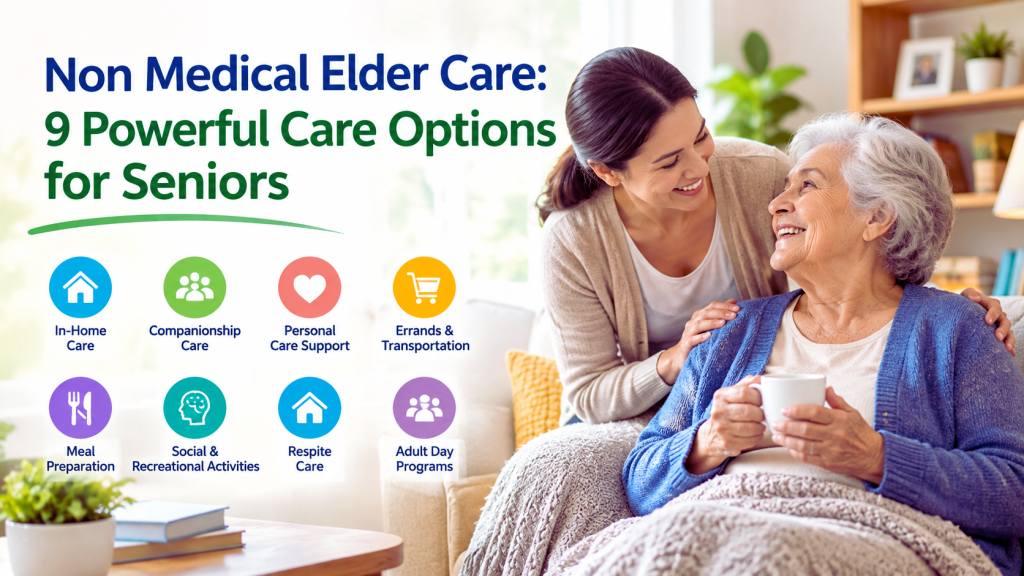
As people grow older, everyday activities can become more challenging even when they do not need regular medical treatment. Non medical elder care provides practical and personal support that can help seniors remain comfortable, safe, and independent at home. Instead of focusing on clinical treatment, this type of care helps with daily routines, personal needs, household responsibilities, companionship, and other activities that may become difficult with age.
Families often consider non medical homecare when an older loved one needs assistance with bathing, dressing, preparing meals, shopping, transportation, light housekeeping, or spending time with someone they trust. A trained non medical caregiver can provide this support while respecting the senior’s preferences, privacy, dignity, and independence. Understanding the different types of services available can help families determine what kind of assistance may be appropriate.

What Is Non Medical Elder Care?
Non medical elder care is support provided to older adults who need help with everyday activities but do not require skilled medical treatment. The focus is usually on activities of daily living, personal assistance, companionship, household tasks, transportation, and basic support with mobility. The goal is to make daily life easier while allowing seniors to remain involved in their own routines and decisions.
For example, an older adult may be able to live safely at home but struggle to prepare meals, do laundry, shop for groceries, or get dressed without assistance. A caregiver can help with these activities without taking away the senior’s ability to participate. This approach allows the older adult to receive the support they need while continuing to do the tasks they can safely manage.
Unlike skilled medical care, nonmedical home care generally does not involve diagnosing illnesses, performing complex medical procedures, providing clinical treatments, or managing medical conditions that require professional healthcare training. Those responsibilities are normally handled by appropriately licensed healthcare professionals. The exact services permitted can vary by state, agency, caregiver training, and individual care plan, so families should confirm what a provider is authorized to do.
Who Can Benefit From Non Medical Elder Care?
Many older adults can benefit from non medical elder care, especially when they are generally stable but need assistance with certain everyday activities. A senior who lives alone may need help with meals and household chores, while another person may mainly need companionship, transportation, or assistance with personal routines. The amount of support can be adjusted according to the person’s individual needs.
This type of care may also be helpful for seniors who have reduced mobility or find household responsibilities increasingly difficult. Some older adults may return home after an illness or hospital stay and no longer require skilled medical services but still need help with everyday tasks. In these situations, non-medical support can provide practical assistance while the person gradually returns to a comfortable routine.
Family members can benefit as well. Caring for an older relative can require significant time and energy, particularly when several daily responsibilities are involved. A professional caregiver can provide scheduled support, giving family members time to work, rest, manage personal responsibilities, or simply spend meaningful time with their loved one without constantly focusing on caregiving duties.
1. Personal Care Assistance for Seniors
Personal care is one of the most common services included in non medical elder care. As people age, activities such as bathing, dressing, grooming, and maintaining personal hygiene can become difficult because of reduced strength, balance, flexibility, or mobility. Having appropriate assistance can make these routines safer and less stressful while helping seniors maintain their dignity.
A caregiver can support personal routines according to the senior’s needs, preferences, and agreed care plan. The purpose should not be to take control of every task but to assist where help is actually needed. Whenever possible, seniors should be encouraged to complete the parts of a routine they can safely manage themselves. This can help preserve independence and confidence.
Help With Bathing and Grooming
Bathing can become challenging for older adults who have difficulty standing, bending, reaching, or maintaining balance. Bathrooms may also contain slippery surfaces that can make movement more difficult. A non medical caregiver may help prepare bathing supplies, provide appropriate assistance, and support basic grooming tasks when those activities are within the caregiver’s training and responsibilities.
Grooming may include helping with hair care, shaving, oral hygiene, or other basic personal routines. Because these activities are personal, caregivers should communicate respectfully and protect the senior’s privacy. A calm approach can help an older adult feel comfortable receiving assistance rather than feeling that control over their personal routine has been taken away.
2. Companion Care for Older Adults
Companionship is another valuable part of non medical elder care. Older adults who live alone or have limited opportunities for social interaction may experience loneliness or become less engaged in activities they once enjoyed. A companion caregiver can provide conversation, encouragement, social interaction, and support for enjoyable activities without replacing the role of family or professional mental health providers.
Companion care can be as simple as talking about family memories, reading a book together, watching a favorite television program, playing a board game, listening to music, or enjoying a cup of tea. These everyday interactions can provide meaningful social connection. Having someone visit regularly may also create a predictable routine that gives the senior something positive to look forward to.
Social Interaction and Emotional Support
Social interaction can contribute to an older person’s sense of connection and daily well-being. A caregiver can listen to stories, discuss hobbies, talk about family members, or simply spend time with the senior. For someone who spends much of the day alone, regular conversation can make the day feel more engaging and connected.
Caregivers should understand the difference between companionship and professional mental health treatment. Their role is generally to provide friendly support and observe changes that may need to be communicated to family members or appropriate professionals. If a significant change in mood, behavior, or daily functioning occurs, it should not simply be ignored or treated as an ordinary caregiving issue.
3. Non Medical Homecare for Daily Tasks
Non medical homecare can help older adults manage household responsibilities that become difficult with age. Tasks such as preparing meals, doing laundry, cleaning frequently used areas, shopping, and organizing the home may seem manageable individually but can become tiring when performed every day.
A caregiver can provide practical assistance based on the agreed care plan. The amount of help can vary considerably. Some seniors may only need assistance with grocery shopping once a week, while others may need regular help with meals, laundry, and basic household organization. Personalized support allows families to avoid providing more assistance than the senior actually needs.
Meal Preparation and Light Housekeeping
Meal preparation can become challenging when an older adult has difficulty standing for long periods, handling kitchen equipment, shopping for ingredients, or cleaning afterward. A caregiver may help plan simple meals, prepare food, organize ingredients, and clean up after meals. Any dietary instructions should be communicated clearly and followed according to appropriate professional guidance.
Light housekeeping may include dusting, vacuuming, washing dishes, changing bed linens, doing laundry, and keeping commonly used areas organized. The purpose is generally to maintain a clean, comfortable, and practical living environment rather than provide intensive cleaning or specialized household services.
Shopping, Errands, and Transportation
Shopping and errands can also become difficult when seniors no longer drive or have trouble walking through stores. A caregiver may help create a shopping list, accompany the senior to a store, pick up groceries, or assist with routine errands depending on the provider’s services.
Transportation assistance can be particularly useful for maintaining independence. Depending on the provider and local requirements, a caregiver may accompany a senior using an approved vehicle or transportation arrangement. These services can help older adults remain involved in everyday activities without requiring family members to manage every errand themselves.
4. Non Medical Caregiver Support
A non medical caregiver generally provides practical assistance rather than skilled medical treatment. Their work may include personal care, companionship, meal preparation, light housekeeping, errands, transportation support, and assistance with daily routines. The exact responsibilities depend on the senior’s needs, the caregiver’s training, and the services included in the care arrangement.
The caregiver should have a clear understanding of what is expected. Families can reduce confusion by discussing responsibilities before care begins and creating a care plan that identifies the senior’s routine, preferences, important safety considerations, and specific support needs.
What Does a Non Medical Caregiver Do?
The responsibilities of a non medical caregiver can vary from one senior to another. One person may require substantial assistance with personal care, while another may mainly need companionship and help with household tasks. A good caregiver adjusts support according to the person’s abilities instead of assuming that every senior requires the same level of assistance.
Caregivers may also notice changes in a senior’s behavior, mobility, appetite, or general functioning. Their role is generally to communicate concerns rather than diagnose or treat medical conditions. Clear communication between the caregiver, senior, family, and appropriate healthcare professionals can help ensure that important changes are not overlooked.

5. Mobility and Safety Assistance
Mobility support can be another useful component of non medical elder care. Some seniors can walk independently but appreciate someone nearby for confidence or safety. Others may need help moving around the home or using mobility equipment according to their established care plan.
Caregivers should only provide mobility assistance that falls within their training and permitted responsibilities. If an older adult has significant mobility limitations or a high risk of falling, professional assessment may be appropriate. Caregivers should never attempt physically demanding transfers beyond their training because doing so could place both people at risk.
Home Safety
Home safety is an important part of non medical elder care. Caregivers can help identify common hazards such as loose rugs, cluttered walkways, poor lighting, slippery surfaces, and frequently used items placed too far out of reach.
Keeping walking areas clear and placing commonly used items in accessible locations can make daily activities easier. However, larger home modifications may require an appropriate professional. The caregiver’s role is primarily to support safe everyday routines and communicate concerns rather than perform specialized assessments.
6. Non Skilled In-Home Care vs Skilled Care
Understanding the difference between non skilled in-home care and skilled care is important when choosing services for an older adult. Non-skilled care generally focuses on daily living, personal assistance, companionship, household support, and other routine activities. Skilled care is designed for healthcare needs that require appropriate professional training.
What Is Non Skilled Home Care?
Non skilled home care refers to everyday assistance that does not require specialized medical treatment. Depending on the provider, it may include bathing, dressing, meal preparation, light housekeeping, companionship, transportation, errands, and basic support with daily routines.
For example, an older adult may be physically stable but struggle to prepare meals or maintain household chores. A caregiver can provide practical assistance without performing medical procedures. This can allow the senior to continue living at home while receiving support where it is needed.
7. Benefits of Nonmedical Home Care for Seniors
There are several potential benefits of nonmedical home care, particularly for older adults who prefer to remain in familiar surroundings. Receiving practical assistance can make everyday responsibilities easier without necessarily requiring a senior to move away from home.
Home-based support may also help families share caregiving responsibilities. Instead of one family member handling every task, professional assistance can provide additional support during specific hours or days. This can make the overall caregiving arrangement more manageable.
Improving Comfort and Quality of Life
Comfort and quality of life are also important goals. Assistance with personal routines, household tasks, meals, transportation, and companionship can reduce some of the everyday challenges associated with aging.
A clean home can be more comfortable to live in, prepared meals can simplify daily routines, and regular companionship can provide meaningful social interaction. Most importantly, personalized care allows support to reflect the senior’s preferences rather than applying the same approach to everyone.
8. How Much Does Non Medical Elder Care Cost?
The cost of non medical elder care varies depending on several factors. Location, number of care hours, type of services, caregiver qualifications, and whether care is arranged through an agency or privately can all affect the overall price.
Some seniors may need only a few hours of support each week, while others may require assistance every day. The total cost generally increases as the number of care hours increases, but families should also consider the type of services being provided and any additional charges.
Factors That Affect Cost
The number of hours is one of the most important factors affecting non medical homecare costs. Part-time care will generally cost less overall than extensive daily care. Location can also influence rates because caregiver wages and operating expenses vary between regions.
The type of assistance can also affect pricing. Basic companionship and light household support may have different rates from personal care or more demanding assistance. Families should ask about transportation charges, holiday rates, minimum visit requirements, overnight services, and other possible fees before agreeing to a care plan.
9. How to Choose the Right Non Medical Elder Care
Choosing the right non medical elder care provider involves more than finding the lowest price. Families should consider the senior’s needs, personality, schedule, preferences, safety, and desired level of independence. A good care arrangement should provide useful assistance while allowing the senior to remain involved in decisions about their daily life.

Before hiring a caregiver or agency, families should ask what services are included, what tasks caregivers are trained and authorized to perform, how caregivers are screened, and how caregivers are matched with seniors. It is also important to understand what happens if the regular caregiver becomes unavailable.
Families should also ask about additional fees, emergency procedures, communication with family members, and whether the care plan can be changed as the senior’s needs develop. These questions can make expectations clearer and reduce misunderstandings after services begin.
Non Medical Elder Care vs Medical Home Care
Although the terms can sound similar, non medical elder care and medical home care have different purposes. Non-medical care focuses primarily on everyday living and personal support. It may include companionship, personal care, meal preparation, light housekeeping, transportation, errands, and assistance with routine activities.
Some seniors may benefit from both forms of care. For example, a qualified healthcare professional may provide skilled medical services while a non medical caregiver assists with meals, bathing, housekeeping, companionship, and daily routines. Understanding the difference helps families choose appropriate support and avoid expecting a caregiver to perform tasks outside their role.
Conclusion
Non medical elder care can provide valuable assistance for older adults who need help with everyday activities but do not require continuous skilled medical treatment. From personal care and companionship to meal preparation, housekeeping, transportation, mobility support, and errands, these services can make daily life easier while allowing seniors to remain involved in their routines.
The right non medical homecare arrangement should be based on the senior’s individual needs, preferences, safety, and desired level of independence. Families should carefully evaluate providers, understand which services are included, ask about caregiver qualifications, and confirm that caregivers are permitted to perform the requested tasks.
Most importantly, effective elder care should support dignity rather than unnecessarily replace independence. With the right assistance, many seniors can continue enjoying familiar surroundings, meaningful activities, social connections, and everyday routines while receiving the practical support they need to live more comfortably at home.
Frequently Asked Questions About Non Medical Elder Care
What Is Considered Non Medical Elder Care?
Non medical elder care generally includes everyday assistance that does not require skilled medical treatment. Services may include personal care, companionship, meal preparation, light housekeeping, transportation assistance, errands, and support with routine daily activities. The exact services vary by provider and local requirements.
What Does a Non Medical Caregiver Do?
A non medical caregiver generally helps seniors manage everyday activities and household routines. Depending on the care plan, responsibilities may include personal care, preparing meals, companionship, light housekeeping, shopping, transportation, and basic mobility support. Caregivers may also report concerns to family members or appropriate professionals.
What Is the Difference Between Medical and Non Medical Home Care?
Medical home care provides skilled healthcare services that require appropriate professional training, while nonmedical home care focuses on everyday support. Non-medical services generally include personal assistance, companionship, household tasks, and routine activities rather than clinical treatment or complex medical procedures.
What Services Are Included in Non Medical Home Care?
Services can include bathing and grooming assistance, dressing, meal preparation, light housekeeping, laundry, companionship, errands, transportation, and support with daily routines. Because services differ between providers, families should ask for a clear description of what is included before starting care.
Can Seniors Receive Non Medical Care at Home?
Yes. Non medical elder care is commonly provided in a senior’s home when the person can safely remain there and needs assistance with everyday activities. Home-based support can help older adults maintain familiar routines while receiving practical assistance with tasks that have become more difficult.

Welcome to USA Senior Citizen, a trusted resource dedicated to helping older adults live healthier, happier, and more independent lives.
Our mission is to provide valuable information, practical tips, and helpful guidance for seniors and their families. We cover important topics including **senior health, retirement planning, senior living, caregiving, technology for seniors, and everyday lifestyle solutions**.
At USA Senior Citizen, we believe aging is not about slowing down — it is about embracing new opportunities, staying connected, and enjoying every stage of life. Our goal is to make life easier for seniors by sharing simple, reliable, and easy-to-understand information that supports better decisions and improved well-being.
Whether you are looking for advice on maintaining a healthy lifestyle, exploring retirement options, learning new technology skills, or finding ways to stay active and independent, USA Senior Citizen is here to guide you.
We are committed to creating a supportive online community where seniors can discover useful resources, gain confidence, and continue living life with dignity and purpose.
USA Senior Citizen — Empowering Seniors to Live Better Every Day.