
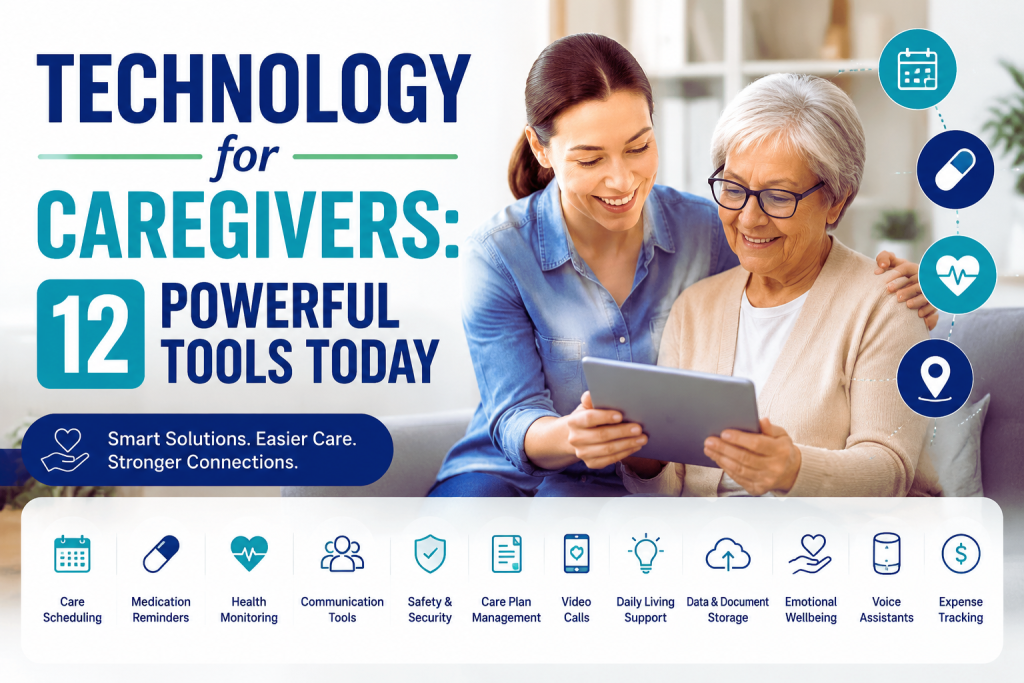
How Technology Is Transforming Modern Caregiving
Caregiving is much easier and more efficient now thanks to the many solutions available to support caregivers and seniors. Today, technology for caregivers provides practical ways to manage health needs, improve safety, organize daily responsibilities, and reduce the stress that often comes with caring for an aging loved one. From applications to advanced monitoring devices, modern technology allows caregivers to provide better support while giving seniors more confidence and independence.
Technology for caregivers provides caregivers with confidence because they know they have additional support available. By reducing stress and improving organization, technology allows caregivers to focus more on emotional support and meaningful interactions with their loved ones.

Many families are now using tools to overcome common caregiving challenges, especially when managing medications, medical appointments, emergencies, and communication. Whether a caregiver lives with a senior or provides support from a distance, the right technology can make daily care more organized and effective.
The latest solutions include caregiver apps, advanced medical alert systems for seniors, and innovative smart home devices that improve safety and comfort. These tools not only assist caregivers but also play an important role in helping seniors stay independent while maintaining a better quality of life.
How Technology Helps Family Caregivers Provide Better Care
Reducing Caregiver Stress and Daily Responsibilities
Caring for a family member requires a lot of patience, planning, and constant attention. Many caregivers manage responsibilities, including medication schedules, doctor appointments, household tasks, and emergencies. This workload can become overwhelming, especially when caregivers also have jobs, families, and personal responsibilities.
Technology for caregiver helps reduce this pressure by simplifying tasks. Digital calendars, reminder applications, health tracking tools, and automated systems allow caregivers to organize information in one place. Instead of manually remembering every detail, caregivers can use technology to receive alerts, monitor health changes, and maintain better routines.
Improving Communication and Care Coordination
Communication is one of the most important parts of successful caregiving. When multiple family members, doctors, and caregivers are involved, keeping everyone updated can become challenging. Technology provides solutions that make communication faster and more convenient.
Care coordination platforms and mobile applications allow families to share information about medications, appointments, symptoms, and daily activities. These digital solutions help prevent confusion and ensure everyone involved in care understands the senior’s needs.
For families who live away, technology provides a way to stay connected and involved. Video communication tools, remote monitoring systems, and digital health records allow caregivers to provide support when they cannot be physically present.
By improving communication between caregivers and healthcare professionals, technology creates an organized approach to senior care and helps families make better decisions.
Helping Seniors Stay Independent Through Technology
One of the advantages of modern caregiving technology is that it supports independence among older adults. Many seniors prefer to remain in their homes while maintaining control over their daily routines. Technology helps make this possible by providing safety features and assistance without removing their independence.
Smart devices, voice assistants, health monitoring tools, and emergency systems allow seniors to complete activities more safely. For example, smart home technology can help control lights, locks, and appliances while medical monitoring devices can provide warnings about health concerns.
Helping seniors stay independent is not about physical safety; it also improves emotional well-being. When seniors feel confident managing their lives, they often experience greater happiness and a stronger sense of control.
Best Apps for Caregivers to Manage Daily Care
Medication Management Apps
Managing medications is one of the important responsibilities for caregivers. Missing a dose, taking the medication incorrectly, or forgetting prescription schedules can create serious health risks for seniors. Medication management applications provide a way to organize and monitor prescriptions.
The best apps for caregivers often include features such as medication reminders, prescription tracking, refill alerts, and health information storage. These apps help caregivers maintain medication schedules and reduce the possibility of mistakes.
Some applications also allow caregivers to share medication information with doctors or other family members. This creates coordination and ensures that everyone involved has access to updated health details. For seniors who take medications, these digital tools provide extra support and make daily routines easier to manage.
Care Coordination Apps for Families
Family caregiving often involves teamwork, especially when several relatives share responsibilities. Without organization, important tasks can be missed or duplicated. Care coordination apps help families work together effectively.
These applications allow caregivers to create schedules, assign tasks, share updates, and communicate about care decisions. Instead of relying on phone calls or handwritten notes, families can use one digital platform to manage caregiving activities. For caregivers balancing responsibilities, these tools save time and improve efficiency. They also help create a support system around seniors by ensuring that everyone stays informed.
Health Monitoring Apps
Health monitoring applications are becoming a part of modern caregiving. These apps allow caregivers to track health information, including blood pressure, symptoms, appointments, and wellness progress.
Using health monitoring technology allows caregivers to identify changes in a person’s condition earlier. This information can be valuable when discussing health concerns with doctors and making care decisions.
Many health apps also connect with devices that track activity levels, sleep patterns, and other wellness information. These tools encourage care instead of waiting until a health problem becomes serious.
Medical Alert Systems for Seniors: Improving Safety and Emergency Response
How Medical Alert Systems Work

Safety is a concern for families caring for older adults, especially seniors who live alone or have mobility challenges. Medical alert systems for seniors are designed to assist with emergencies.
These systems usually include devices, emergency buttons, fall detection features, and professional monitoring services. When a senior experiences a fall, injury, or sudden health problem, they can quickly contact emergency support.
Modern medical alert technology has improved significantly, with many systems offering GPS tracking and mobile connectivity. This allows seniors to receive help both at home and while traveling outside.
Benefits of Medical Alert Systems for Seniors
Medical alert systems provide peace of mind for both seniors and caregivers. Knowing that help is available at any time allows older adults to feel safer and more confident in their activities. For caregivers, these systems reduce anxiety because they provide a layer of protection.
Families do not have to worry about whether their loved one can get assistance during an emergency. These devices are especially valuable for seniors who want to maintain independence while ensuring that support is available when needed.
Features to Consider Before Choosing a Medical Alert System
When selecting medical alert systems for seniors, families should consider important features. A reliable system should be easy for seniors to use and comfortable enough for wear.
Important features may include fall detection, GPS location tracking, two-way communication, long battery life, and 24-hour monitoring services. The best option depends on the senior’s health needs, lifestyle, and level of independence.
Choosing the system ensures that seniors receive appropriate protection while caregivers gain greater confidence in their safety.
Smart Home Devices for Seniors That Improve Daily Living
As technology continues to evolve, smart home devices for seniors are becoming a part of modern caregiving. These devices are designed to create more comfortable and more convenient living environments for older adults. For caregivers, smart home technology provides support by helping them monitor safety, manage daily activities, and respond quickly when assistance is needed.
Many seniors prefer to remain in their homes as they age, and technology makes this option more realistic. Smart devices can help reduce risks, support independence, and improve quality of life. By combining convenience with safety features, smart home solutions have become a part of technology for caregiver.
Smart Security Cameras and Monitoring Devices
One of the useful smart home device for seniors is a smart security camera system. These devices allow caregivers to check on their loved ones remotely while respecting their independence. Families can monitor areas of the home such as entrances, living spaces, and outdoor areas to ensure seniors remain safe.
Smart cameras are especially helpful for caregivers who live away from their elderly family members. Instead of making frequent visits just to check safety, caregivers can use remote monitoring technology to stay connected and respond when needed.
Many modern systems include features such as motion detection, mobile alerts, and two-way communication. These features allow caregivers to communicate with seniors and quickly identify activity or potential safety concerns.
Smart Lighting and Voice Assistants for Senior Safety
Falls are one of the concerns for older adults, especially during nighttime movement around the home. Smart lighting systems help reduce this risk by adjusting brightness and providing better visibility. Voice assistants are another tool that supports seniors in their daily routines. With voice commands, older adults can control lights, make phone calls, set reminders, check the weather, and manage household devices without needing complicated controls. These technologies are especially helpful for seniors with mobility challenges or limited physical ability. By making everyday tasks easier, smart devices contribute to helping senior stay independent while reducing their dependence on caregiver assistance.
Smart Medication Dispensers
Medication management can be challenging for seniors, particularly those who take multiple prescriptions throughout the day. Smart medication dispensers provide reminders. Help ensure medications are taken correctly and on time. These devices can alert seniors when it is time for medication and notify caregivers if a dose is missed.
This additional support reduces the risk of medication errors. Gives families greater confidence in their loved one’s health routine. When combined with the apps for caregivers, smart medication technology creates a stronger caregiving system by keeping health information organized and easily accessible.
Technology Tools for Dementia and Memory Care Support
Caring for seniors with memory challenges requires patience, planning, and reliable support systems. Technology, for caregivers, has introduced solutions that help families manage dementia care more effectively while improving safety and comfort for older adults.
Digital tools can be a help with things like reminders, communication, location tracking, and daily routines for seniors. These technologies do not replace the care that people give. They do provide valuable assistance that helps caregivers give better support.
Digital Reminder and Memory Assistance Tools
Some seniors have trouble with everyday activities because of memory problems. Digital reminder tools help older adults remember things like appointments, meals, medications, and daily routines.
These tools can give alerts through smartphones, tablets, smart speakers, or specialized devices. For seniors who are experiencing memory loss, consistent reminders create structure. Reduce confusion.
For caregivers, these solutions give them reassurance because they help seniors maintain routines even when direct supervision is not always possible.
Location Tracking Devices for Seniors
For families who are caring for seniors with dementia or memory-related conditions, safety outside the home is a concern. Location tracking technology gives a layer of protection by helping caregivers know where their loved ones are.
GPS-enabled devices can help families find seniors who may get lost or confused while outside. These tools are especially useful for helping seniors stay independent while reducing safety risks. When used responsibly, location technology supports helping senior stay independent while giving caregivers peace of mind.
Communication Technology for Seniors With Dementia
Seniors need to stay connected with their family and friends to keep them from feeling lonely. Communication technology helps older adults stay connected with family members, friends, and healthcare providers.
Simple video calling devices, friendly tablets, and voice communication tools make it easier for seniors to communicate without complicated technology. Regular communication can improve well-being and help caregivers stay aware of changes in a senior’s mood, health, and daily life.
Remote Caregiving Technology for Families Living Apart
Many families give care from cities or even different countries. Remote caregiving technology lets family members stay involved even when they cannot be physically present.
Modern digital solutions make it possible to check health information, communicate regularly, and give assistance from a distance. These tools are especially valuable for long-distance caregivers who want to stay actively involved.
Video Communication Tools
Video communication has become one of the most helpful caregiving technologies. Regular video calls let families stay connected emotionally and check on their loved ones.
For seniors, seeing family members regularly can reduce loneliness and improve health. For caregivers, video conversations give them a chance to notice changes in appearance, behavior, or overall well-being. Easy-to-use communication devices are helping families give emotional support while keeping stronger relationships.
Remote Health Monitoring Devices
Remote health monitoring is changing the way caregivers manage health. These devices collect health information and let caregivers and healthcare professionals check for changes over time.
Wearable devices and connected health tools can track activity levels, heart rate, sleep patterns, and other wellness indicators. This information helps caregivers find concerns before they become serious problems. Combined with remote monitoring technology improves decision-making and creates a more proactive approach to caregiving.
How Technology Helps Seniors Stay Independent
One of the benefits of modern caregiving technology is that it helps seniors stay independent. Many seniors want to keep living according to their routines while having access to support when needed. Technology gives solutions that make everyday activities safer and easier.
From home automation to health monitoring tools, these innovations let seniors stay confident and in control of their lives. Helping seniors stay independent is not about physical assistance; it is also about improving emotional well-being and dignity. When seniors can do tasks on their own, they often feel more confident. Have a stronger sense of purpose.
How to Choose the Right Technology for Caregivers
Understand the Senior’s Needs and Lifestyle
Every senior has needs, health conditions, and comfort levels with technology. Before choosing tools, caregivers should think about the senior’s daily challenges and personal preferences. A device that works well for one person may not be suitable for another. The best technology solutions are those that match the senior’s abilities and give meaningful support.

Choose Easy-to-Use Technology
Technology should make caregiving easier, not create stress. Seniors often benefit most from devices with designs, clear instructions, and user-friendly features. Voice-controlled systems, large displays, and automatic functions can make technology more accessible for adults who are not familiar with digital tools.
Consider Privacy, Security and Cost
While technology gives benefits, caregivers should also think about privacy and security. Personal health information and home monitoring systems should be protected with security measures. Cost is another thing to consider. Families should choose solutions that give support without creating unnecessary financial pressure.
Challenges of Using Technology in Caregiving
Although technology gives advantages, some challenges may stop seniors and caregivers from fully using digital solutions. Learning devices can sometimes feel overwhelming, especially for older adults who have limited experience with technology.
Privacy concerns, internet requirements, and device costs can also create barriers. Caregivers should introduce technology gradually. Choose tools that genuinely improve daily life. With guidance and support, most seniors can successfully benefit from modern caregiving technology.
Future Trends in Technology for Caregivers
The future of technology for caregivers is expected to bring more advanced solutions for senior support. Artificial intelligence, health monitoring, and personalized care systems are creating new opportunities for improving elderly care. Future technologies may give health warnings, smarter home automation, and more personalized assistance based on individual needs. As innovation continues, caregivers will have access to tools that improve safety, efficiency, and quality of life for seniors.
Technology has changed the way families give care and support for adults. From the apps for caregivers that simplify daily tasks to medical alert systems for seniors that improve safety and smart home devices for seniors that create comfortable living environments, modern solutions help caregivers manage responsibilities more effectively.
While technology cannot replace the compassion, attention, and emotional connection that caregivers give, it can make caregiving safer, more organized, and less stressful. The right digital tools let families check health, improve communication, respond quickly during emergencies, and support seniors in maintaining their independence.
As innovation continues, technology for caregivers will become more advanced, giving smarter and more personalized solutions for senior care. By combining technology with care and understanding, families can create a safer, healthier, and more supportive future for both caregivers and their loved ones.
Conclusion
Taking care of an aging loved one can be tough. The right tools can make the process easier and more satisfying. Technology for caregivers offers solutions that help families increase safety, manage daily tasks, and give better support. From the apps for caregivers that make health management simpler to medical alert systems for seniors and smart home device for seniors that create safer homes, technology has become a key part of today’s caregiving.
Even though technology cannot take the place of the kindness and personal touch that caregivers bring, it can lower stress, help with communication, and make daily jobs easier. These new tools let seniors feel more confident, comfortable, and independent while giving caregivers peace of mind.
As technology keeps getting better, families will have better tools to help older adults. By using these ideas along with patience, understanding, and good care, caregivers can build a safer and healthier place where seniors can live with respect and freedom.
Frequently Asked Questions
What is the technology for caregivers?
The best technology for scaregivers depends on the needs of the senior and the type of support required. Useful tools include apps for caregivers, medication management systems, health monitoring devices, medical alert systems for senior, and smart home devices for seniors. These technologies help caregivers organize care, improve safety, and give support.
What are the best apps for caregivers?
The best apps for caregivers include tools for medication reminders, appointment scheduling, health tracking, and family communication. These apps help caregivers manage responsibilities, check health information, and coordinate care more effectively.
What is the best technology for the elderly?
The best technology for the elderly includes user-friendly devices that improve safety, comfort, and independence. Popular options include voice assistants, wearable health trackers, emergency alert systems, and smart home devices for seniors that help with activities.
How do medical alert systems help seniors?
Medical alert system for seniors give access to emergency assistance through wearable devices, emergency buttons and fall detection features. They help seniors feel safer while giving caregivers peace of mind, especially when older adults live alone.
How do smart home devices help seniors?
Smart home devices for senior improve daily living by making homes safer and easier to manage. Smart lighting, security cameras, voice assistants, and automated systems help prevent accidents, support routines, and contribute to helping seniors stay independent.
Can technology help seniors stay independent?
Yes, technology plays an important role in helping seniors stay independent. Tools such as health monitoring devices, smart home technology, and communication platforms let seniors manage activities safely while staying connected with caregivers and family members.
What are the benefits of technology for caregivers?
Technology for senior caregivers provides benefits, including reducing caregiver stress, improving communication, organizing health information, increasing senior safety, and making daily caregiving tasks easier. Digital tools let caregivers give efficient and personalized support.
What are the four types of caregivers?
The four common types of caregivers include family caregivers, professional caregivers, independent caregivers, and volunteer caregivers. Each type provides levels of support depending on the senior’s health needs and personal situation.

Welcome to USA Senior Citizen, a trusted resource dedicated to helping older adults live healthier, happier, and more independent lives.
Our mission is to provide valuable information, practical tips, and helpful guidance for seniors and their families. We cover important topics including **senior health, retirement planning, senior living, caregiving, technology for seniors, and everyday lifestyle solutions**.
At USA Senior Citizen, we believe aging is not about slowing down — it is about embracing new opportunities, staying connected, and enjoying every stage of life. Our goal is to make life easier for seniors by sharing simple, reliable, and easy-to-understand information that supports better decisions and improved well-being.
Whether you are looking for advice on maintaining a healthy lifestyle, exploring retirement options, learning new technology skills, or finding ways to stay active and independent, USA Senior Citizen is here to guide you.
We are committed to creating a supportive online community where seniors can discover useful resources, gain confidence, and continue living life with dignity and purpose.
USA Senior Citizen — Empowering Seniors to Live Better Every Day.